Explore our premium selection of industrial barrier systems, engineered to meet rigorous international standards for drainage, filtration, and waterproofing.
In modern environmental engineering and infrastructure development, waterproofing systems have transitioned from passive membranes to highly active, intelligent composite systems. At the forefront of this evolution is the industrial-grade Bentonite Waterproof Blanket (commonly referred to in geotechnical sectors as a Geosynthetic Clay Liner (GCL)). The global market for these advanced containment systems is accelerating rapidly. According to global commercial analytics, the market is driven by tightening environmental regulations, large-scale civil works, and the increasing necessity of protecting groundwater reserves from contaminated runoff.
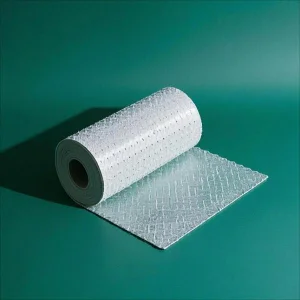
These industrial GCLs act as self-sealing barriers. By sandwiching a high-swelling sodium bentonite clay layer between needle-punched geotextiles, they offer low permeability, exceptional shear strength, and structural resilience. Whether applied in municipal landfills, artificial water bodies, civil basements, or transport networks, the modern waterproof blanket must withstand high hydraulic pressures, localized ground settlements, and chemical exposure, making specialized engineering and manufacturing capabilities essential for structural projects worldwide.
Upon hydration, sodium bentonite swells, forming a dense gel barrier that automatically seals minor punctures and shifts in the substrate.
Engineered with non-woven and woven polypropylene geotextiles to withstand mechanical stress during installation and long-term service.
Constructed primarily from natural minerals, eliminating the risk of plasticizer migration or chemical leaching into surrounding soil.
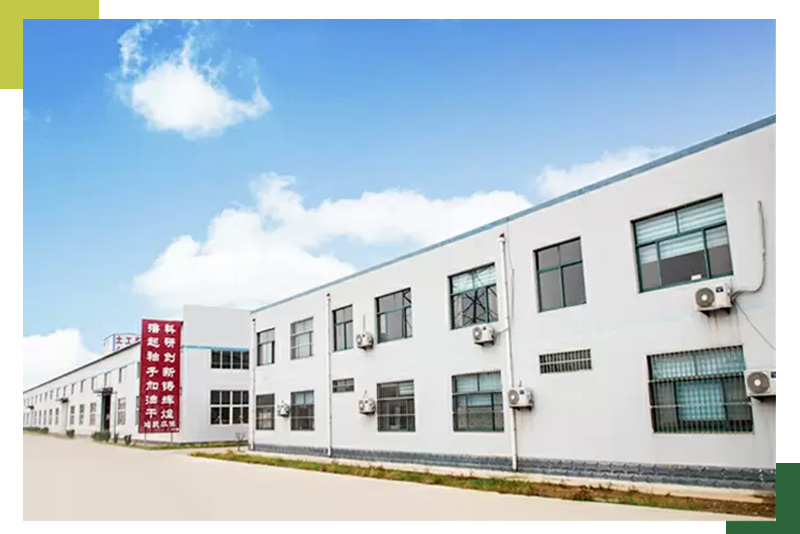
Located at the north end of Fufeng Street, Lingcheng District, Dezhou, Shandong Province, Shandong Hongyue Environmental Engineering Co., Ltd. is a high-tech manufacturer specializing in geotechnical materials. We integrate manufacturing, sales, engineering design, and professional construction services under one roof.
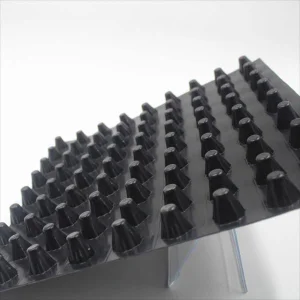
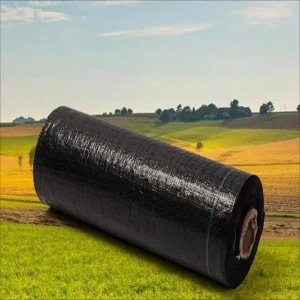
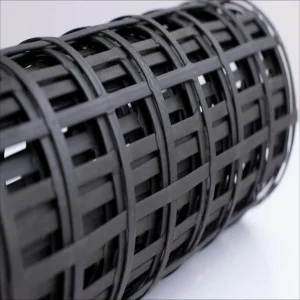
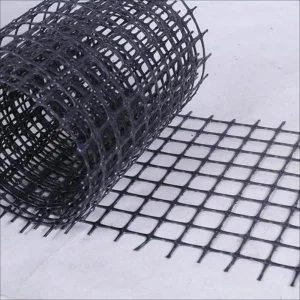
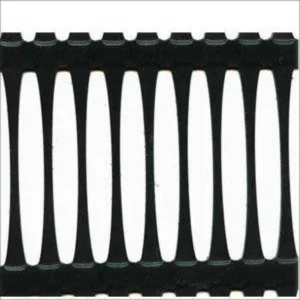
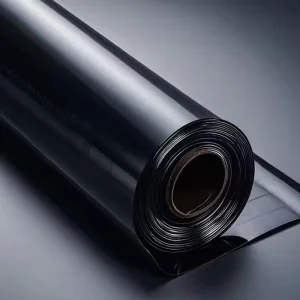
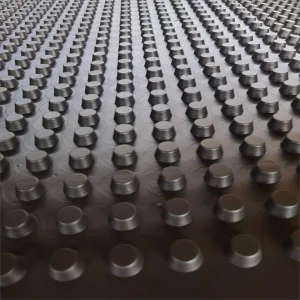
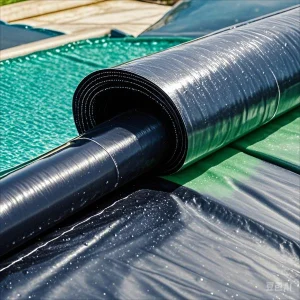
Registered on April 6, 2023, with a substantial capital of 105 million yuan, our facility stands as one of China's largest production bases for geotechnical materials. With a strategic geographical position in Shandong, we leverage optimal transit networks to serve municipal and industrial projects globally. Our expansive product line covers geotextiles, geomembranes, composite geomembranes, waterproof boards, bentonite waterproof blankets (GCLs), 3D composite drainage nets, grass-proof cloth, geogrids, geocells, and cement blankets.
Shandong Hongyue is an active member of the Dezhou Geotextile Association. Our products are widely utilized in national and international key infrastructure projects, including expressways, high-speed railways, bridges, tunnels, municipal landfills, reservoirs, and mining operations.
The global sourcing structure for geosynthetics heavily relies on Chinese manufacturing, and specifically the Dezhou industrial cluster in Shandong Province. This region operates as the global hub for geotechnical innovation, concentrating raw material supply chain nodes, high-precision equipment manufacturers, and specialized scientific labs.
Shandong Hongyue harnesses this cluster to deliver exceptional production efficiency. By utilizing state-of-the-art co-extrusion technology and automated needle-punch systems, we significantly reduce energy consumption per unit while maintaining tight production tolerances. Our integrated raw material procurement channels ensure cost stability for high-grade polypropylene fibers and premium natural sodium bentonite clay. As a result, our factory offers highly competitive direct pricing, scalable volume capacities, and rapid processing times for large-scale global projects.
In addition, our location in Dezhou provides direct access to major seaport networks like Qingdao, enabling fast ocean shipping to markets across Europe, North America, Southeast Asia, and Australia.
How we manufacture high-performance geosynthetics. Our engineering workflow integrates modern materials science with advanced automated production lines.
Our production begins with selecting and testing raw materials: polyester chips, polypropylene filament, viscose fiber, and premium sodium bentonite clay. These ingredients undergo thorough mineralogical and mechanical testing to ensure they meet our durability standards.
Polyester chips are melted at high temperatures and extruded into high-tenacity continuous filaments using advanced screw extruders. Polypropylene and viscose fibers are then integrated to create the ideal blend for structural applications.
The extruded filaments are laid down in multi-axial patterns on structured conveyor belts to form a uniform web. For GCLs, this step includes distributing raw bentonite clay evenly between the backing and cover geotextile layers.
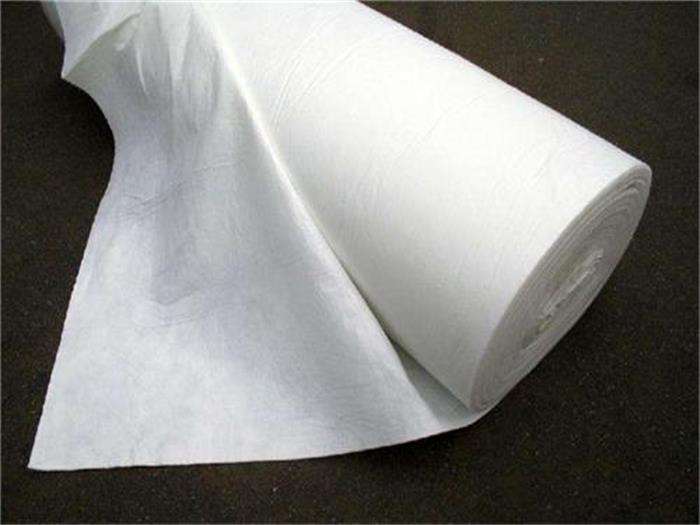
The composite structure undergoes high-density needle punching. Thousands of structural fibers are driven through the bentonite layer, mechanically locking the upper and lower geotextiles together. This mechanical bonding provides high internal shear resistance and structural stability.
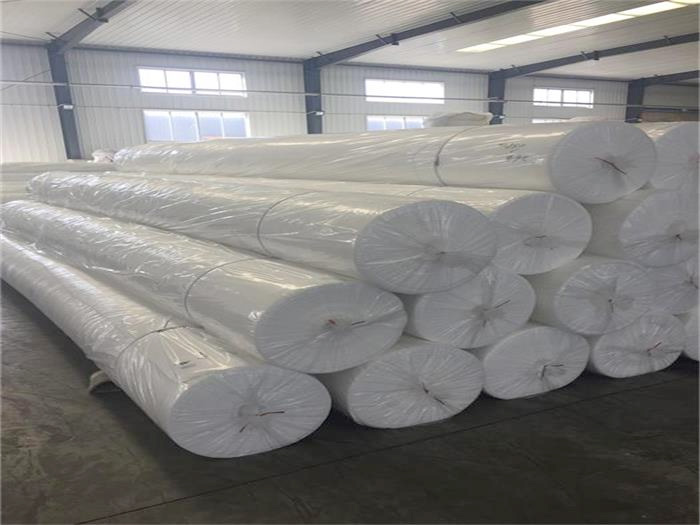
The cured geosynthetic roll is measured for length, width, and thickness to ensure strict compliance with project design specifications before being packed in protective UV-resistant wraps.
Samples from each manufacturing run undergo physical and chemical testing at our in-house facility. We test hydraulic conductivity, grab tensile strength, static puncture resistance (CBR), peel strength, and free swell index, ensuring compliance with international engineering standards.
Modern geosynthetic materials play a critical role in civil and environmental protection projects. From municipal waste containment to agricultural water management, our products are engineered to prevent seepage and protect environmental resources.
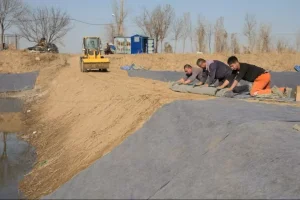
GCLs work alongside HDPE geomembranes to create high-efficiency composite lining systems that prevent leachate from contaminating nearby aquifers.
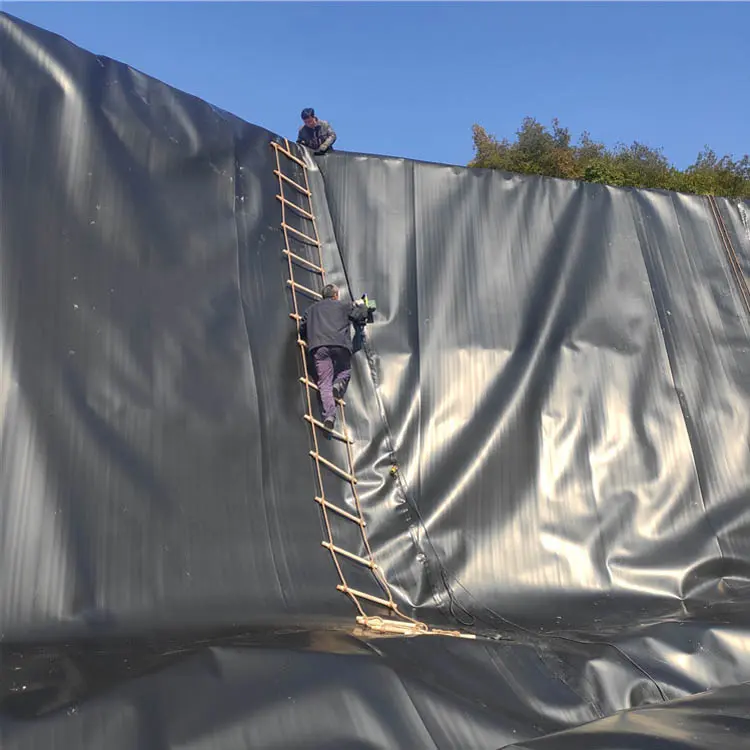
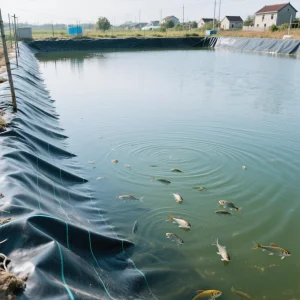
Our GCLs control seepage in municipal drinking water reservoirs, artificial lakes, and agricultural irrigation networks, minimizing water loss.
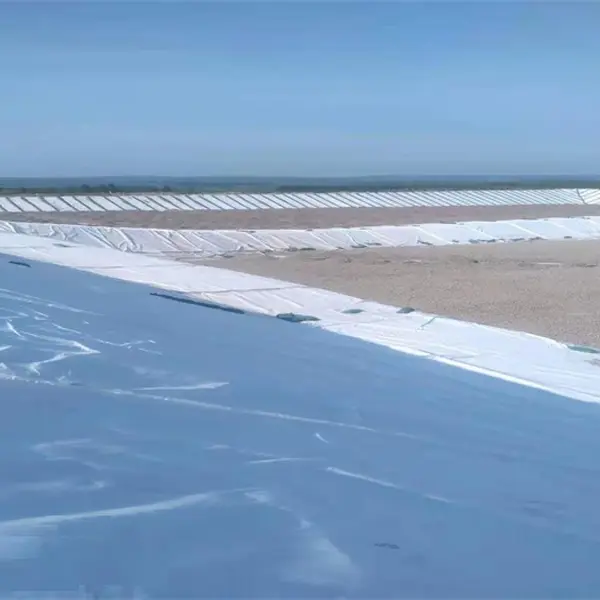
Integrating concrete blankets and GCLs along channel slopes prevents erosion, stabilizes banks, and controls water loss.
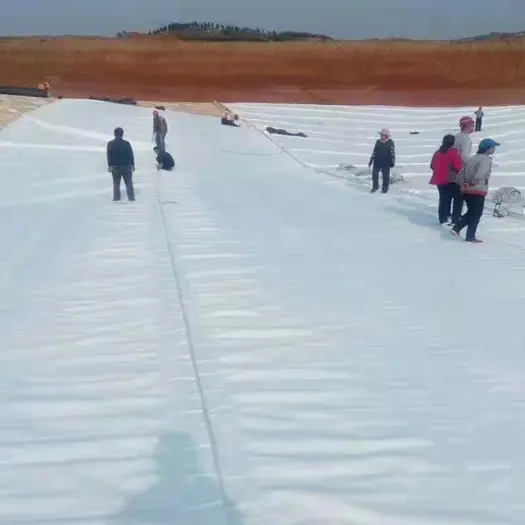
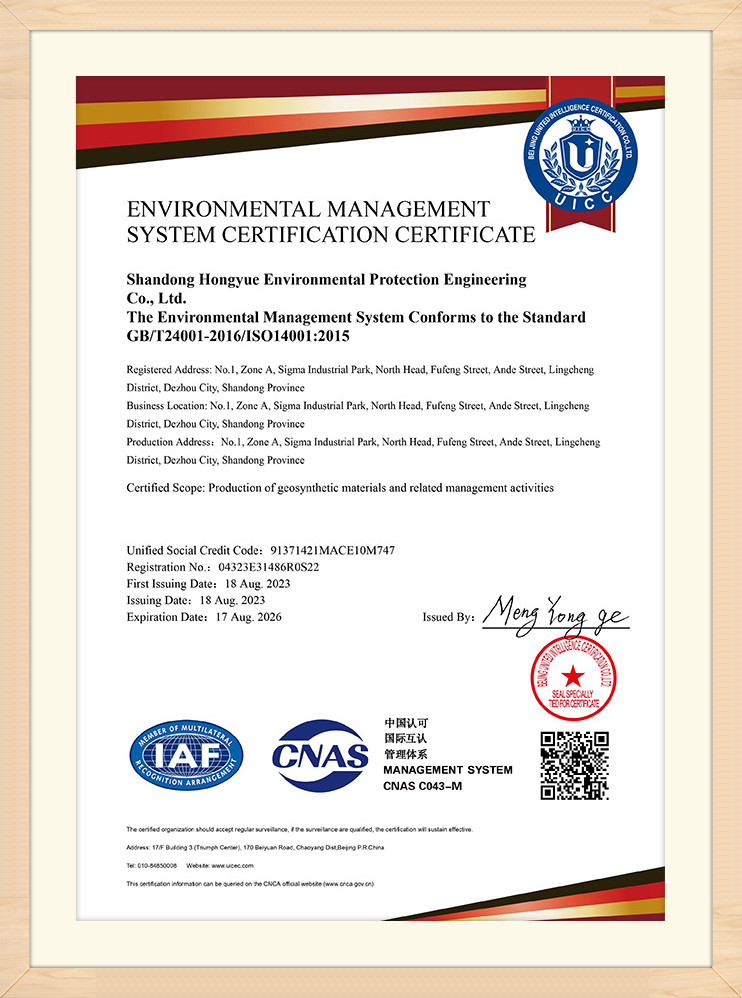
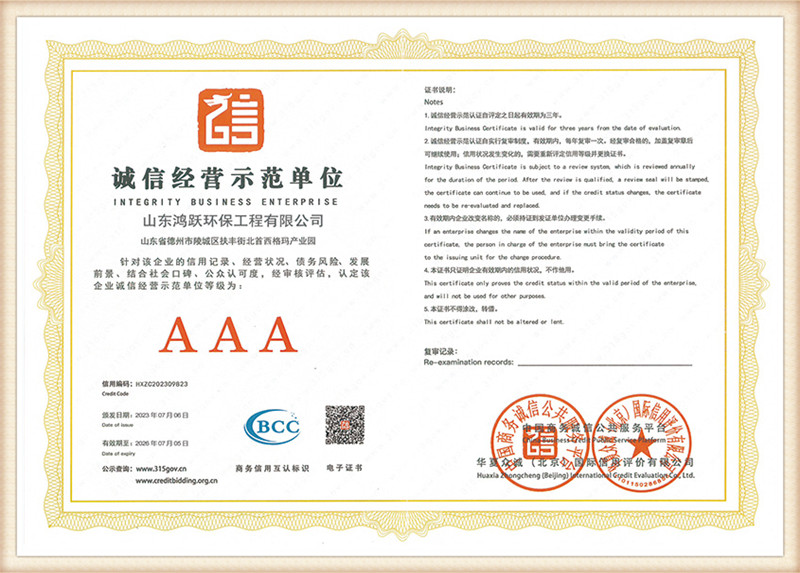
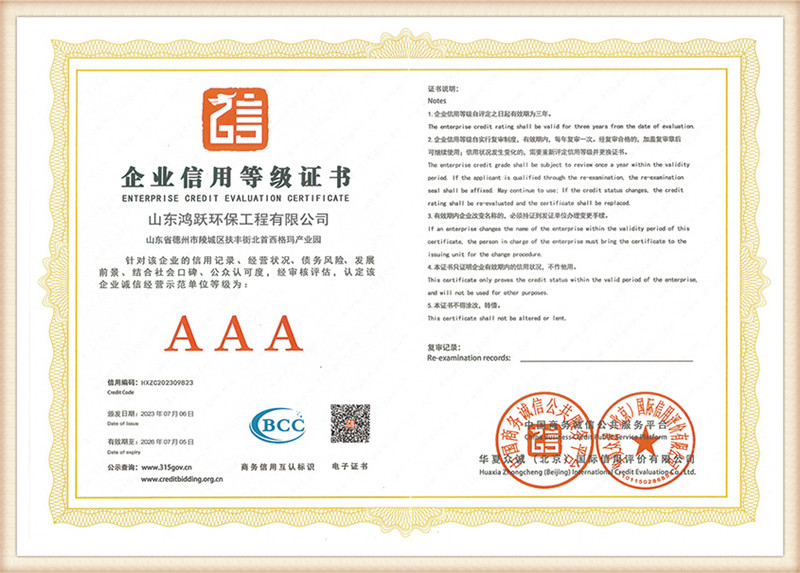
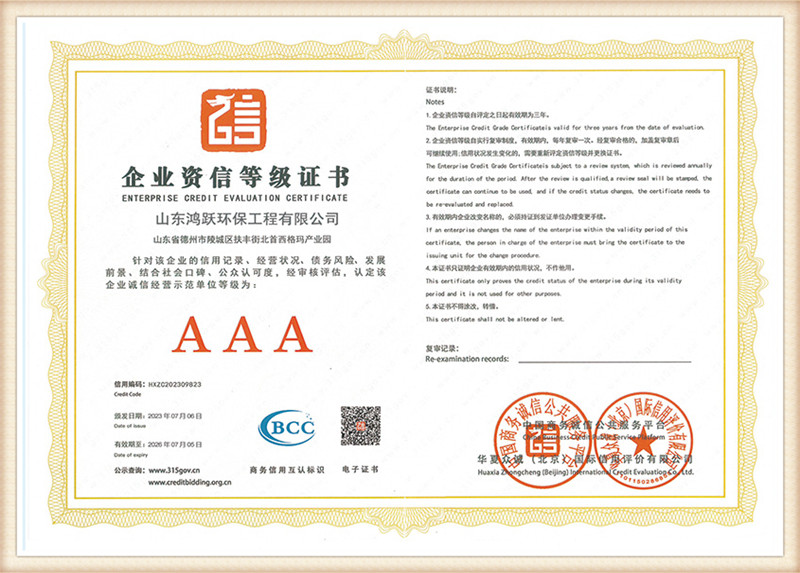
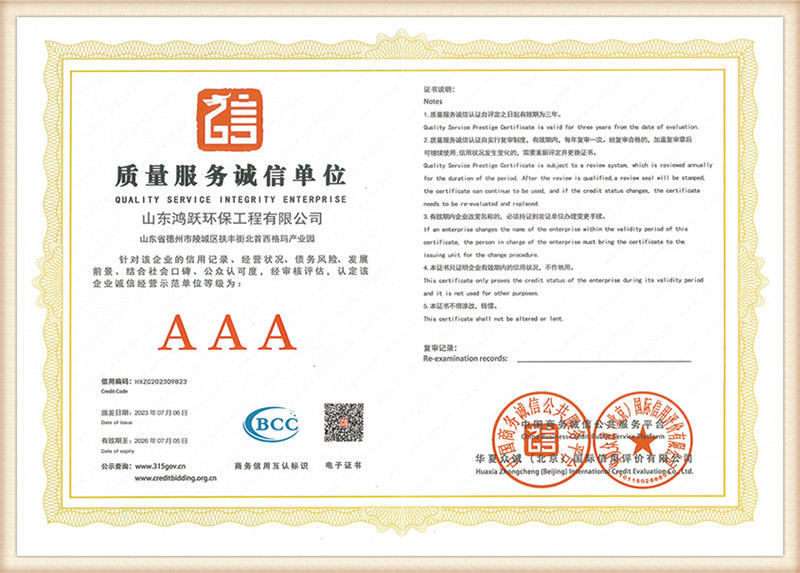
At Shandong Hongyue, our quality assurance protocols ensure every roll of geosynthetic material meets strict international specifications. We operate in compliance with ISO9001 (Quality Management), ISO14001 (Environmental Management), and ISO45001 (Occupational Health & Safety).
All products undergo systematic sampling and testing by the China National Testing Center, meeting or exceeding required standards. We check key physical and mechanical properties, including:
Standard engineering parameters for Shandong Hongyue geosynthetics. Custom specifications are available upon request.
| Property / Parameter | Sodium Bentonite GCL | HDPE Geomembrane | Test Standard Reference | |
|---|---|---|---|---|
| Hydraulic Conductivity | ≤ 5 × 10-11 m/s | ≤ 1 × 10-13 m/s | ASTM D5887 / ASTM D5084 | Excellent low permeability |
| Thickness (Standard Range) | 6.0 mm - 10.0 mm | 0.3 mm - 3.0 mm | ASTM D5199 / ASTM D1777 | Adjustable by application |
| Bentonite Mass / Area | ≥ 4000 g/m² (Typical) | — | ASTM D5993 | Premium natural sodium clay |
| Tensile Strength (MD/CD) | ≥ 600 N / 100mm | ≥ 15 kN/m (1.0mm thick) | ASTM D6768 / ASTM D6693 | High mechanical resistance |
| Puncture Resistance (CBR) | ≥ 1.8 kN | ≥ 250 N (1.0mm thick) | ASTM D6241 / ASTM D4833 | High subgrade protection |
Expert technical answers to common questions about selecting, installing, and sourcing geosynthetics.
Geosynthetic Clay Liners (GCLs) offer several advantages over compacted clay liners (CCLs), including lower hydraulic conductivity, self-healing capability, and easier installation. While CCLs require sourcing and compacting thick layers of high-grade clay, a 10mm GCL provides equivalent or superior hydraulic containment. This saves site storage space and reduces transport costs, particularly for projects without easy access to clay reserves.
Sodium bentonite swells up to 10 to 15 times its dry volume when hydrated. When water contacts the dry bentonite clay, the clay swells inside the needle-punched geotextile structure. If a small puncture occurs during installation, the swelling clay moves to fill the void, maintaining a low-permeability barrier under confinement.
Key parameters for landfill liners include chemical resistance (HDPE is preferred for its chemical stability), thickness (typically 1.5mm to 2.0mm to resist punctures), carbon black content (for UV protection), and mechanical properties like tensile strength and stress crack resistance. Texturing the surface can also improve slope stability by increasing friction against adjacent layers.
Typically, GCL panel edges should overlap by 150mm to 300mm. It is important to clean the overlap area of soil and debris. Applying dry bentonite powder or paste along the overlap zone ensures a continuous, low-permeability seal when hydrated.
Our quality control program begins with testing incoming raw materials. We monitor temperature, pressure, and line speed during extrusion and needle punching. Each roll is tracked, sampled, and tested in our laboratory, ensuring our products meet ISO and CE standards before leaving our facility.
View our additional product lines designed for seepage control, environmental containment, and soil stabilization.
 Hongyue