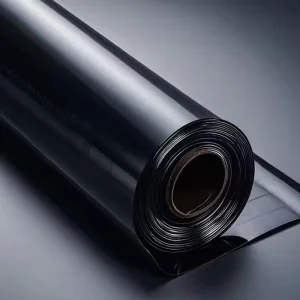
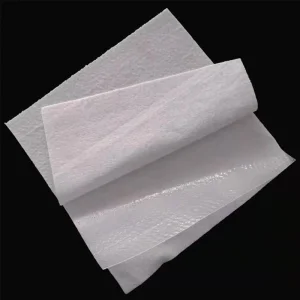
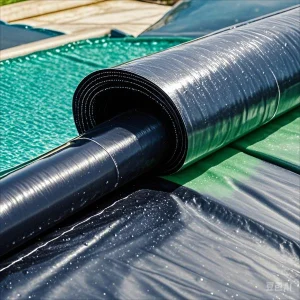
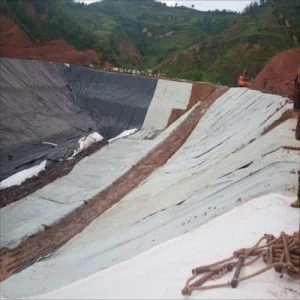
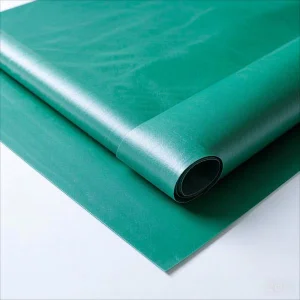
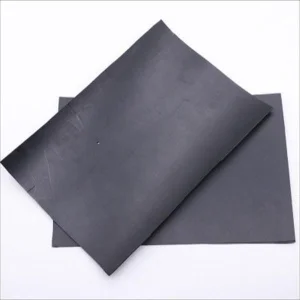
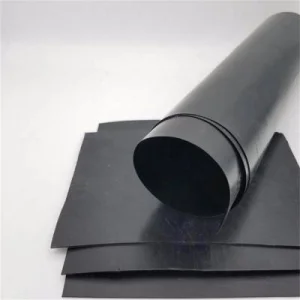
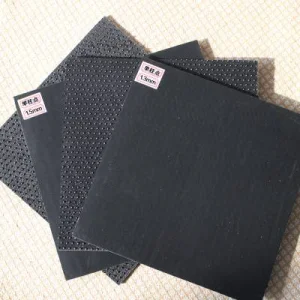
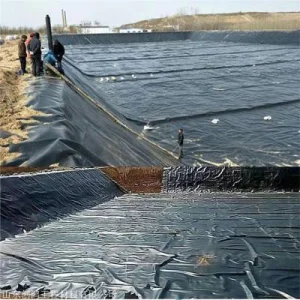
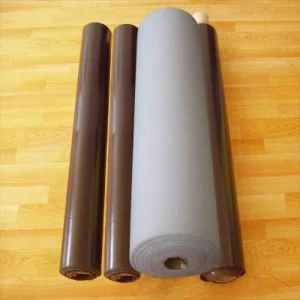
Linear low-density polyethylene (LLDPE) geomembrane is a polymer anti-seepage material made of linear low-density polyethylene (LLDPE) resin as the main raw material through blow molding, cast film and other processes. It combines some of the characteristics of high-density polyethylene (HDPE) and low-density polyethylene (LDPE), and has unique advantages in flexibility, puncture resistance and construction adaptability.
With a dense molecular structure and low permeability coefficient, LLDPE geomembrane can effectively prevent liquid leakage. Its seepage-proof effect is comparable to that of HDPE geomembrane, making it widely applicable to projects requiring seepage control.
It exhibits outstanding flexibility and is not easily brittle at low temperatures, with a temperature resistance range of approximately -70°C to 80°C. This allows it to adapt to irregular terrains or environments with dynamic stress, such as water conservancy projects in mountainous areas with complex terrains.
The membrane has strong toughness, and its tear and impact resistance are better than those of HDPE smooth membranes. During construction, it can better resist punctures from stones or sharp objects, reducing accidental damage and improving the reliability of the project.
It can be connected by hot-melt welding, and the joint strength is high, ensuring the integrity of seepage prevention. At the same time, its good ductility makes it easy to bend and stretch during construction, and it can better fit complex bases such as uneven soil bodies and foundation pit slopes, reducing the construction difficulty.
It has a certain ability to resist the corrosion of acid, alkali, and salt solutions, and is suitable for most conventional seepage-proof scenarios. It can withstand the erosion of various chemical substances to a certain extent and prolong the service life.
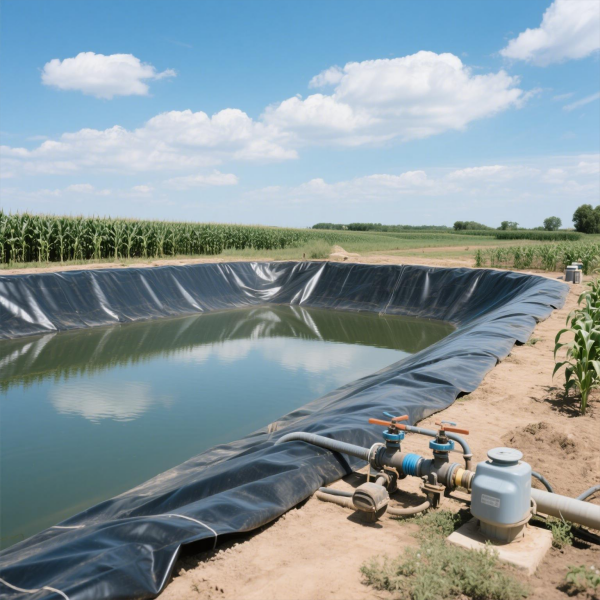
It is suitable for the seepage-proof projects of small and medium-sized reservoirs, channels, and storage tanks, especially in areas with complex terrains or uneven settlement, such as the construction of check dams on the Loess Plateau, where its good flexibility and seepage-proof performance can be brought into play. For temporary or seasonal water conservancy projects, such as drought-emergency storage tanks, its advantages of convenient construction and relatively low cost make it an ideal choice.
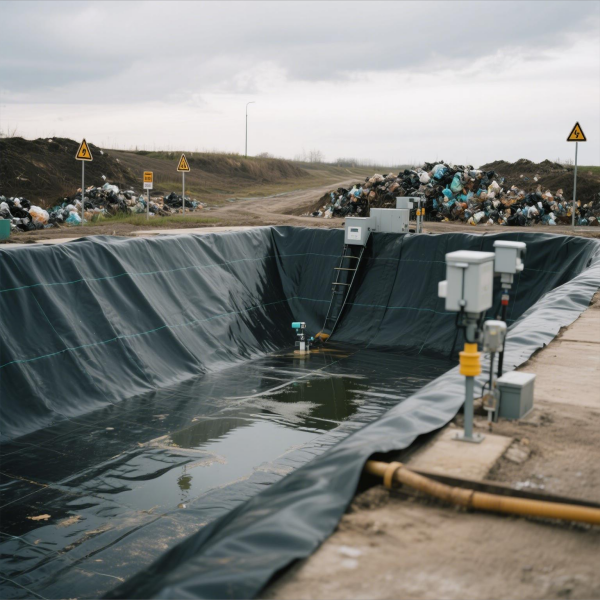
It can be used as a temporary seepage-proof layer for small landfills, seepage-proof for regulating ponds, and linings for industrial wastewater ponds (in non-strongly corrosive scenarios), helping to prevent the leakage of pollutants and protect the surrounding environment.
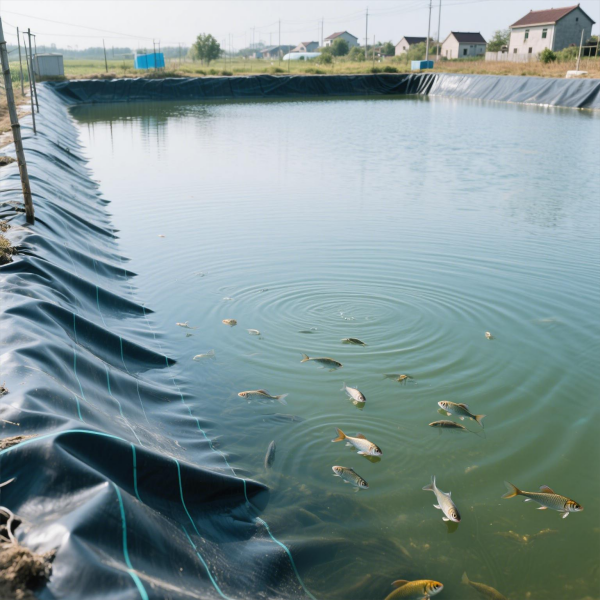
It is widely used in the seepage prevention of fish ponds and shrimp ponds, which can effectively prevent water leakage and improve the utilization efficiency of water resources. It can also be used for the seepage prevention of agricultural irrigation storage tanks, biogas digesters, and the moisture-proof and root-isolation at the bottom of greenhouses, and can adapt to the slight deformation of the soil due to its flexibility.
It can be used as a moisture-proof layer for roadbeds, replacing traditional gravel layers and reducing project costs. It can also be used for the seepage-proof isolation of underground pipe trenches and cable tunnels to protect underground facilities from water erosion.
Q
What are the main performance advantages of LLDPE geomembrane?
LLDPE geomembrane offers outstanding seepage resistance, excellent low-temperature flexibility (ranging from -70°C to 80°C), strong puncture and tear resistance, excellent adaptability to complex terrains, and good chemical corrosion resistance against acids, alkalis, and salts.
Q
In which agricultural and aquaculture applications is LLDPE geomembrane used?
It is widely applied in fish and shrimp ponds to prevent water leakage, and in agricultural irrigation storage tanks, biogas digesters, as well as for moisture-proofing and root-isolation at the bottom of greenhouses.
Q
What is the service temperature range of LLDPE geomembrane?
LLDPE geomembrane can maintain long-term stable performance within a service temperature range of -70℃ to 80℃, allowing it to adapt to cold environments and mountainous terrains without becoming brittle.
Q
How is LLDPE geomembrane connected during construction?
It is connected using hot-melt welding. This process ensures high joint strength and maintains the overall integrity of the seepage prevention layer, fitting closely to complex and uneven soil bases.
Q
Is LLDPE geomembrane resistant to chemicals and organic solvents?
Yes, it exhibits stable chemical resistance in neutral to weak acid/alkali environments (pH range 4~10). However, it has moderate resistance to organic solvents and is not recommended for strongly corrosive environments.
Q
What is the typical permeability coefficient of LLDPE geomembrane?
It has a very low permeability coefficient of ≤1×10⁻¹² cm/s, which provides high-efficiency anti-seepage capabilities equivalent to those of high-density polyethylene (HDPE).
 Hongyue