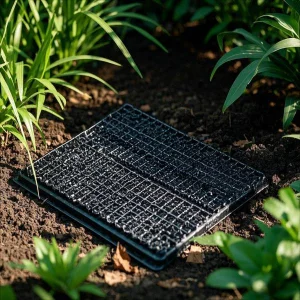
CE Certification Coiled drainage board Factories, Exporters
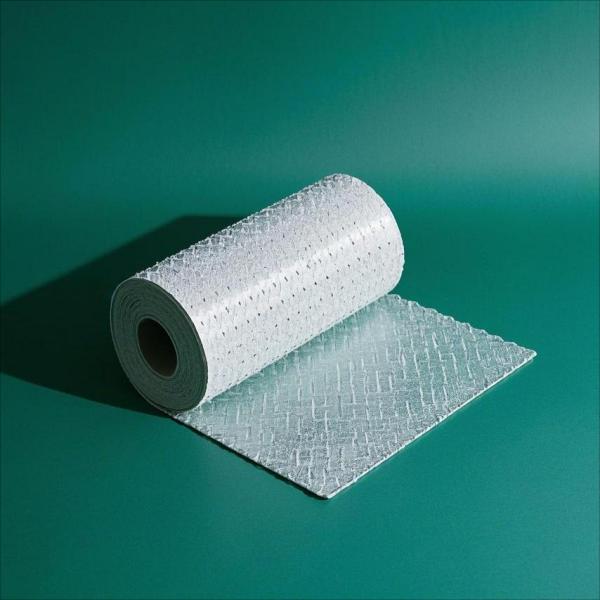
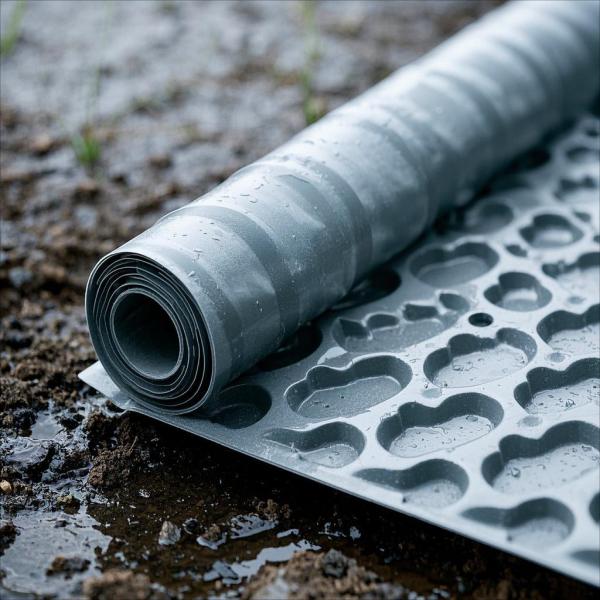
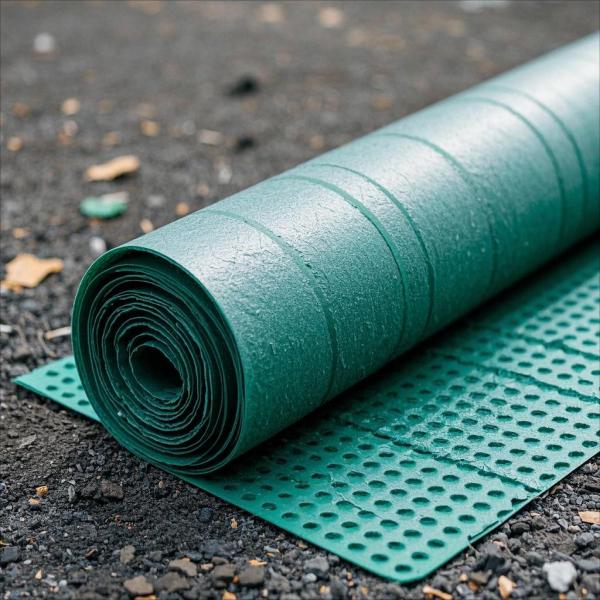
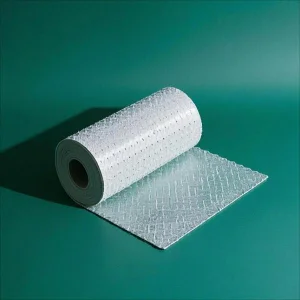
A roll drainage board is a drainage roll made of polymer materials through a special process and having a continuous concave-convex shape. Its surface is usually covered with a geotextile filter layer, forming a complete drainage system that can effectively drain groundwater, surface water, etc., and has certain waterproof and protective functions.
A roll drainage board is a drainage roll made of polymer materials through a special process and having a continuous concave-convex shape. Its surface is usually covered with a geotextile filter layer, forming a complete drainage system that can effectively drain groundwater, surface water, etc., and has certain waterproof and protective functions.
Structural Characteristics
Concave-convex Structure:
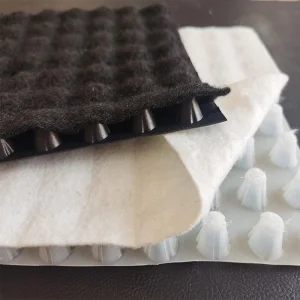
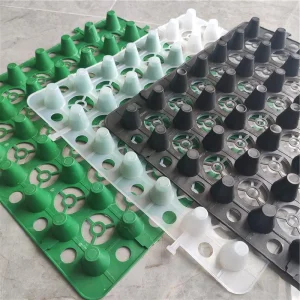
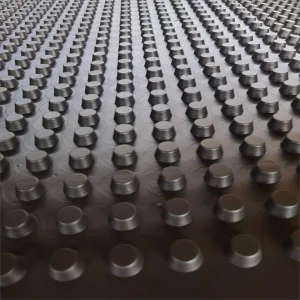
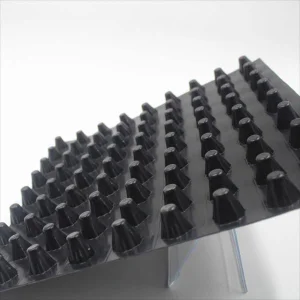
It has a unique concave-convex film, forming a closed convex columnar shell. This structure can increase the compressive strength of the drainage board and form drainage channels between the protrusions to allow water to flow quickly.
Edge Treatment:
The edges are usually thermally bonded with butyl rubber strips during processing and production, enhancing the sealing and waterproof properties of the roll to prevent water from infiltrating from the edges.
Filter Layer:
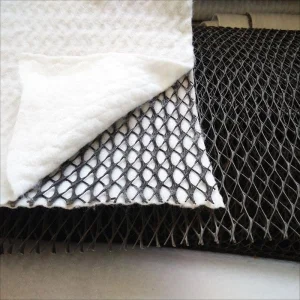
The geotextile filter layer on the top can filter out sediment, impurities, etc. in the water to prevent the drainage channels from being blocked and ensure the long-term effectiveness of the drainage system.
Performance Characteristics
Excellent Drainage Performance:
It can quickly drain water from the raised channels of the drainage board, reduce the groundwater level or drain surface water, and reduce the pressure of water on buildings or planting layers.
High Compressive Strength:
It can withstand a certain amount of pressure without deformation and is suitable for various load conditions, such as vehicle driving and personnel activities.
Good Corrosion Resistance:
It has a certain tolerance to chemicals such as acids and alkalis and can be used stably for a long time in different soil environments.
Strong Flexibility:
It has good flexibility, which is convenient for laying on various shaped ground or slopes and can adapt to a certain degree of deformation without damage.
Environmental Protection and Energy Saving:
The polymer materials used usually have good environmental protection performance, and its drainage function contributes to the rational use and recycling of water resources.
Production Process
Raw Material Mixing:
Mix the polymer raw materials such as polyethylene (HDPE) and polyvinyl chloride (PVC) with various additives in a certain proportion evenly.
Extrusion Molding:
Heat and extrude the mixed raw materials through an extruder to form a drainage board baseband with a continuous concave-convex shape.
Cooling and Shaping:
The extruded drainage board baseband is cooled and shaped through a cooling water tank or an air-cooling device to fix its shape.
Edge Treatment and Composite Filter Layer:
Treat the edges of the cooled drainage board by thermally bonding butyl rubber strips, and then composite the geotextile filter layer on the top of the drainage board by thermal compounding or gluing.
Application Areas
Building and Municipal Engineering:
Used for the waterproof and drainage of the exterior walls, roofs, and roofs of building basements, as well as the ground drainage systems of roads, squares, and parking lots.
Greening projects: Roof gardens, garage roofs...
Parameter Table of Roll Drainage Boards
Parameters
Details
Material
Usually made of plastic materials such as high-density polyethylene (HDPE), polypropylene (PP), and EVA
Size
The width is generally 2-3 meters, and the length includes 10 meters, 15 meters, 20 meters, 25 meters, 30 meters, etc.
Thickness
The common thickness is 10-30 millimeters, such as 1 cm, 1.2 cm, 1.5 cm, 2 cm, 2.5 cm, 3 cm, etc.
Drainage Hole Diameter
Generally 5-20 millimeters
Weight per Square Meter
Usually 500g - 3000g/m²
Load-bearing Capacity
Generally, it should reach 500-1000kg/m². When used on roofs, etc., and when used in places like roads, the load-bearing capacity requirement is higher, up to more than 20 tons.
Color
Common colors include black, gray, green, etc.
Surface Treatment
Usually has anti-slip treatment, surface texture or added anti-slip agent
Corrosion Resistance
It has a certain tolerance to chemicals such as acids and alkalis and can be used stably for a long time in different soil environments.
Service Life
Generally more than 10 years
Installation Method
Splicing installation, lapping, plugging, pasting
Frequently Asked Questions (FAQ)
What are roll drainage boards typically made of?
Roll drainage boards are primarily manufactured using high-density polyethylene (HDPE), polypropylene (PP), or EVA, combined with special additives to ensure high performance and longevity.
How does the concave-convex design benefit structural engineering?
The continuous concave-convex shape forms a closed columnar structure. This design significantly increases compressive strength and creates efficient drainage channels, allowing water to drain quickly.
What is the purpose of the geotextile filter layer?
The geotextile layer acts as a filter, preventing sediment, dirt, and other impurities from entering and blocking the drainage channels, thereby ensuring the system operates efficiently over the long term.
Can roll drainage boards withstand heavy loads?
Yes, they are designed to support substantial loads. Standard boards handle 500-1000kg/m², while heavy-duty variants utilized under roads or pathways can support loads of more than 20 tons.
How long do these drainage boards typically last?
Thanks to their polymer composition and strong chemical corrosion resistance against soil acids and alkalis, roll drainage boards generally have a service life exceeding 10 years.
What are the common methods used for installation?
Roll drainage boards are highly flexible and can be installed via splicing, lapping, plugging, or pasting, depending on the requirements of the specific application area.
 Hongyue