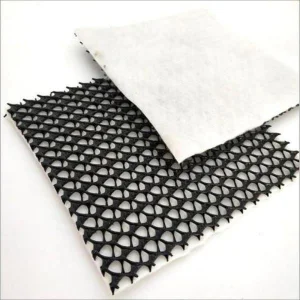
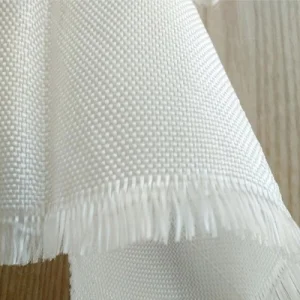
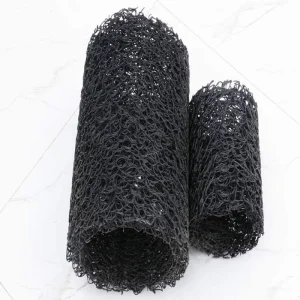
Discover our primary certified concrete canvas solutions engineered for slope stabilization, anti-seepage canals, and extreme hydraulic protection.
A paradigm shift in erosion control and hydraulic lining, replacing traditional shotcrete with speed and efficiency.
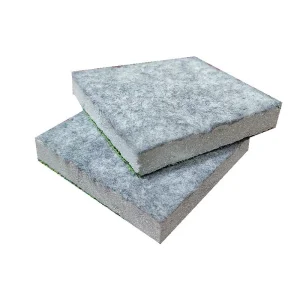
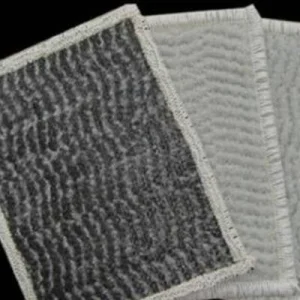
Commonly referred to as a Concrete Canvas or Geosynthetic Cementitious Composite Mat (GCCM), a cement blanket is a flexible, concrete-impregnated fabric that hardens upon hydration to form a thin, durable, waterproof, and fire-resistant concrete layer. This engineered material merges the structural properties of conventional concrete with the flexible, lightweight parameters of geotextiles.
By trapping a dry, proprietary cement mixture within a 3D fiber matrix and coupling it with a completely impermeable geomembrane backing, cement blankets allow engineers to construct concrete armor without the need for heavy mixing machinery, spray equipment, or complex formwork. This brings unprecedented logistical efficiency to remote sites globally.
Under international standards such as ASTM D8364, GCCMs are classified into specific grades (Type I, II, III) based on compressive, flexural, and physical load-bearing requirements. Manufacturers like Shandong Hongyue design these materials to withstand extreme environments, including freeze-thaw cycles, high UV radiation, and acidic runoff.
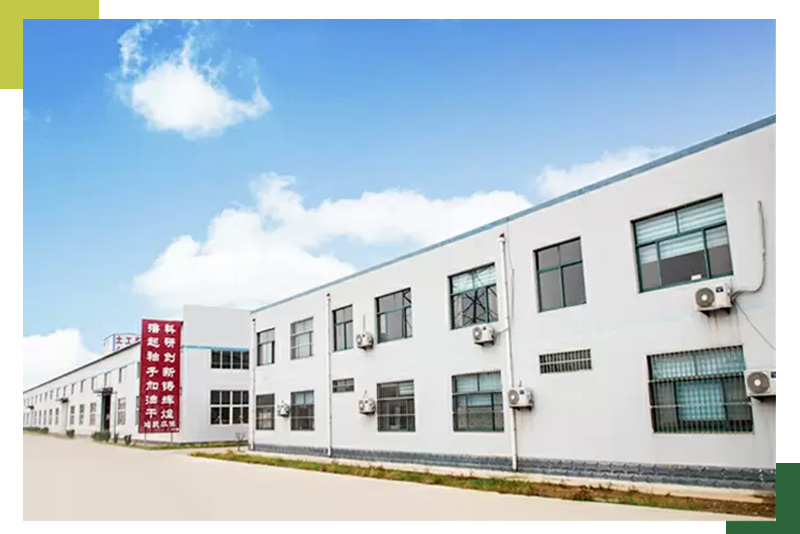
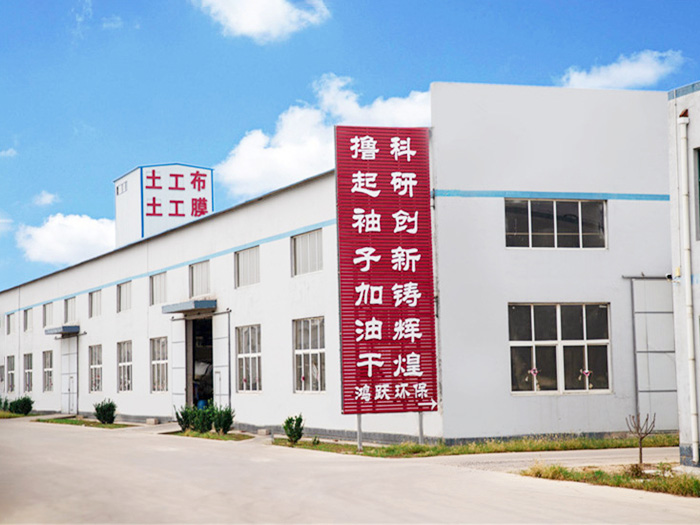
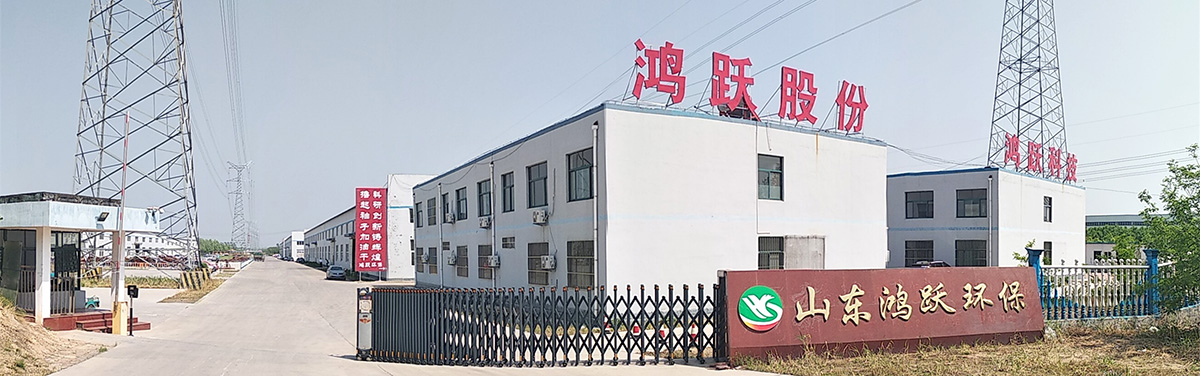
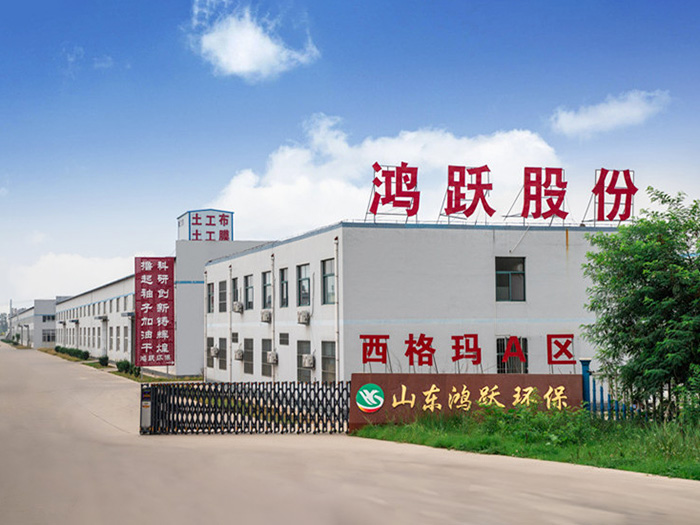
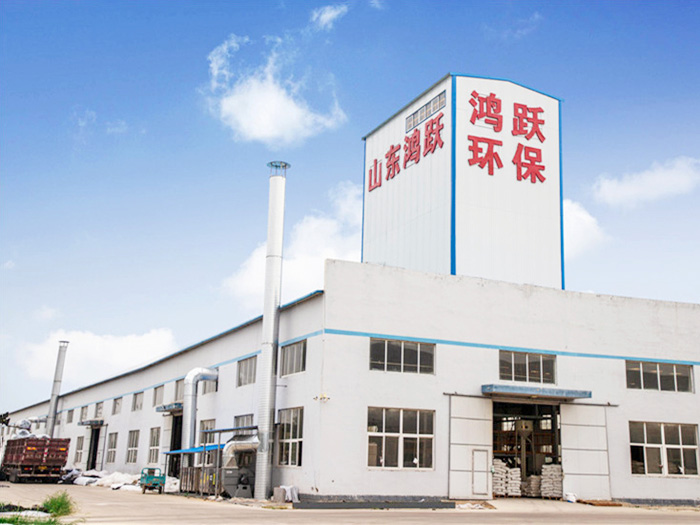
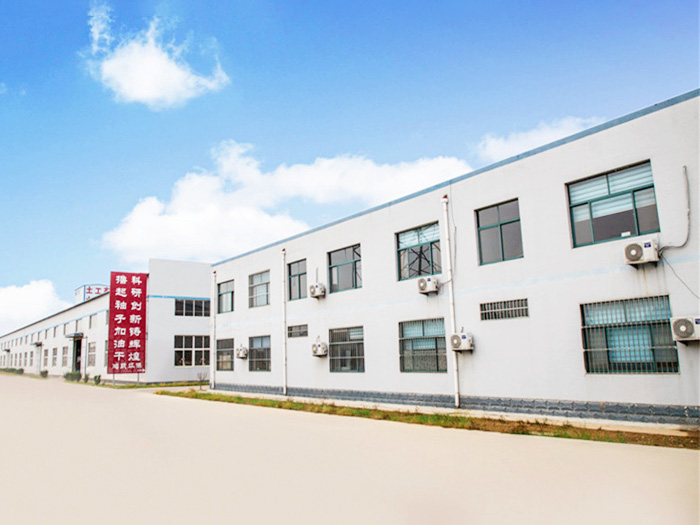
Located at the north end of Fufeng Street, Lingcheng District, Dezhou, Shandong Province, Shandong Hongyue Environmental Engineering Co., Ltd. is a scientific and technological geotechnical material manufacturer integrating engineering material production, sales, design, and construction services. The company was officially registered with the Lingcheng District Market Supervision and Administration Bureau of Dezhou City on April 6, 2023, boasting a robust registered capital of 105 million yuan.
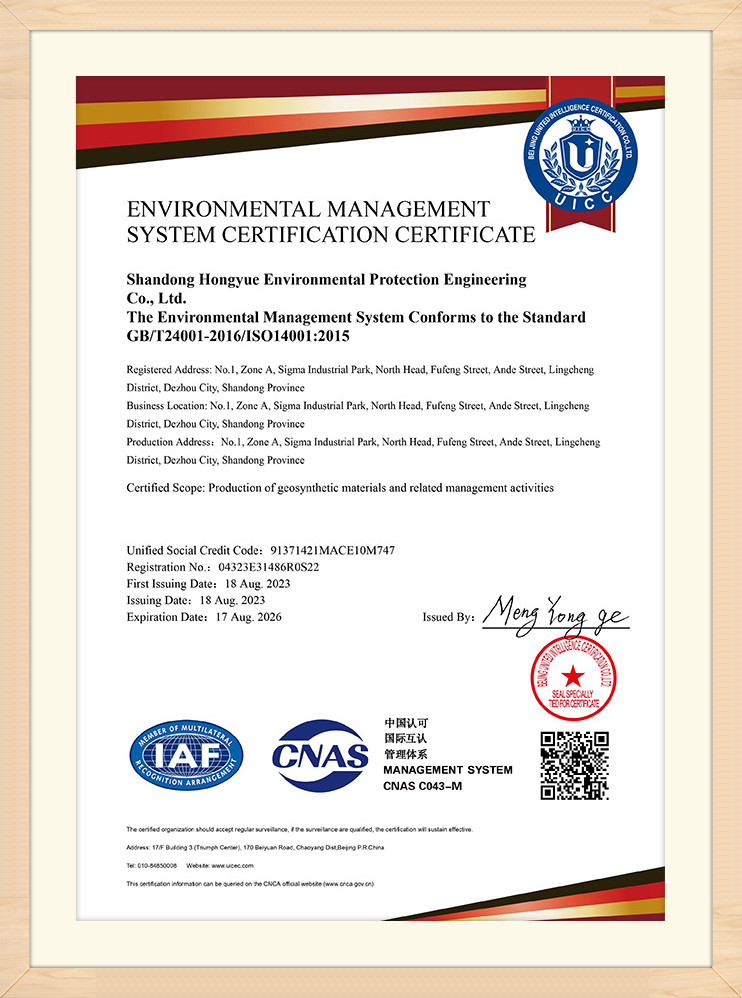
As one of the largest production bases of geotechnical materials in China, we leverage a superior geographical location and highly integrated transport systems to supply global infrastructure projects. Our production and testing processes have successfully achieved compliance with ISO9001 international quality system certification, ISO14000 environmental system certification, and ISO45001 occupational health and safety management system certification.
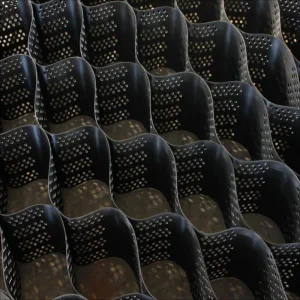
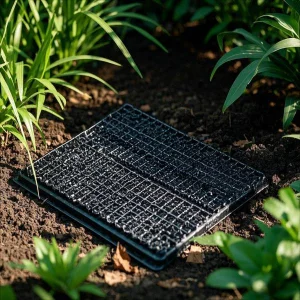
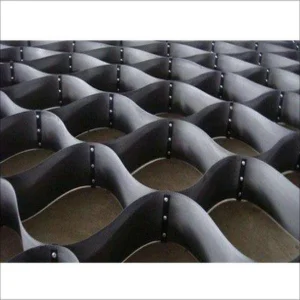
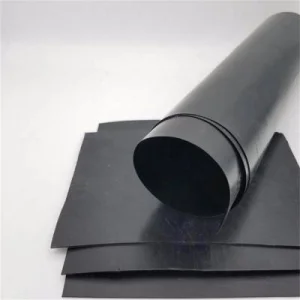
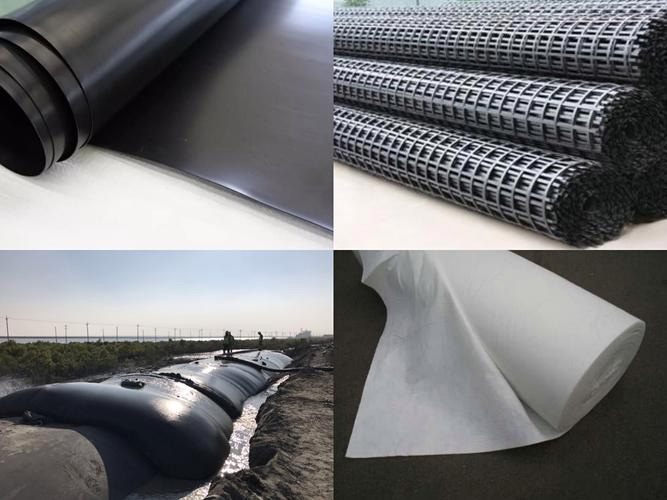
We focus on manufacturing a versatile suite of anti-seepage materials, including geotextiles, geomembranes, composite geomembranes, bentonite waterproof blankets (GCLs), 3D composite drainage nets, geocells, and cement blankets.
We provide a single-source integrated supply structure. Our team delivers professional technical guidance, detailed design engineering consults, and 24-hour global service for site operations.
Our systems protect railways, highways, bridges, tunnels, municipal reservoirs, drainage canals, artificial lakes, landfill liners, tailings ponds, and agricultural sectors across Europe, the US, and Australia.
Navigating ASTM standards, roll specifications, and structural metrics for commercial design integration.
When procurement managers and civil design consultants specify cement blankets, understanding standard classifications is crucial. GCCMs must meet strict mechanical targets, particularly regarding flexural strength and puncture resistance. Selecting the appropriate thickness (e.g., 5mm, 10mm, or 15mm) changes based on flow velocity and mechanical wear expectations.
| Classification (ASTM D8364) | Typical Thickness | Flexural Strength (Initial) | Primary Target Applications |
|---|---|---|---|
| Type I (Light Duty) | 5 mm - 6 mm | ≥ 3.0 MPa | Low-velocity drainage ditches, weed suppression, temporary erosion controls. |
| Type II (Medium Duty) | 8 mm - 10 mm | ≥ 4.0 MPa | Roadside highway ditches, culvert linings, riverbank slope protection, bund linings. |
| Type III (Heavy Duty) | 12 mm - 15 mm | ≥ 5.0 MPa | Mining spillway channels, high-velocity storm channels, railway wave walls. |
International shipping introduces logistical requirements. Unhydrated cement blankets must remain completely dry. Our specialized moisture-proof vacuum packaging prevents premature hydration from high humidity during ocean freight. Standard rolls are packaged in heavy-duty wooden crates or steel frames, ready for rapid mechanical deployment via spreader beams, while smaller "man-portable" rolls are packaged to allow manual installation in hard-to-reach locations.
How global EPC firms coordinate cement blankets with supplementary geosynthetics for long-term environmental protection.
Combining cement blankets with high-density geomembranes creates an impermeable barriers. The geomembrane prevents structural seepage, while the hydrated cement blanket armors the surface against animal burrows, high-velocity currents, and structural cleaning equipment.
For steep railway cuts and highway embankments, cement blankets conform to the ground topology. Securing the matting with custom earth anchors stops soil erosion, prevents slope slide failures, and eliminates weed growth, reducing maintenance costs.
In chemical and municipal landfill operations, runoff must be strictly isolated. Cement blankets provide durable lining for diversion channels, perimeter ditches, and secondary containment structures, withstanding exposure to highly concentrated waste effluents.
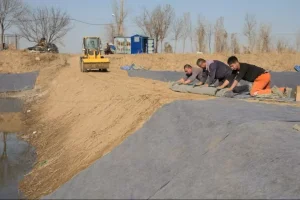
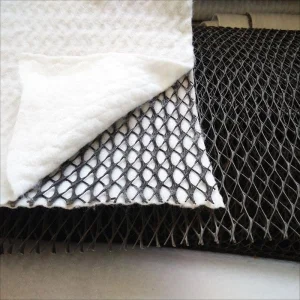
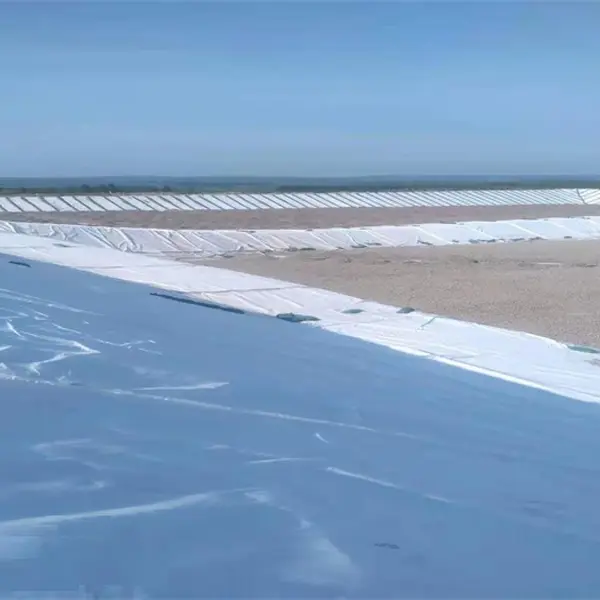
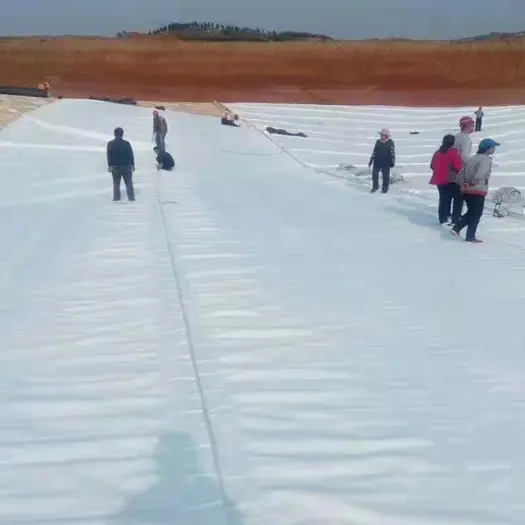
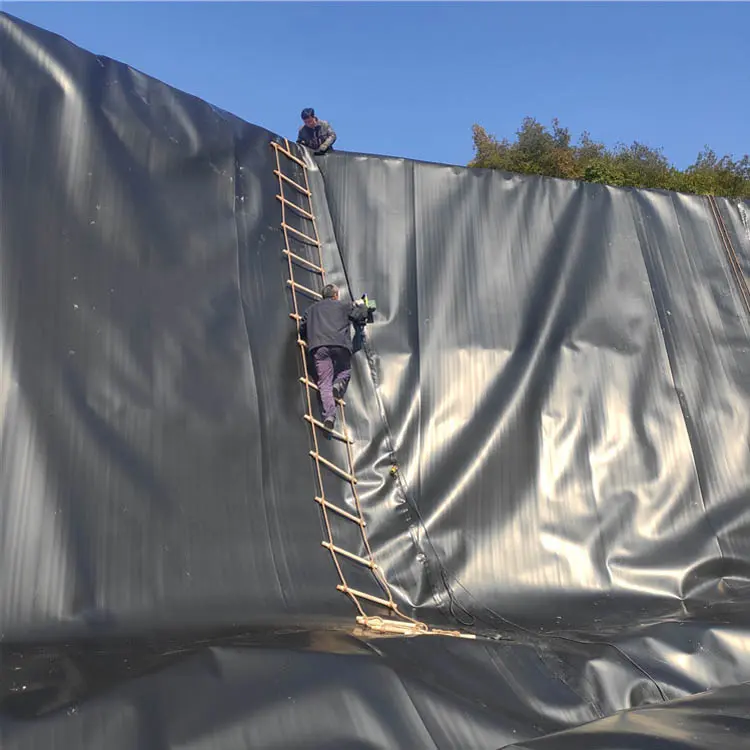
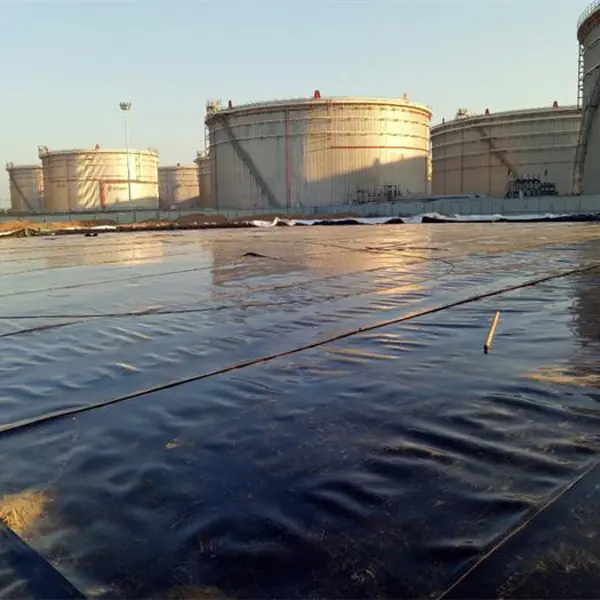
Real-world application of geocomposite systems including geomembranes and drainage networks in hydraulic projects:
From raw polypropylene melt extrusion to laboratory quality inspection systems.
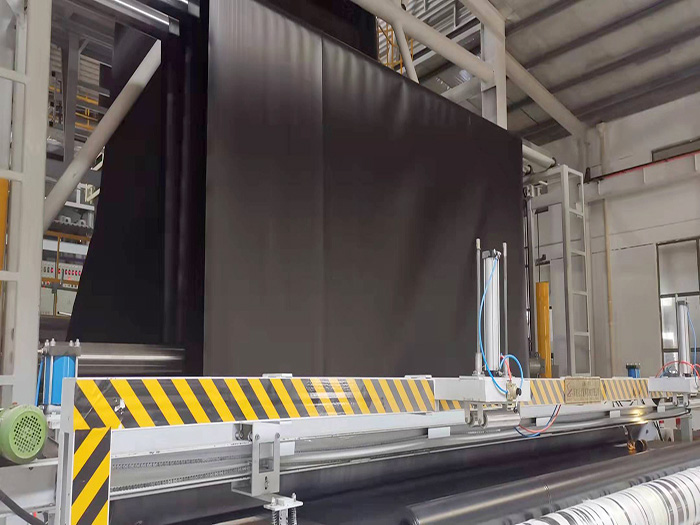
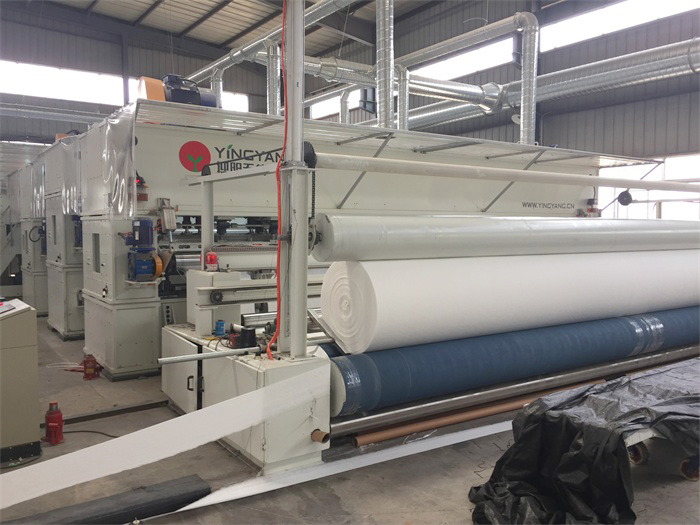
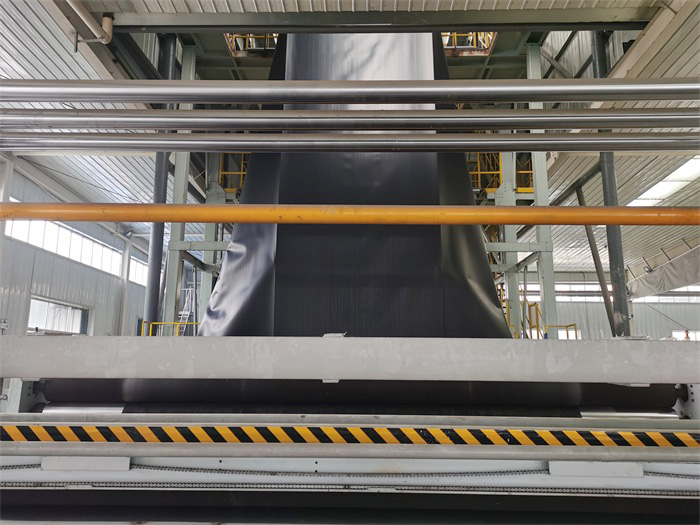
Creating high-performance geosynthetics requires control over the fiber extrusion and needle-punching assembly. At Shandong Hongyue, we employ automated production lines to ensure uniform thickness, accurate dry powder distribution, and durable geotextile bonding. The manufacturing framework relies on several core stages to guarantee the physical properties of our composite matrices:
High-grade polyester chips, polypropylene filament, and viscose fibers are inspected and stored. High-purity dry cement powders are formulated to ensure correct setting times post-hydration.
Polyester raw materials are processed through screw extruders to form a uniform web. Needle-punching bonds the fibers, creating a 3D matrix capable of locking the dry cement blend in place.
The fibers are drafted to adjust mechanical strength, thickness, and weave density, guaranteeing the mat has high puncture resistance and flexible handling limits.
The assembled mats are rolled, trimmed, and wrapped in vacuum-sealed, moisture-proof barrier foil. Every production lot undergoes testing for thickness, density, and flexural load-bearing capacity.
Practical technical processes to ensure leak-free joints, stable anchoring, and correct hydration.
1. Ground Preparation & Surface Cleansing:
Ensure the subgrade is level and free of large stones, roots, or sharp debris. Compact the soil to prevent localized settling, which could place unnecessary stress on the uncured cement blanket.
2. Roll Deployment & Overlap Layout:
Lay the mats starting at the top of the slope and moving downwards, allowing downstream layers to overlap like shingles. Joints should overlap by a minimum of 100mm in the direction of the water flow.
3. Securing Overlaps & Anchoring:
Secure joints using screws or physical anchors driven through the overlapping layers. Use anchor trenches at the crest of the slope to prevent water ingress behind the blanket.
4. Controlled Water Hydration:
Hydrate the deployed matting with a uniform water spray, avoiding high-pressure streams that could wash away dry cement. Water should be applied at least twice within the first hour of installation. In hot or arid climates, repeat spraying to prevent premature drying.
Innovations in self-healing matrices, low-carbon geopolymer concrete, and smart sensor integration.
Traditional OPC (Ordinary Portland Cement) is responsible for considerable CO2 emissions. Next-generation cement blankets incorporate fly ash and slag-based geopolymers, cutting production emissions by up to 40% while matching performance criteria.
Integrating crystalline micro-admixtures into the dry cement core allows the cured blanket to self-seal micro-cracks. When water accesses a crack, it activates the crystalline compound to seal the gap, maintaining impermeability.
Integrating fiber-optic sensors into the reinforcement fabric allows real-time structural monitoring. Operators receive stress and deflection reports, helping identify shifting ground before failure occurs.
Addressing standard design queries, mechanical properties, and deployment criteria.
Typically, a cement blanket cures to 80% of its ultimate strength within 24 hours of hydration. Full mechanical curing is achieved at the 28-day mark, in line with standard concrete curing timelines. The mat remains flexible for roughly 1 to 2 hours after initial hydration, during which minor field adjustments can be made.
Yes. Cement blankets can hydrate underwater and in damp environments. If installing in freezing conditions, ensure the water does not freeze during the initial hydration period. Using warm water or setting accelerants can prevent frost damage.
Our top fiber layer contains UV-stabilizers to protect the reinforcement matrix from degrading. The composite has a designed service life exceeding 50 years under standard environmental conditions, backed by ASTM testing.
The integrated HDPE backing membrane protects the subgrade from chemical seepage. For highly acidic or alkaline conditions (pH levels below 4 or above 11), we formulate the dry cement blend with specialized high-alumina or sulfate-resistant cements.
Cement blankets can be installed on vertical rock faces or steep embankments up to a 90-degree slope. The limiting factor is the shear stability of the underlying soil, which must be supported using soil nails, geocells, or anchor plates.
Saltwater or brackish water can be used for hydration without affecting the material's compressive strength. The water must be free of oil, organic compounds, and large particulate suspended solids that could block hydration channels.
Explore our complete range of high-performance geocells, geomembranes, drainage boards, and geotextiles.
 Hongyue