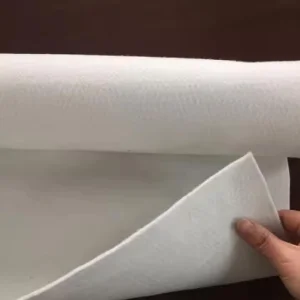
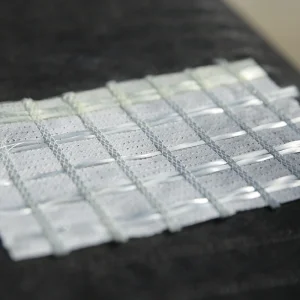
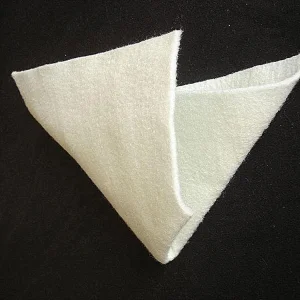
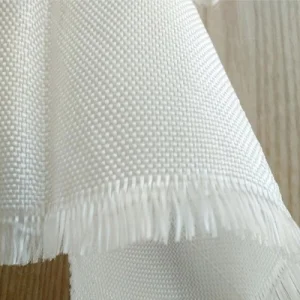
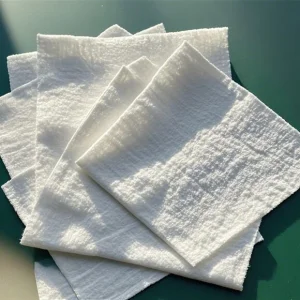
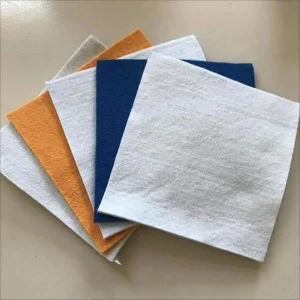
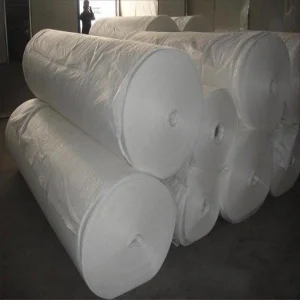
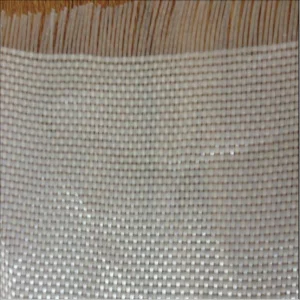
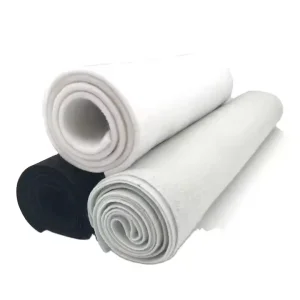
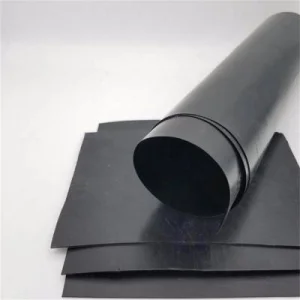
Explore our foundational range of certified non-woven, warp-knitted, and high-strength filament geotextiles manufactured for infrastructure durability.
In the macro-landscape of global civil engineering, geotextiles have evolved from optional separation sheets to highly specialized, load-bearing engineering mediums. As massive structural investments surge globally—ranging from high-speed railway networks in Asia to structural reinforcement projects throughout Europe and South America—the demand for reliable, long-lasting geosynthetic elements has peaked.
Geotextiles are deployed primarily to fulfill four core engineering parameters: Filtration, Separation, Drainage, and Reinforcement. By acting as a dynamic filter, these synthetic sheets prevent soil migration while allowing water permeability, stabilizing critical structures like dams, embankments, and heavy haulage roadways.
Selecting the right exporter and evaluating the geotextile pricelist is not merely a purchasing task; it is a critical engineering decision. High-quality non-woven and woven fabrics must withstand chemical environments, heavy shear loading, and environmental oxidation over decades. This guide explores the engineering specs, economic parameters, and manufacturing steps defining top-tier geotextile distribution today.
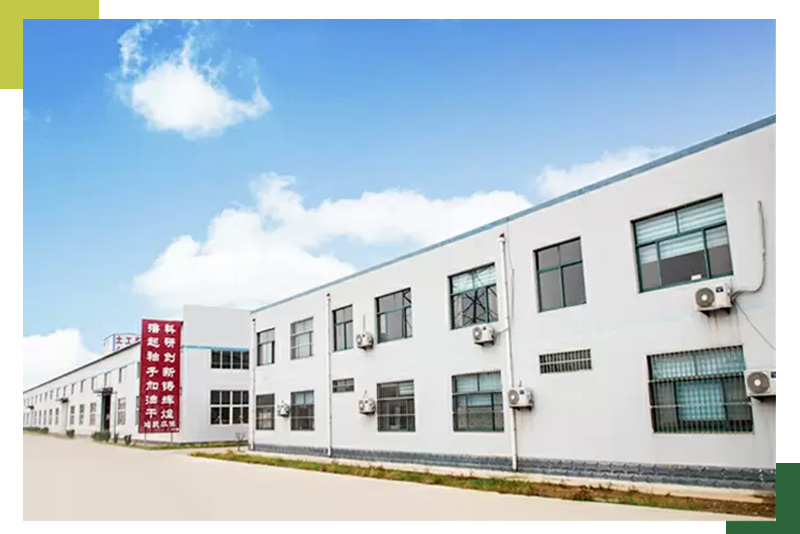
A leading force in environmental engineering and high-durability geosynthetics.
Established as a core scientific and technological powerhouse, Shandong Hongyue Environmental Engineering Co., Ltd. is located at the north end of Fufeng Street, Lingcheng District, Dezhou, Shandong Province. Our company integrates advanced engineering material production, sales, custom system design, and specialized construction services. We registered with the Lingcheng District Market Supervision and Administration Bureau of Dezhou City with a massive registered capital of 105 million yuan. Today, our facility stands as one of the largest production bases for geotechnical materials in China, leveraging our superior geographical location and convenient transport routes.
As an active member of the Dezhou Geotextile Association, Shandong Hongyue Environmental Engineering Co., Ltd. maintains a strong R&D program aimed at expanding our material portfolio. Our diverse range of geosynthetics, waterproofing membranes, bentonite blankets (GCL), and composite drainage nets is trusted in key projects across continents. We maintain a reliable supply chain system that ensures prompt delivery to challenging civil, environmental, and mining operations worldwide.
Our production systems adhere to strict global standards, ensuring every batch manufactured has predictable performance and verified durability properties.
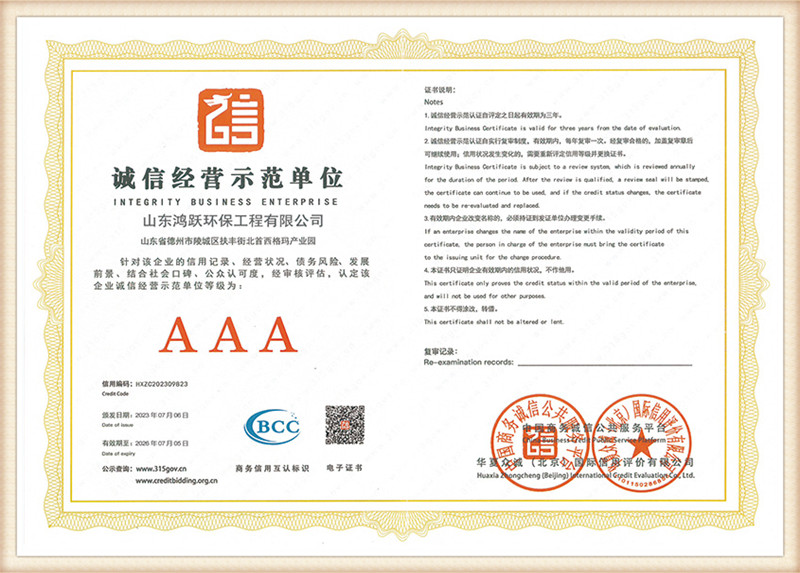
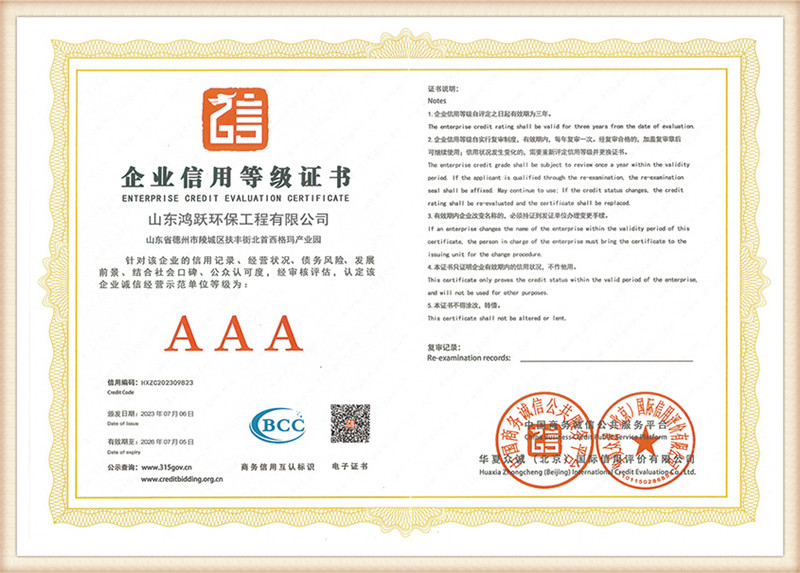
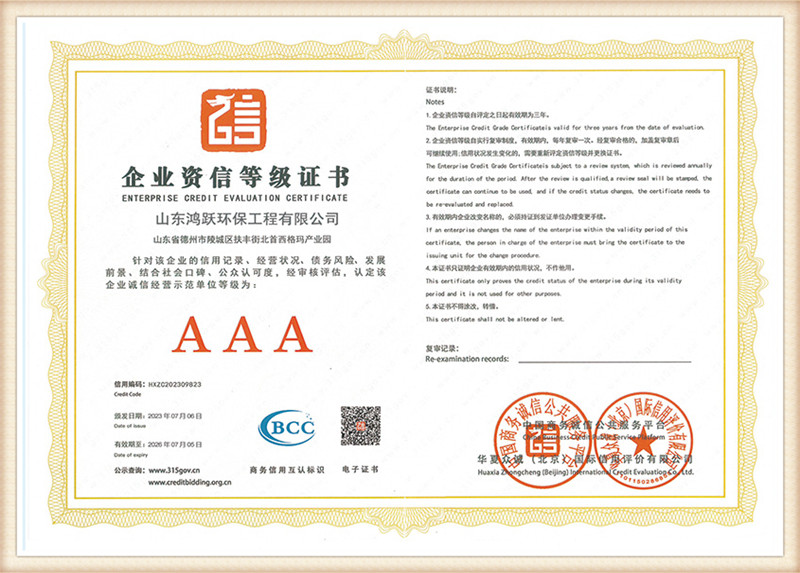
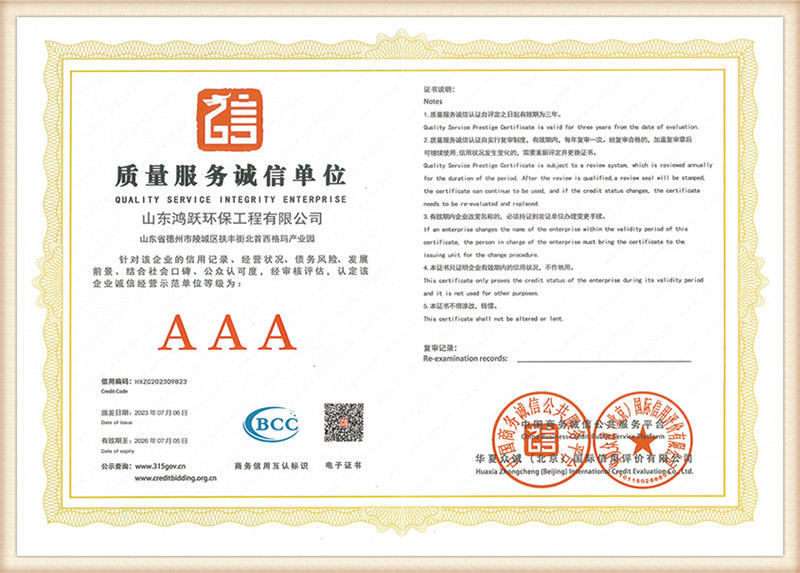
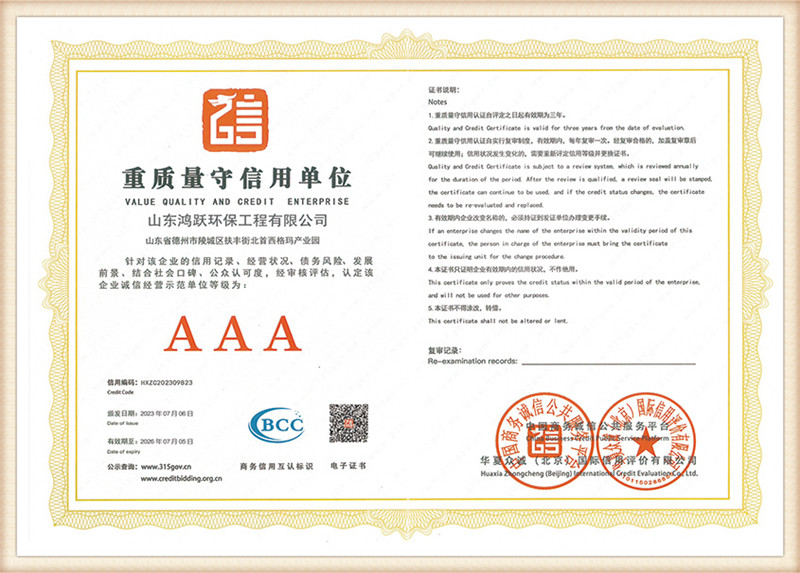
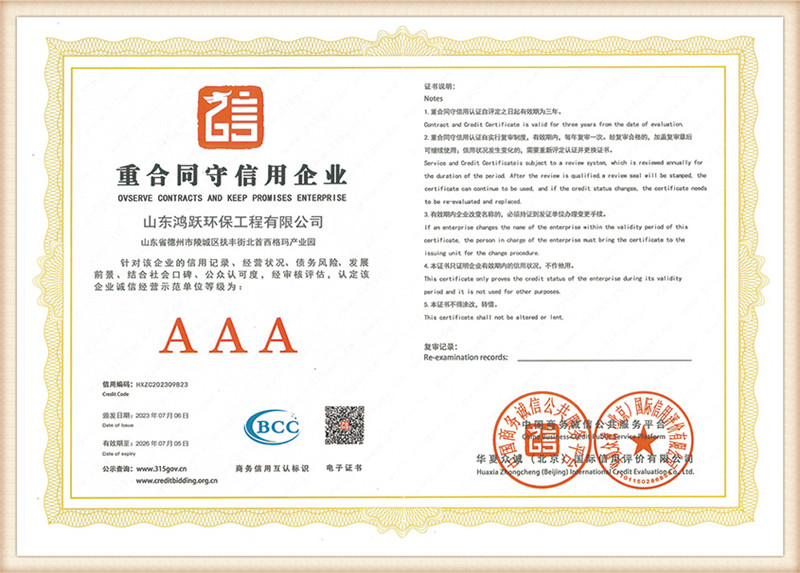
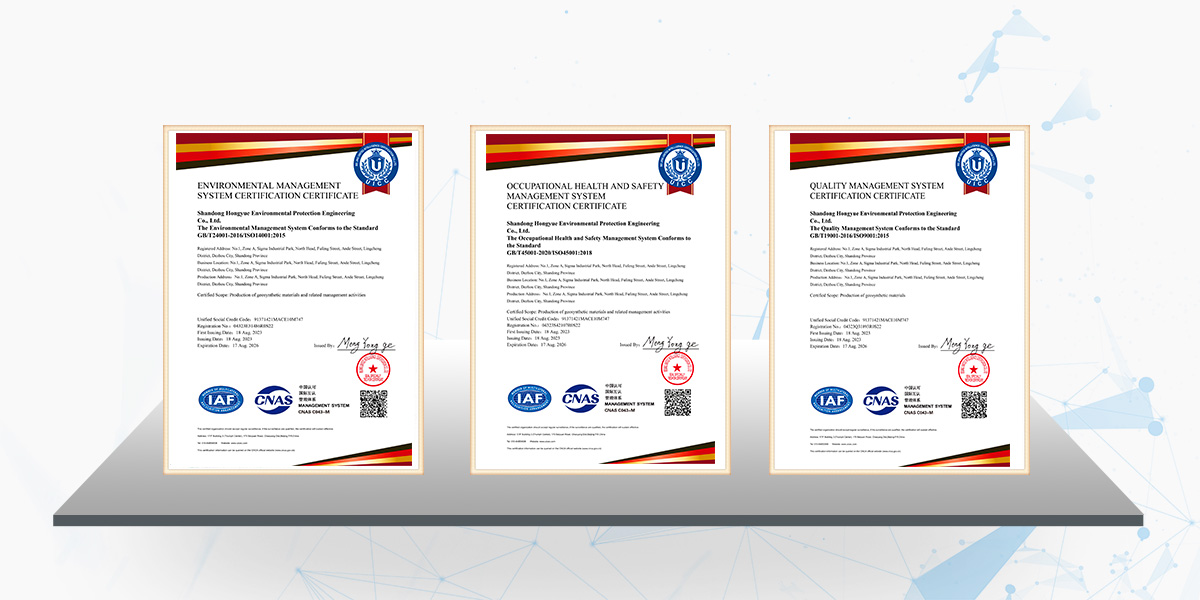
Step-by-step documentation of our advanced geotextile extrusion and quality checking protocols.
Our raw material preparation strictly selects premium polyester (PET) chips, virgin polypropylene (PP) filament, and viscose fibers. These materials undergo immediate inbound testing to verify polymer density, melting index, and tensile qualities, securing the structural performance of the end product.
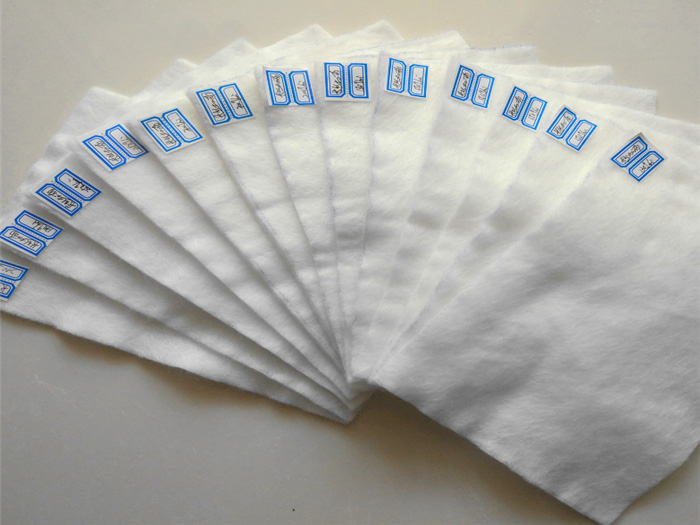
Polyester slices are melted at high temperatures and extruded into fibers via precise screw extruders. Mixing in polypropylene filament and viscose fibers under computerized pressure and thermal controls ensures a uniform, stable molten mixture free of impurities.
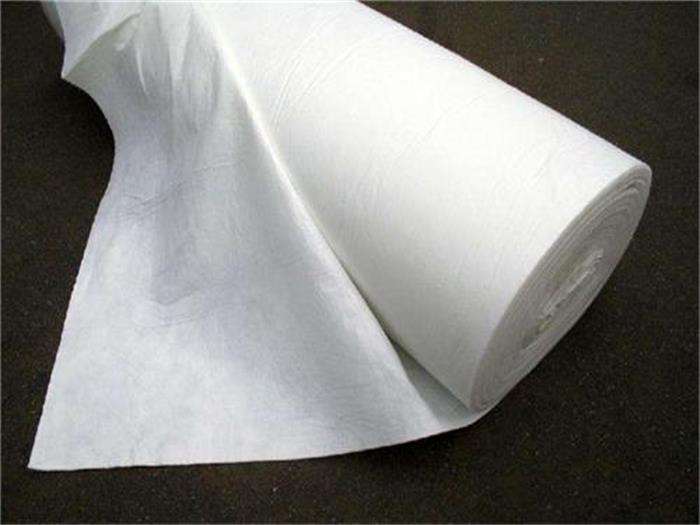
The extruded polymer melt is spun through custom spinnerets to form a dense micro-fiber web. This web is laid uniformly on the conveyor line, where we adjust the lay density, orientation, and thickness to achieve anisotropic strength qualities requested by international projects.
The fibrous web is fed into a needle loom for mechanical interlocking. Thousands of structured needles punch the web, interlocking the fibers to create high tensile strength and puncture resistance. After curing, the material achieves its stable physical specifications.
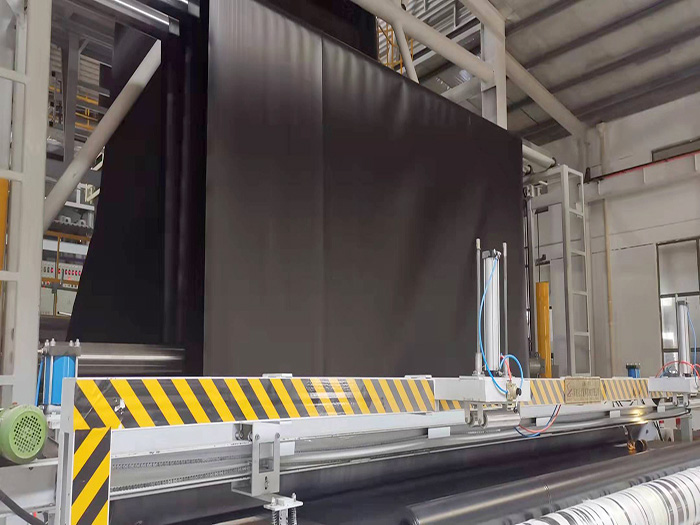
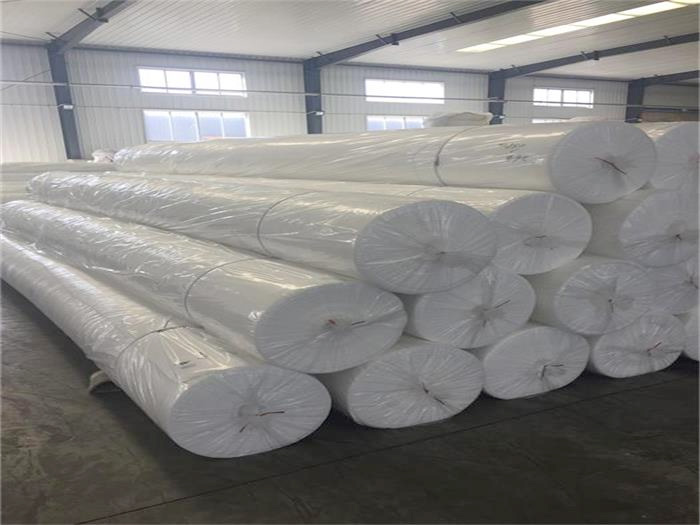
Our automated systems slit and roll the cured geotextiles into standard or custom widths (up to 6 meters). Proper tension winding prevents fiber elongation during packing, and heavy-duty protective bags protect the rolls from UV damage during transport.
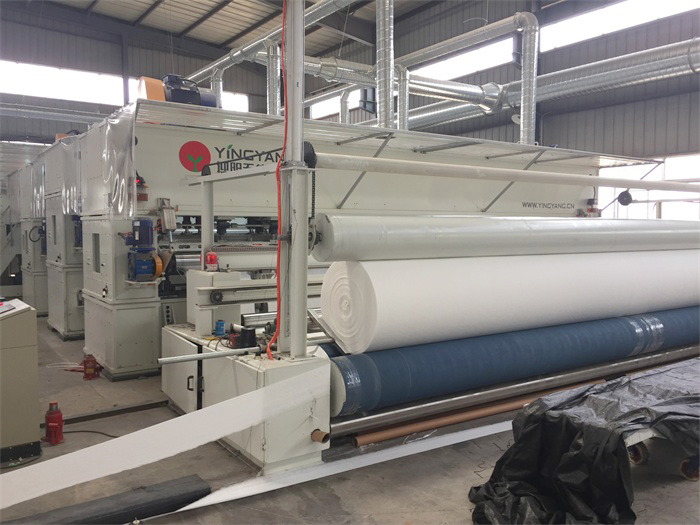
Prior to shipment, samples from each batch undergo rigorous testing. Standard properties tested include: CBR puncture resistance, wide-strip tensile strength, effective opening size (EOS), water permeability, and UV aging properties. Only certified batches are released for export.
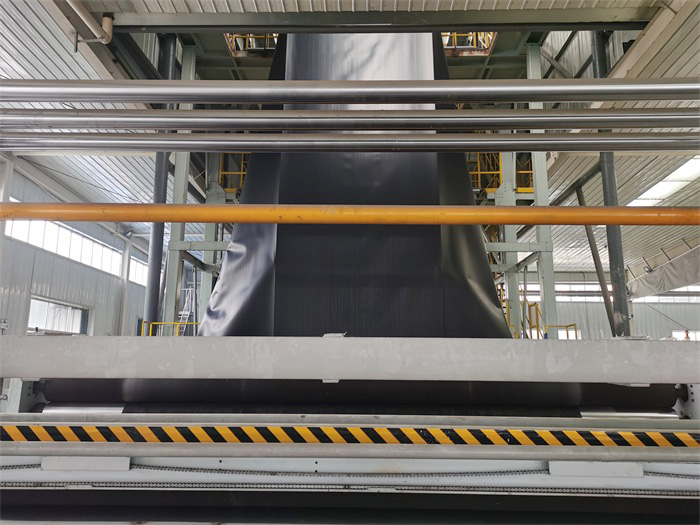
How geomembranes and geotextiles integrate into structural works to protect the environment and reinforce infrastructure.
Modern engineering demands materials engineered for specific geotechnical challenges. Selecting the correct geomembrane or geotextile determines the integrity of structures exposed to high hydraulic pressure, structural loads, and aggressive chemical environments.
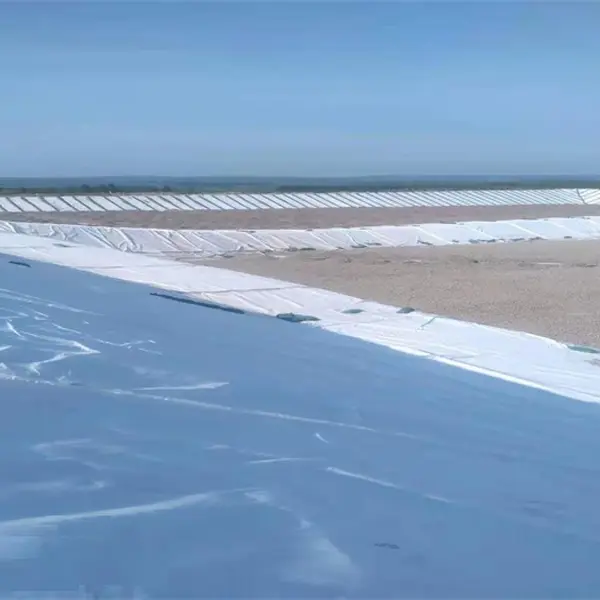
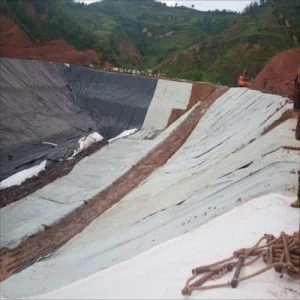
Maintains reservoir stability by preventing water leakage through subgrades and surrounding rock walls.
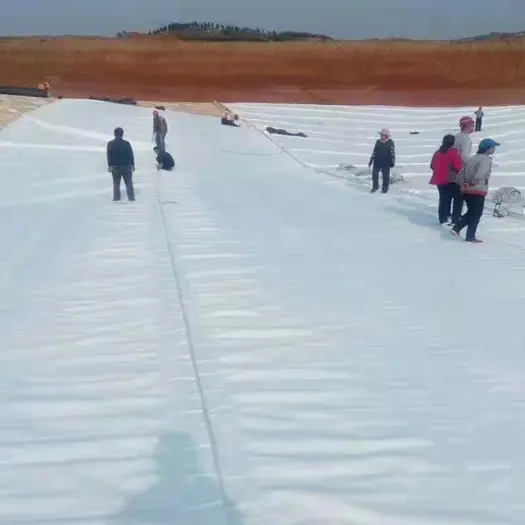
Prevents soil erosion and maintains channel routes by managing water flow along embankment lines.
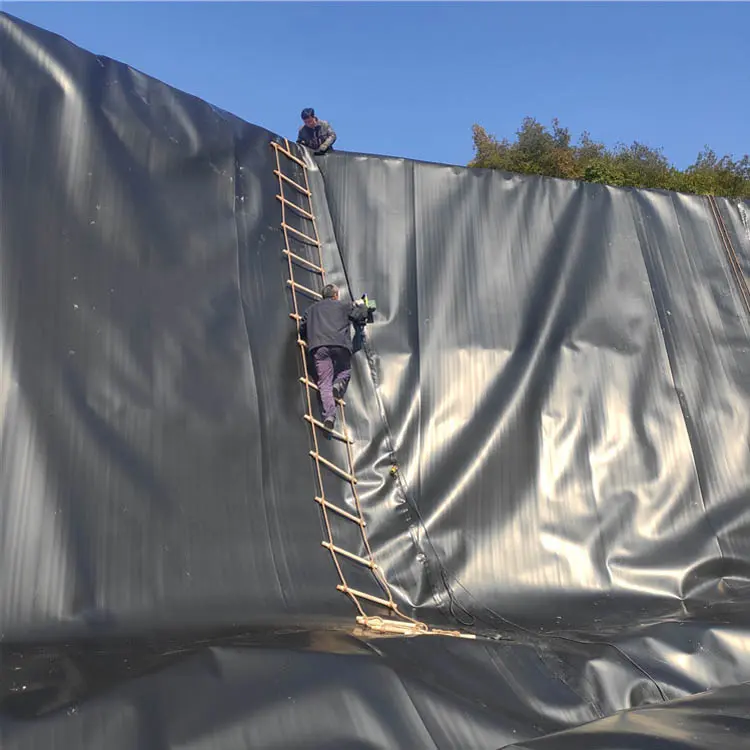
Provides critical barriers against leachate run-off to protect surrounding groundwater networks.
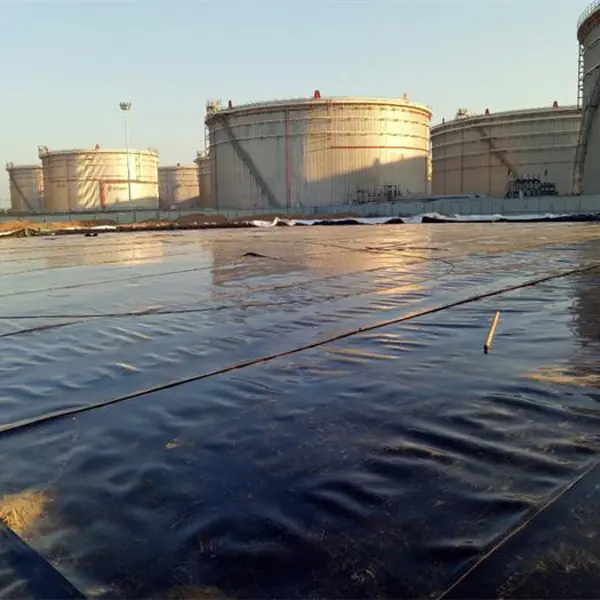
Secures petrochemical sites with chemically resistant barriers that contain spills and protect soil.
Understanding the cost composition of geotextiles to optimize your project's supply chain budget.
Geotextile pricing depends on raw material costs and manufacturing specifications. When evaluating quotes, consider these three core cost components:
*Prices below are standard industry estimates and vary based on raw material indexes, customization, and purchase volume. For exact project quotes, contact our sales department.
| Material Category | Density (g/m²) | Est. FOB Price Range (USD/m²) | Primary Application |
|---|---|---|---|
| Polyester Short-Fiber (PET) Non-Woven | 150g - 300g | $0.18 - $0.45 | Subgrade Filtration & Drainage |
| Polyester Filament (PET) Non-Woven | 200g - 400g | $0.32 - $0.78 | Railways, Airports & Landfills |
| Polypropylene (PP) High-Strength Non-Woven | 150g - 500g | $0.40 - $1.20 | Alkaline Soil & Waste Containment |
| Reinforced Filament Woven Geotextile | 200g - 600g | $0.55 - $1.65 | Slope Stability & Earth Retaining |
Best practices for subgrade preparation, material selection, laying, and maintaining structural geosynthetics.
Even high-strength geotextiles can fail if damaged during installation. Our technical engineering division recommends adhering to these layout protocols:
We verify performance criteria in our internal lab to ensure structural compliance with international standards:
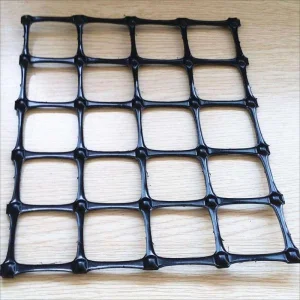
Explore our highly specialized geocells, 3D geonets, and CE-certified geomembranes for critical erosion control and environmental containment.
Industry answers to common questions about certifications, logistics, and material applications.
Contact our technical sales team for sample requests, lab test reports, or a customized project quote.
Request Technical Spec Sheet Hongyue