 Hongyue
1 / 3
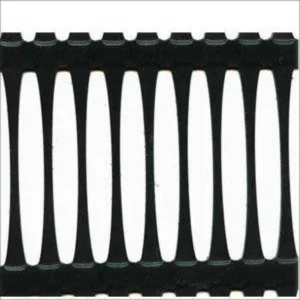
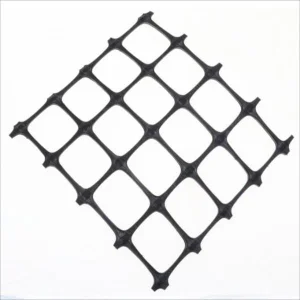
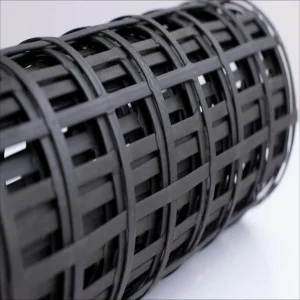
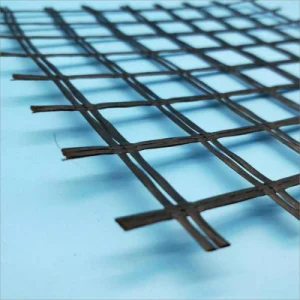
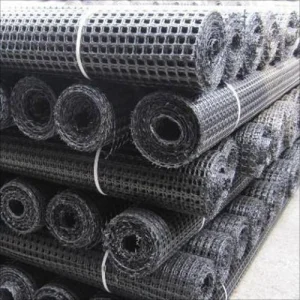
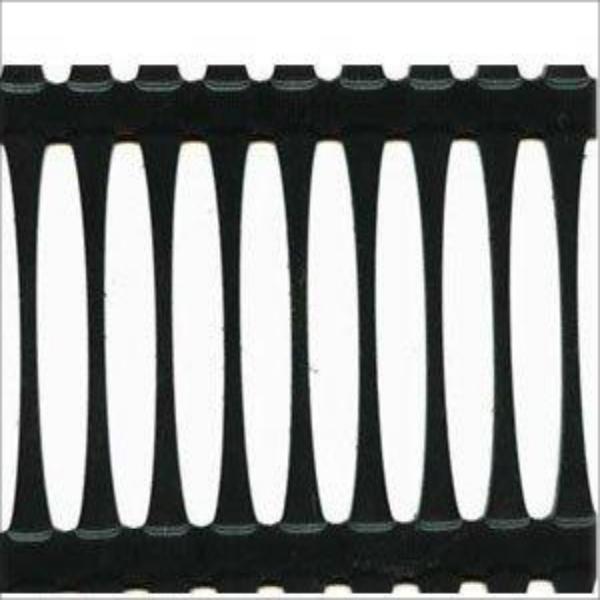
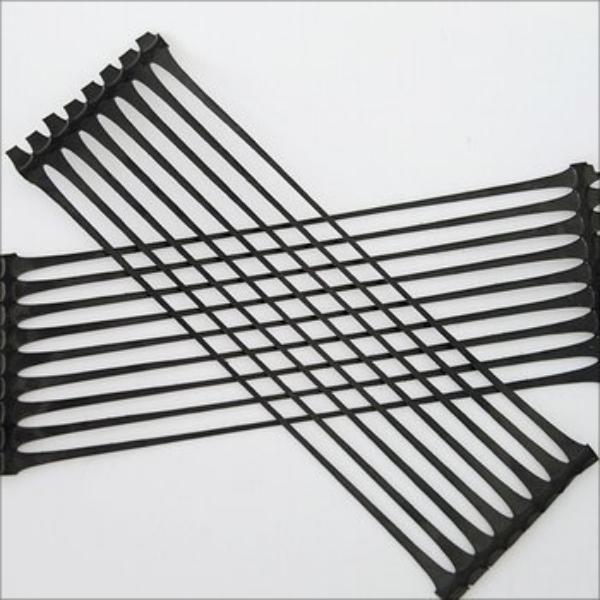
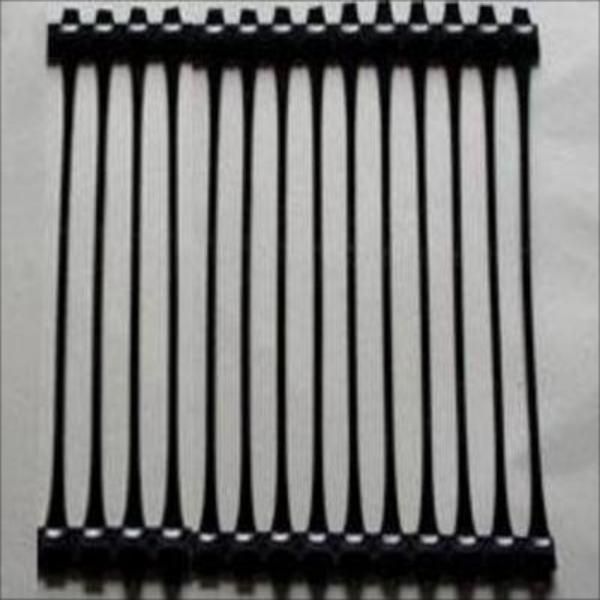
Uniaxially – stretched plastic geogrid is a kind of geosynthetic material. It uses high – molecular polymers (such as polypropylene or high – density polyethylene) as the main raw materials and also adds anti – ultraviolet, anti – aging and other additives. It is first extruded into a thin plate, then regular hole nets are punched on the thin plate, and finally it is longitudinally stretched. During the stretching process, the molecular chains of the high – molecular polymer are re – oriented from the original relatively disordered state, forming an oval – shaped network – like integral structure with evenly distributed and high – strength nodes.
The tensile strength can reach 100 - 200MPa, close to the level of low - carbon steel. It has quite high tensile strength and rigidity, which can effectively disperse and transfer the stress in the soil and improve the bearing capacity and stability of the soil mass.
Under the action of long - term continuous load, the deformation (creep) tendency is very small, and the creep - resistance strength is much better than that of other geogrid materials, which plays an important role in increasing the service life of the project.
Due to the use of high - molecular polymer materials, it has good chemical stability and corrosion resistance. It can be used for a long time under various harsh soil and climatic conditions without being easily aged or embrittled.
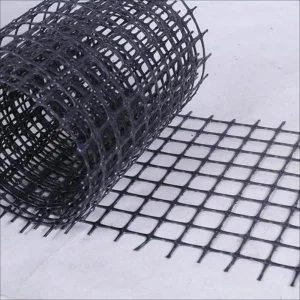
It is light - weight, easy to transport, cut and lay, and has a good fixing effect. It has good bonding performance with soil or other building materials and is easy to combine with various civil - engineering structures.
The reinforced earth retaining structure is a flexible structure that can adapt to slight deformation of the foundation and effectively absorb seismic energy, offering performance that rigid structures cannot match.
It can quickly improve the bearing capacity of the foundation and control the development of settlement. It has a side - limiting effect on the road base, distributes the load to a wider sub - base, reduces the thickness of the base, reduces the project cost and extends the service life of the road.
Laid at the bottom of the asphalt or cement pavement layer, it can reduce the rut depth, extend the anti - fatigue life of the pavement, and also reduce the thickness of the asphalt or cement pavement, achieving the purpose of cost - saving.
It can be used to reinforce the slopes of embankments and retaining walls, reduce the over - filling amount during embankment filling, make the edge of the shoulder easier to compact, reduce the risk of later slope collapse and instability, reduce the occupied area, extend the service life and reduce the cost.
When made into gabions and used together with geogrids, it can prevent the embankment from being scoured by seawater. The permeability of gabions can slow down the impact of waves and extend the life of the embankment, saving manpower and material resources.
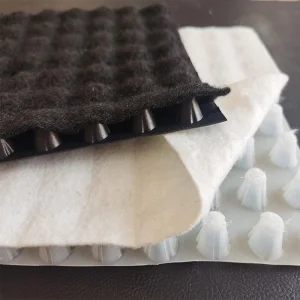
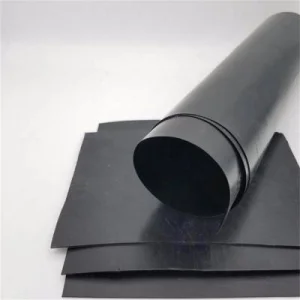
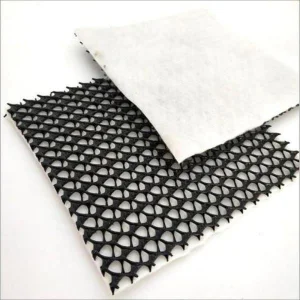
Used in combination with other geosynthetic materials for reliable structural containment and base reinforcement.
| Items | Index Parameters |
|---|---|
| Material | Polypropylene (PP) or High - Density Polyethylene (HDPE) |
| Tensile Strength (Longitudinal) | 20 kN/m - 200 kN/m |
| Elongation at Break (Longitudinal) | ≤10% - ≤15% |
| Width | 1m - 6m |
| Hole Shape | Long - oval |
| Hole Size (Long - axis) | 10mm - 50mm |
| Hole Size (Short - axis) | 5mm - 20mm |
| Mass per Unit Area | 200 g/m² - 1000 g/m² |
| Creep Rupture Strength (Longitudinal, 1000h) | ≥50% of Nominal Tensile Strength |
| UV Resistance (Retained Tensile Strength after 500h Aging) | ≥80% |
| Chemical Resistance | Resistant to common acids, alkalis and salts |
They are primarily manufactured from high-molecular polymers, specifically Polypropylene (PP) or High-Density Polyethylene (HDPE), and formulated with anti-ultraviolet and anti-aging additives to enhance durability.
The stretching process re-orients the molecular chains from a disordered state into an aligned longitudinal arrangement. This forms a high-strength, oval-shaped network with evenly distributed, robust nodes for optimal load bearing.
The nominal longitudinal tensile strength of uniaxially-stretched plastic geogrids ranges from 20 kN/m up to 200 kN/m, depending on the specific model and material composition.
Yes. Thanks to its high-molecular polymer formulation, the geogrid exhibits outstanding resistance to common acids, alkalis, and salts. It retains over 80% of its tensile strength even after 500 hours of intensive UV aging.
The geogrid distributes structural loads across a broader sub-base area, allowing for a reduction in base thickness. Additionally, it minimizes necessary over-filling in embankments and lowers transportation and installation expenses due to its light weight.