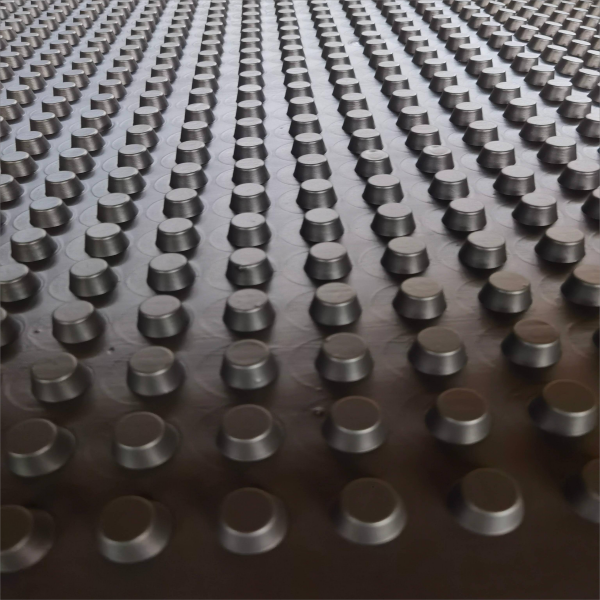
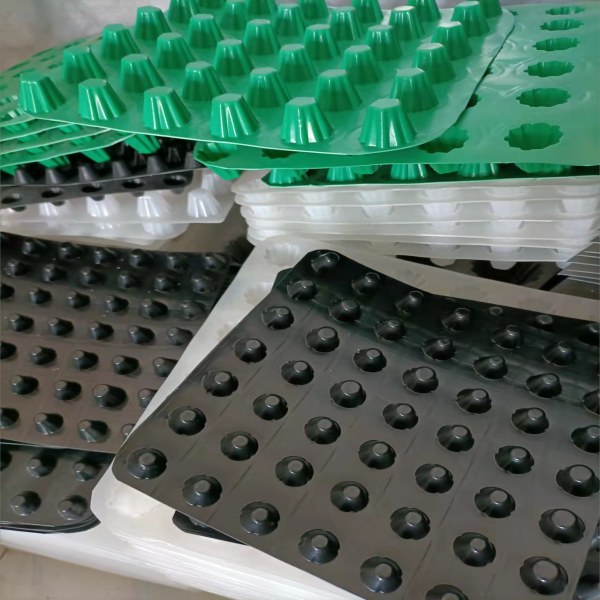
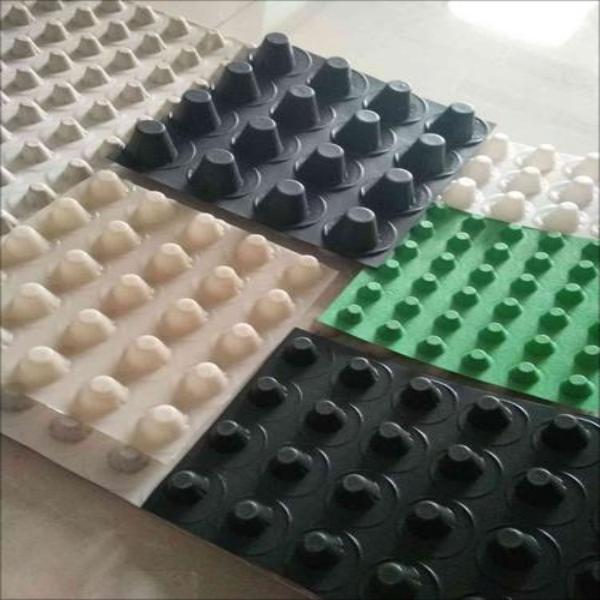
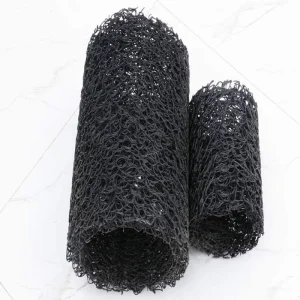
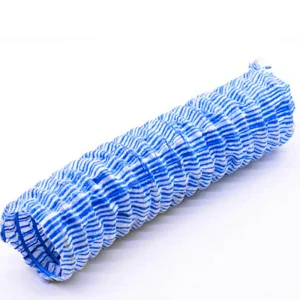
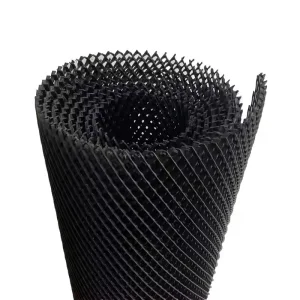
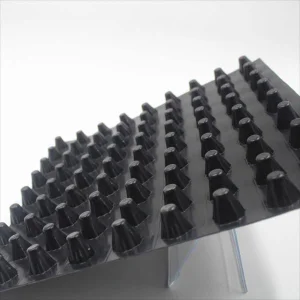
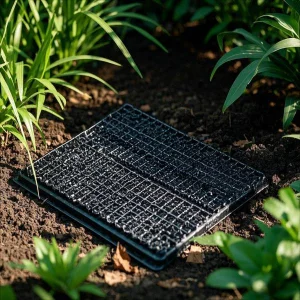
A plastic drainage board is a geosynthetic material used for drainage. It usually appears in a strip - like shape, with a certain thickness and width. The width generally ranges from a few centimeters to dozens of centimeters, and the thickness is relatively thin, usually around a few millimeters. Its length can be cut according to the actual project requirements, and the common lengths range from several meters to dozens of meters.
A plastic drainage board is a geosynthetic material used for drainage. It usually appears in a strip-like shape, with a certain thickness and width. The width generally ranges from a few centimeters to dozens of centimeters, and the thickness is relatively thin, usually around a few millimeters. Its length can be cut according to the actual project requirements, and the common lengths range from several meters to dozens of meters.
Structural Composition
Core Board Part
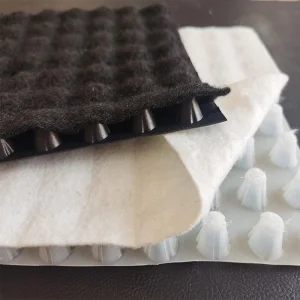
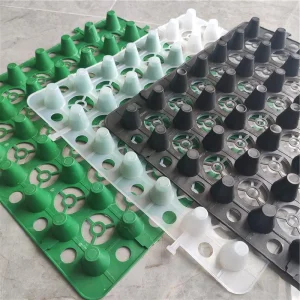
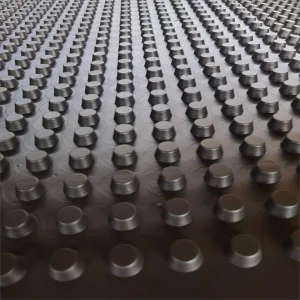
This is the core structure of the plastic drainage board. There are mainly two shapes of the core board, one is the flat-plate type, and the other is the wave-type. The drainage passage of the flat-plate-type core board is relatively straightforward, while the wave-type core board, due to its special shape, increases the length and tortuosity of the drainage passage and can provide better drainage effects. The material of the core board is mostly plastic, such as polyethylene (PE), polypropylene (PP), etc. These materials have good corrosion resistance and a certain strength and can withstand a certain pressure without deformation, ensuring the smoothness of the drainage passage.
Filter Membrane Part
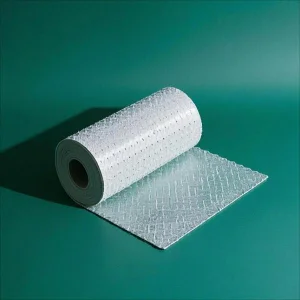
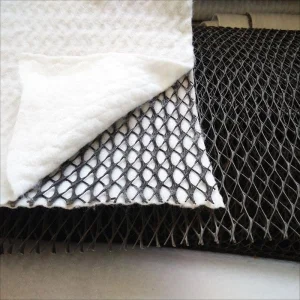
It wraps around the core board and functions as a filter. The filter membrane is usually made of non-woven geotextile. The pore size of it is specially designed to allow water to pass through freely while effectively preventing soil particles, sand grains and other impurities from entering the drainage passage. For example, in the drainage project of soft soil foundation, if there is no filter membrane or the filter membrane fails, soil particles entering the drainage passage will cause the drainage board to be blocked and affect the drainage effect.
Application Fields
Building Foundation Treatment
In construction engineering, for the treatment of soft soil foundation, the plastic drainage board is a commonly-used material. By inserting drainage boards into the foundation, the consolidation of the foundation soil can be accelerated and the bearing capacity of the foundation can be improved. For example, in the construction of high-rise buildings in coastal areas, due to the high groundwater level and soft foundation soil, the use of plastic drainage board can effectively drain the accumulated water in the foundation, shorten the foundation construction period and lay a good foundation for the stability of the building.
Road Engineering
In road construction, especially in the treatment of soft soil subgrade, the plastic drainage board plays an important role. It can quickly reduce the groundwater level in the subgrade and reduce the settlement and deformation of the subgrade. For example, in the construction process of expressways, setting plastic drainage boards in the soft soil subgrade can enhance the stability of the subgrade and improve the service life of the road.
Landscaping
The plastic drainage board is also applied in the drainage system of landscape architecture. For example, around large lawns, gardens or artificial lakes, the use of plastic drainage boards can timely drain excess rainwater, prevent the adverse effects of water accumulation on plant growth and also help to maintain the beauty and tidiness of the landscape.
Advantages
High Drainage Efficiency
Its special core board structure and filter membrane design enable water to quickly enter the drainage passage and be smoothly discharged, having a higher drainage efficiency than traditional drainage materials (such as sand wells).
Convenient Construction
The plastic drainage board is light in weight and small in volume, which is convenient for transportation and construction operations. During the construction process, the drainage board can be inserted into the soil layer through a special inserting machine. The construction speed is fast and it doesn't require large-scale construction equipment.
Cost-effective
Compared with some other drainage solutions, the cost of the plastic drainage board is relatively low. It can ensure the drainage effect while reducing the drainage cost of the project, so it is widely used in many engineering projects.
Product Parameters
Parameter
Details
Material
High-density polyethylene (HDPE), polypropylene (PP), etc.
Dimensions
Length usually includes 3m, 6m, 10m, 15m, etc.; width includes 300mm, 400mm, 500mm, 600mm, etc.; customizable
Thickness
Generally between 20mm and 30mm, such as 20mm concave-convex plastic drainage board, 30mm high plastic drainage board, etc.
Color
Black, gray, green, grass green, dark green, etc., customizable
Frequently Asked Questions (FAQ)
Q: What is the primary function of a plastic drainage board?
A plastic drainage board is a geosynthetic material designed to facilitate efficient water drainage and soil consolidation in various engineering and construction projects.
Q: What materials are plastic drainage boards typically made of?
They are primarily manufactured from high-quality plastics such as High-Density Polyethylene (HDPE) or Polypropylene (PP), which offer excellent corrosion resistance and structural durability.
Q: What is the purpose of the filter membrane?
The filter membrane, usually made of non-woven geotextile, wraps the core board to let water pass through while blocking soil, sand, and other impurities from entering and clogging the drainage channel.
Q: In what projects are plastic drainage boards most commonly applied?
They are widely used in soft soil foundation treatment for buildings, road and highway subgrade stabilization, and landscaping projects like lawns, gardens, and artificial lakes.
Q: Why is the wave-type core board configuration advantageous?
The wave-type design increases the length and tortuosity of the drainage passage, which provides optimized structural support and superior water discharge performance compared to flat-plate types.
Q: What makes plastic drainage boards cost-effective?
They are lightweight, easy to transport, and can be installed rapidly using dedicated insertion machinery, which reduces overall labor, equipment, and project costs compared to traditional sand wells.
 Hongyue