 Hongyue
1 / 3
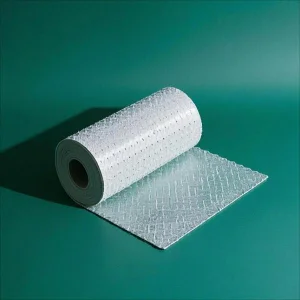
The self-adhesive function makes it unnecessary to use extra glue or perform complicated welding operations during construction. It only needs to attach the self-adhesive surface of the drainage board to the base layer or other materials and press it gently to complete the fixation, which greatly improves the construction efficiency and shortens the construction period.
The self-adhesive layer can ensure the tight connection between the drainage boards and between the drainage board and the base layer, forming a good sealing effect, effectively preventing water leakage and water channeling, and ensuring the stability and reliability of the drainage system.
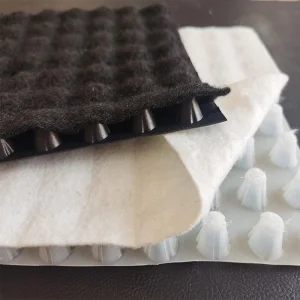
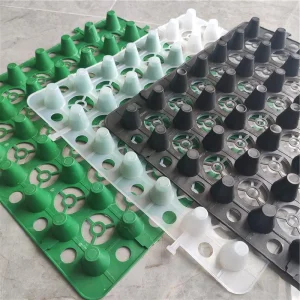
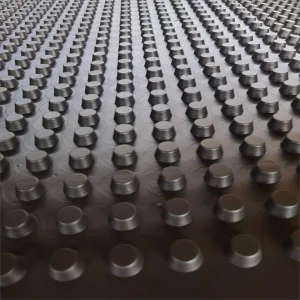
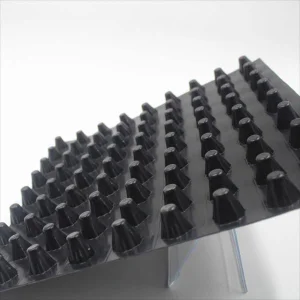
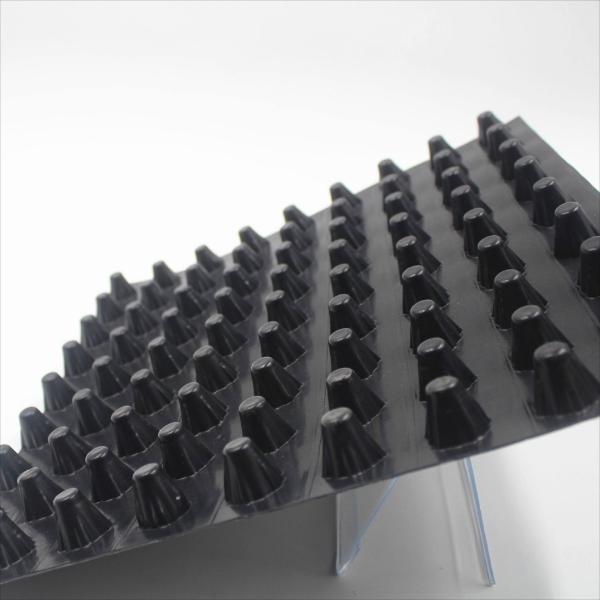
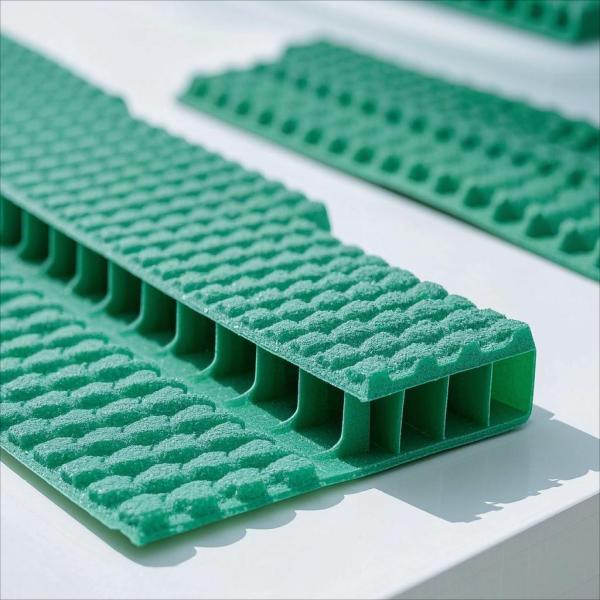
Its unique concave-convex structure design provides a large drainage space and a smooth drainage channel, which can quickly and effectively drain water, reduce the groundwater level or drain accumulated water, and reduce the erosion of water on buildings or soil.
The material itself has high strength and toughness, which can resist sharp objects in the soil and external force puncture during construction, and is not easy to be damaged, thus ensuring the long-term performance of the drainage board.
It has good chemical corrosion resistance and anti-aging performance. It can maintain stable performance in harsh environments such as acidic, alkaline or humid conditions, and has a long service life.
Self-adhesive drainage boards are widely used in the waterproof and drainage systems of building parts such as basements, roof gardens and parking lots. They can effectively drain accumulated water, prevent leakage and protect the structural safety and service functions of buildings.
They are used in the drainage projects of municipal facilities such as roads, bridges and tunnels. They can quickly drain rainwater and groundwater, reduce the damage of water to road foundations and bridge structures, and improve the service life and safety of municipal facilities.
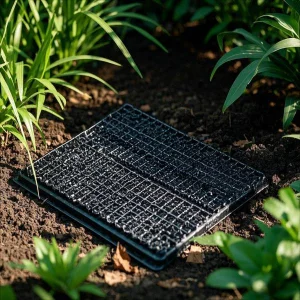
In landscaping projects such as flower beds, green spaces and golf courses, they can be used for soil drainage and water retention, providing a good growth environment for plants and promoting their healthy growth.
In water conservancy facilities such as reservoirs, dams and canals, they can be used as drainage and filter materials to prevent seepage and piping, ensuring the safe operation of water conservancy projects.
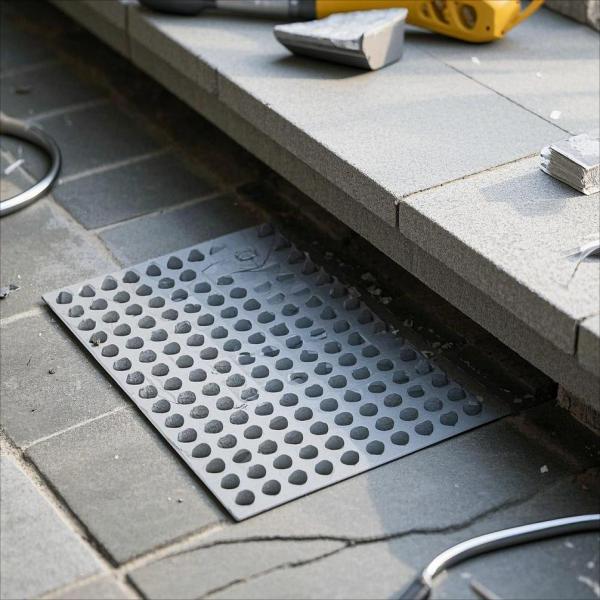
Before laying the self-adhesive drainage board, it is necessary to ensure that the base surface is flat, clean and dry, and free of sharp objects and debris, so as to avoid puncturing the drainage board or affecting the bonding effect.
Generally, it is laid from low to high and from one end to the other. The self-adhesive edges between adjacent drainage boards should be aligned with each other and closely fitted to ensure no gaps or wrinkles.
For the parts that need to be lapped, the lap width should meet the design requirements, usually not less than 100mm, and self-adhesive glue or special sealing materials should be used for sealing treatment to ensure the integrity and tightness of the drainage board.
After the drainage board is laid, the upper covering or protection measures should be carried out in time to avoid damage to the drainage board caused by direct sunlight, mechanical rolling, etc.
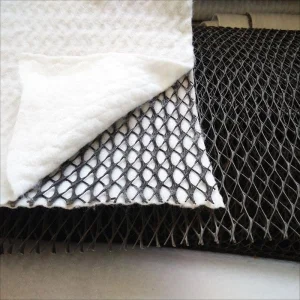
It is a multi-functional composite material that combines a standard drainage board with a specialized self-adhesive layer. It integrates drainage, waterproofing, root barrier properties, and physical protection in a single layer.
Because of the integrated adhesive layer, you do not need external glue or complex hot-welding processes. The board is simply laid on the substrate and pressed down, saving labor costs and project time.
The adhesive layer establishes a continuous, watertight bond between adjacent panels and the structural base, eliminating gaps that cause water leakage or moisture migration.
Laps between adjacent boards must be aligned and firmly sealed. The overlap width should follow construction design requirements and typically measure no less than 100mm.
The material exhibits excellent chemical corrosion resistance and anti-aging properties, maintaining highly stable drainage performance in damp, acidic, or alkaline environments.