Industrial grade geosynthetics designed to exceed international standards in environmental defense and structural reinforcement projects.
Over the last decade, geosynthetics have transitioned from optional protective components to mission-critical structural engineering materials. Driven by severe climate variability and the demand for long-lived, low-maintenance infrastructure, global markets are utilizing woven and non-woven geotextiles to achieve structural stability in highly challenging soils.
Geotextiles function as standard barriers and separation matrices. Modern technical advances enable these engineered materials to dynamically partition load stresses, filter micro-sediments under heavy hydraulic heads, and provide tensile reinforcing frameworks across unstable subgrades. Standard installations now routinely demand lifespans exceeding 50 to 100 years, requiring manufacturers to strictly optimize polymer formulations against oxidation, mechanical puncture, and chemical biodegradation.
As smart cities and ecological civil engineering become global priorities, the integration of geomaterials with sustainable engineering practices is expanding. The current paradigm demands high-precision solutions where tensile dynamics, hydraulic permeability, and chemical resistance are calculated to match specific local geology, ensuring long-term structural integrity and minimizing environmental disruption.
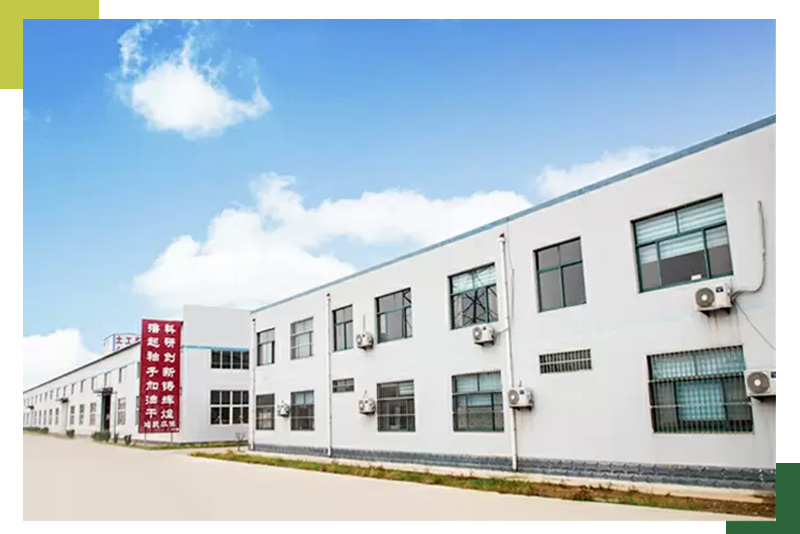
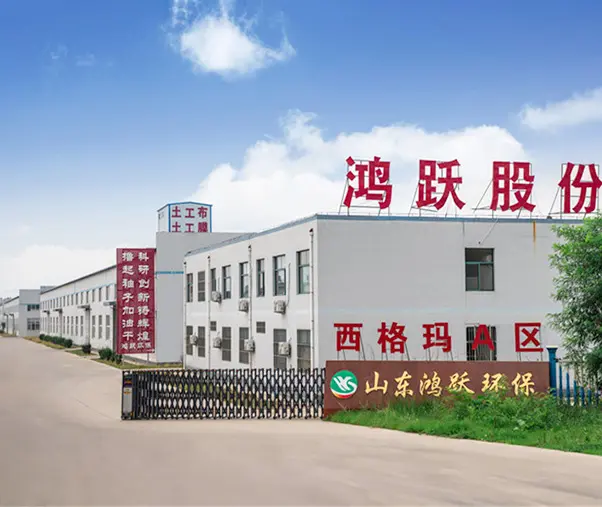
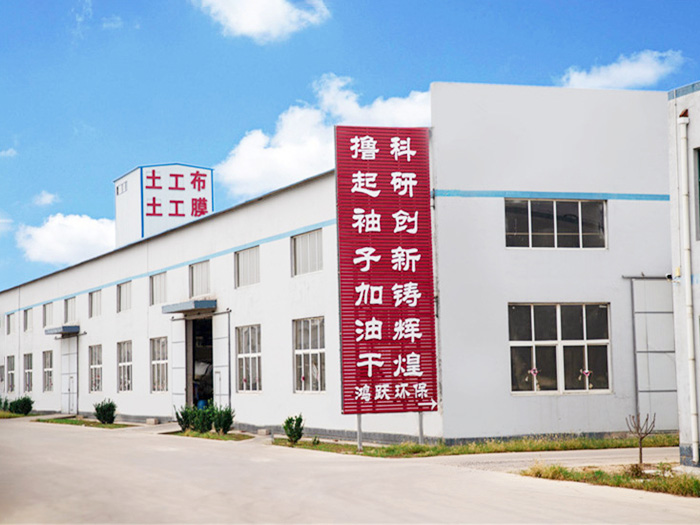
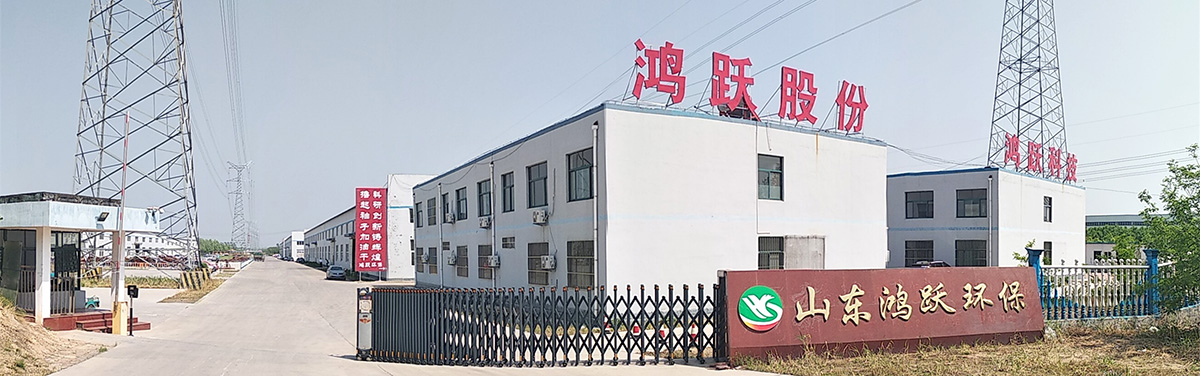
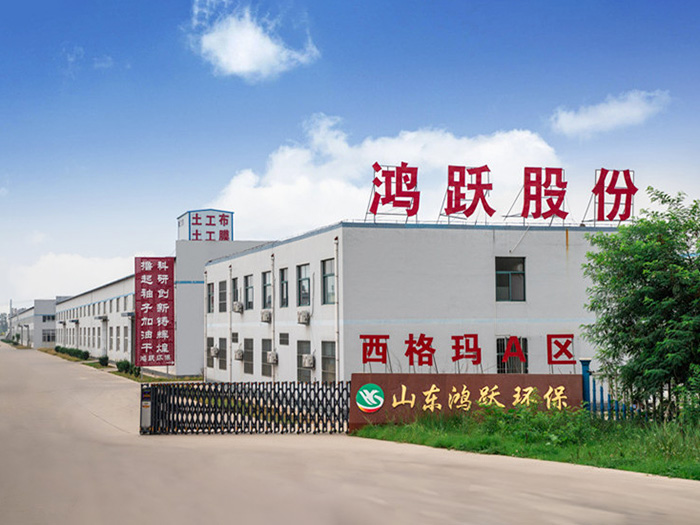
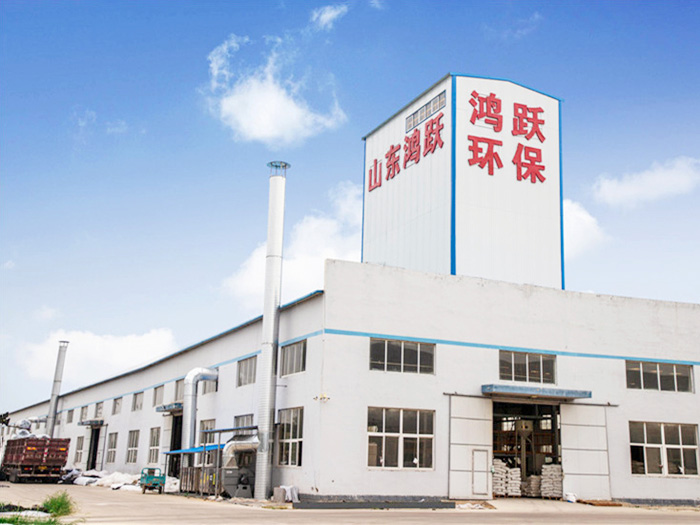
Shandong Hongyue Environmental Engineering Co., Ltd., located at the north end of Fufeng Street, Lingcheng District, Dezhou, Shandong Province, stands as a premier scientific and technological geotechnical material manufacturer. We seamlessly integrate engineering material production, sales, design, and construction services. The company was registered in the Lingcheng District Market Supervision and Administration Bureau of Dezhou City on April 6, 2023, with a robust registered capital of 105 million yuan. Today, it ranks among the largest production bases of geotechnical materials in China, benefiting from a superior geographical location and convenient transit logistics.
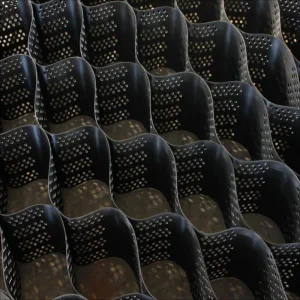
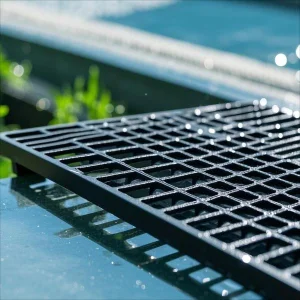
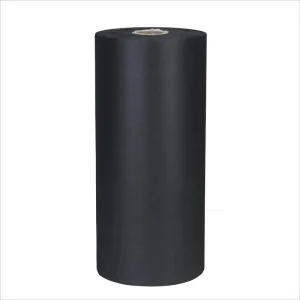
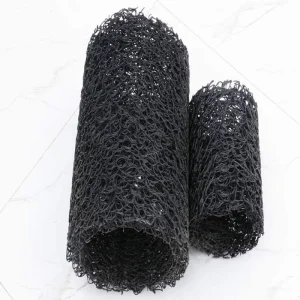
Since our establishment, our growth has been rapid, marked by a expanding business footprint. Our comprehensive portfolio includes geotextiles, geomembranes, composite geomembranes, waterproof boards, bentonite waterproof blankets, 3D composite drainage nets, (composite) drainage boards, weaving cloth, woven cloth, membrane bags, blind ditches, waterproof and drainage combinations, woven bags, ecological bags, cement blankets, fiber plant blankets, flexible pervious pipes, and related geosynthetics. Our products are widely used in key projects across various provinces and cities, providing solutions for highways, railways, bridges, tunnels, water conservancy canals, artificial lakes, environmental protection, aviation, mining, and agriculture.
Understanding the fundamental engineering differences is critical for proper material selection, maximizing structural safety, and optimizing cost-efficiency.
| Parameter / Feature | Woven Geotextile (Slit Film / Monofilament) | Non-Woven Geotextile (Needle Punched / Spunbond) |
|---|---|---|
| Manufacturing Process | Precision weaving of continuous synthetic polymer yarns/tapes. | Random orientation of fibers mechanically bonded via needle-punching. |
| Primary Functions | Reinforcement, Soil Separation, Stabilization. | Filtration, Sub-surface Drainage, Cushion Protection. |
| Tensile Strength | High to Extremely High (Typically 30 kN/m to 200+ kN/m). | Moderate (Typically 4 kN/m to 35 kN/m). |
| Elongation Property | Low (Generally < 15% to 25% at peak load). | High (Typically 50% to 80% allowing conformance to soil contour). |
| Permeability & Flow | Lower water flow rates (Ideal for load distribution over weak soils). | Extremely high planar & vertical water flow rates. |
| Best Applications | Roadway subgrades, retaining walls, rip-rap support, coastal embankments. | French drains, landfill liner protection, landscaping weed control, foundation drainage. |
Step-by-step insight into how our raw polymers are extruded, webbed, cured, and transformed into high-durability geosynthetic systems.
The main raw materials of geotextiles are high-grade polyester chips, polypropylene filament, and viscose fiber. These raw materials undergo strict reception inspection to ensure chemical purity and stability prior to melt blending.
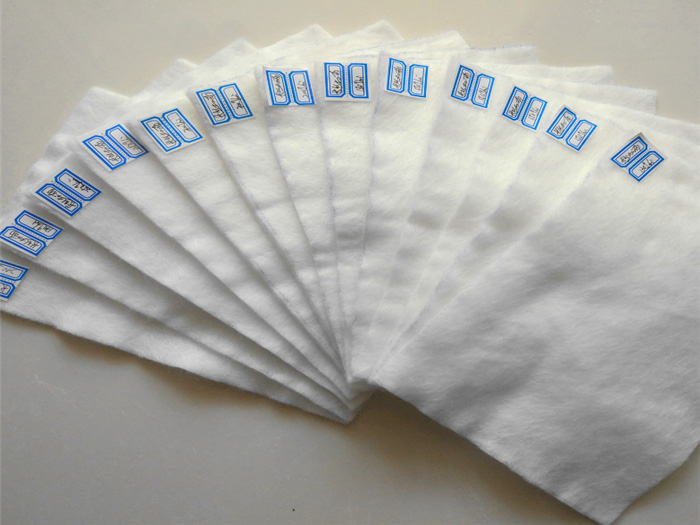
Polyester slices are melted at high temperatures and extruded by a screw extruder. Polypropylene filament and viscose fiber are added. Temperature, pressure, and flow rates are controlled to ensure uniform polymer melt.
After mixing, the melt is sprayed through the spinneret to form a fibrous web. It forms a uniform network structure on the conveyor belt. The thickness and fiber orientation of the mesh are controlled to determine physical properties.
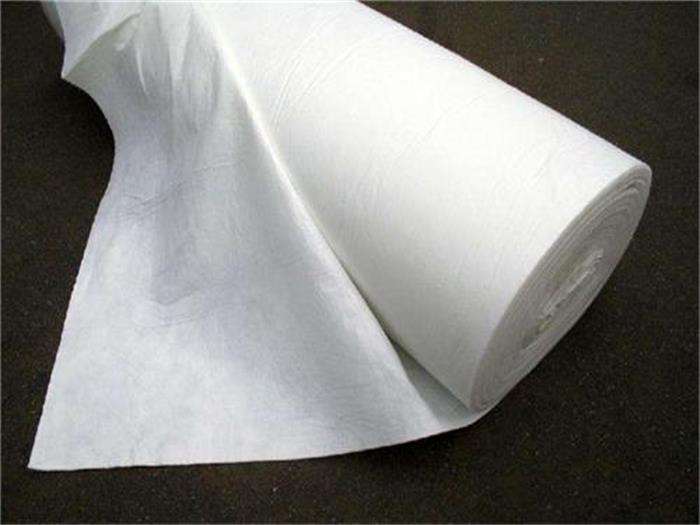
After laying the net into rolls, mechanical needle punching and draft curing are executed. In this step, the temperature, processing speed, and draft ratio are managed to optimize the dimensional stability and tensile strength of the geotextile.
The geotextile after draft curing is rolled up and packaged. During this process, the exact length, width, and thickness of the roll are measured to verify that it meets the engineering design requirements.
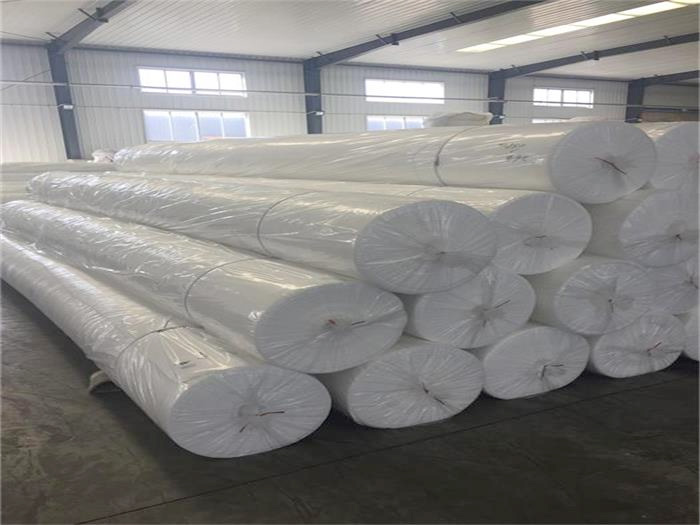
At the end of the production line, comprehensive physical property, chemical resistance, and appearance tests are executed. Only rolls that pass all quality requirements are released to the market.
When engineering firms and procurement teams source woven and non-woven geotextiles, raw unit prices are only part of the total cost calculation. The overall budget is determined by raw material selection (Polypropylene vs. Polyester), physical mass density (measured in grams per square meter, or GSM), and shipping logistics. High-durability projects typically demand virgin polymers, which have higher strength margins, whereas temporary civil installations can utilize recycled fibers to lower upfront unit costs.
Custom dimensions represent another cost variable. Selecting standard roll sizes (typically 4m to 6m widths) minimizes manufacturing changeover costs, which is reflected in a lower square-meter price. For projects requiring custom widths or targeted chemical additives (such as high-level UV stabilizers), production line adjustments can impact the final price. Procurement teams should consult directly with our technical sales division to align specification requirements with optimal production run sizes, ensuring the best unit value.
Virgin Polypropylene (PP) offers high acid-alkali resistance and strength, whereas Polyester (PET) provides cost-effective mechanical properties for neutral soils.
Mass density ranges from 100 GSM to 800+ GSM. Higher weights increase puncture resistance and thickness, directly adjusting pricing scales.
For long-term sun exposure, UV inhibitors prevent photo-degradation. This ensures high performance over years of surface installation.
Our proximity to Dezhou transit hubs allows for efficient ocean and overland shipping, lowering total landed costs.
Correct installation methods determine the success of seepage prevention, stabilization, and environmental engineering projects.
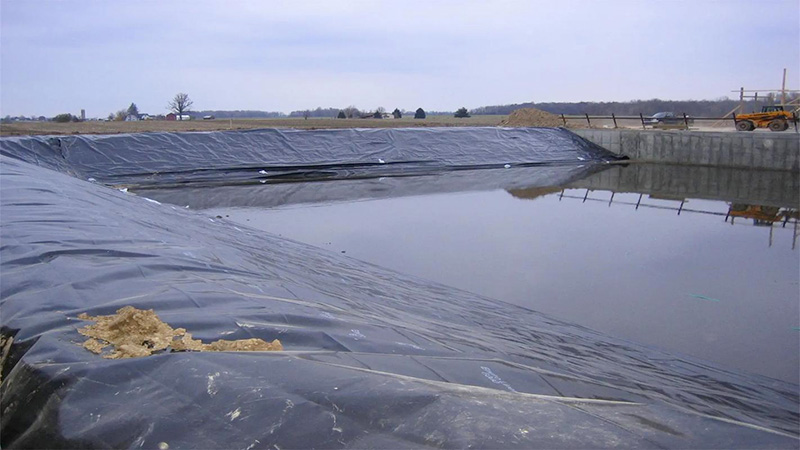
Selecting the appropriate geomembrane (such as HDPE or LLDPE) and thickness (0.3mm to 2.0mm) is a critical step. Before installation, the foundation soil must be cleared of sharp stones, roots, and debris. The surface must be graded and compacted to prevent localized stress points and puncture damage during backfilling.
Geomembranes can be installed using overlap or folded methods, depending on the terrain. Joint seaming is a critical phase; dual-track hot wedge welding is typically used to create a leak-proof bond. Air channel testing is then conducted on the seams to verify water tightness across the site.
Regular maintenance involves cleaning surface silt and monitoring exposed sections for physical damage or weathering. Sharp machinery must be kept away from the liners. Any localized punctures must be patched promptly using identical raw materials and extrusion welding techniques to restore integrity.
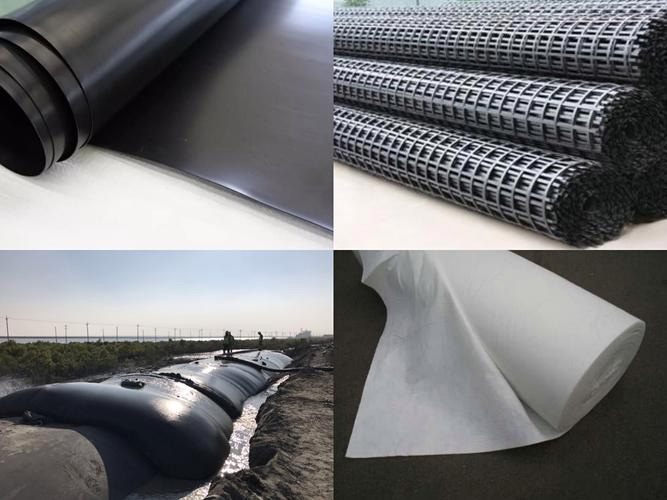
How Hongyue products are combined to build containment, protection, and drainage barriers for key national infrastructure projects.
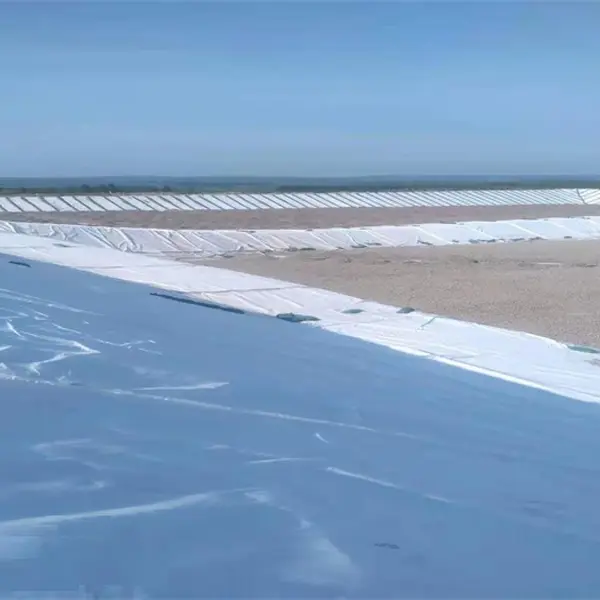
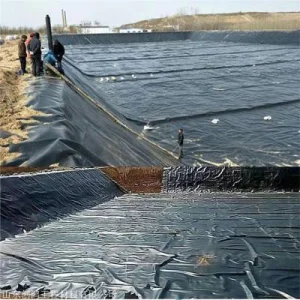
High-performance impermeable liners installed in reservoirs and channels to prevent water loss through geological fractures.
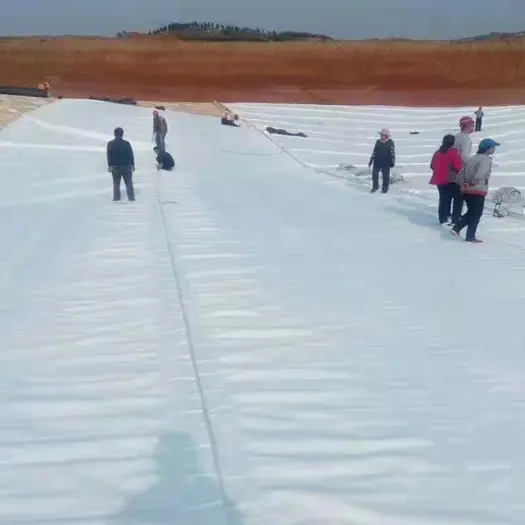
Geomembrane installation along canal beds and banks, protecting adjacent agricultural land and towns from flooding.
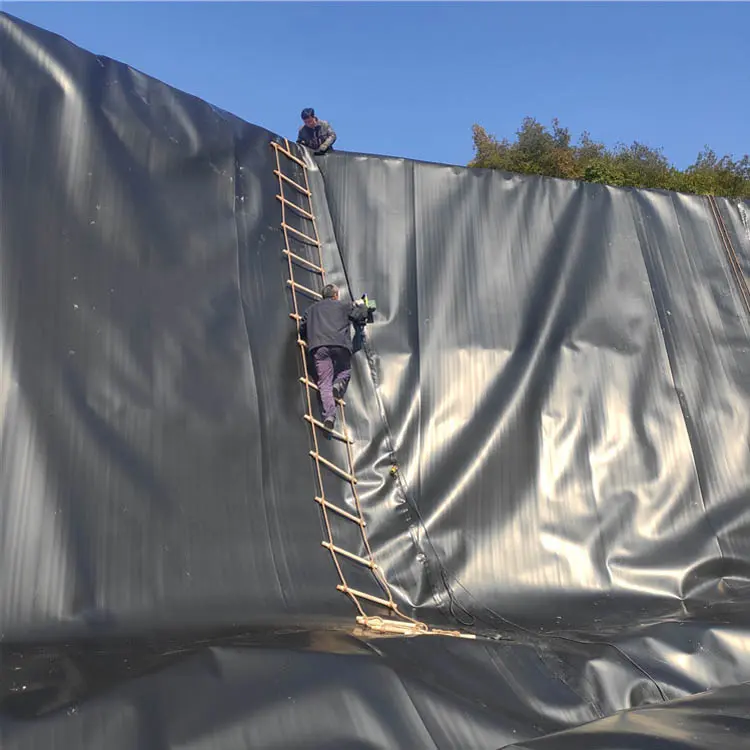
Engineered liner systems designed to contain leachate and safeguard underground water tables from environmental contaminants.
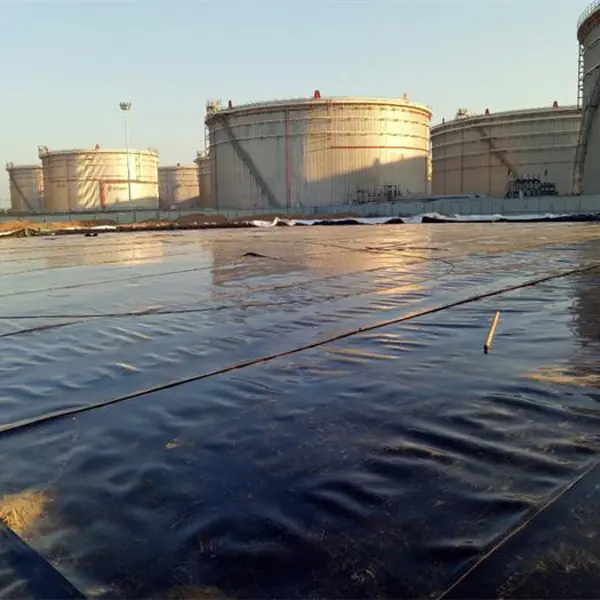
Hydrocarbon-resistant geomembrane lining systems installed under industrial tank farms to contain chemical spills.
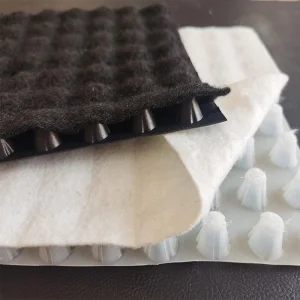
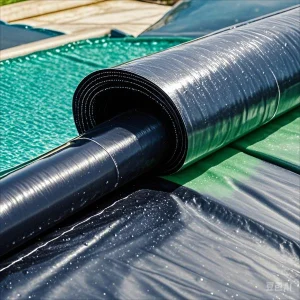
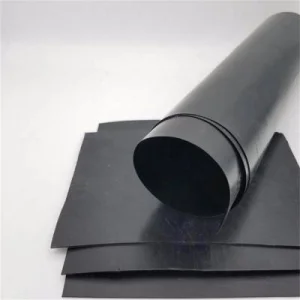
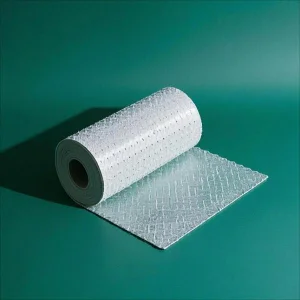
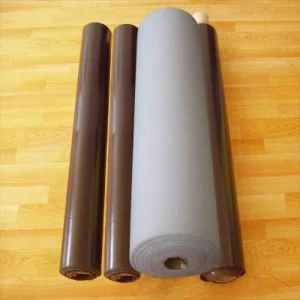
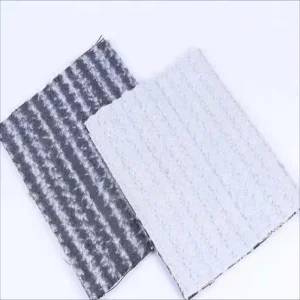
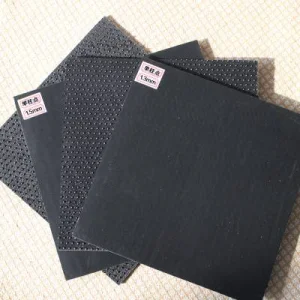
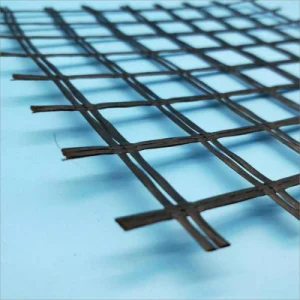
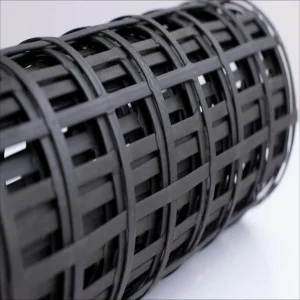
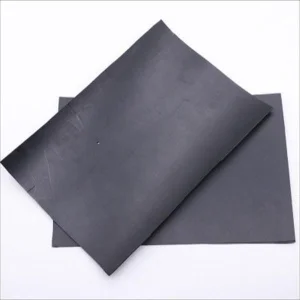
Explore a selection of our primary geosynthetic and drainage products manufactured in our Shandong facilities.
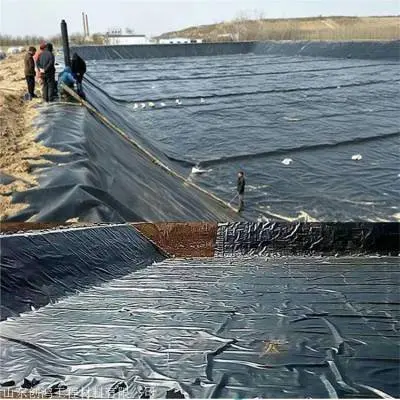
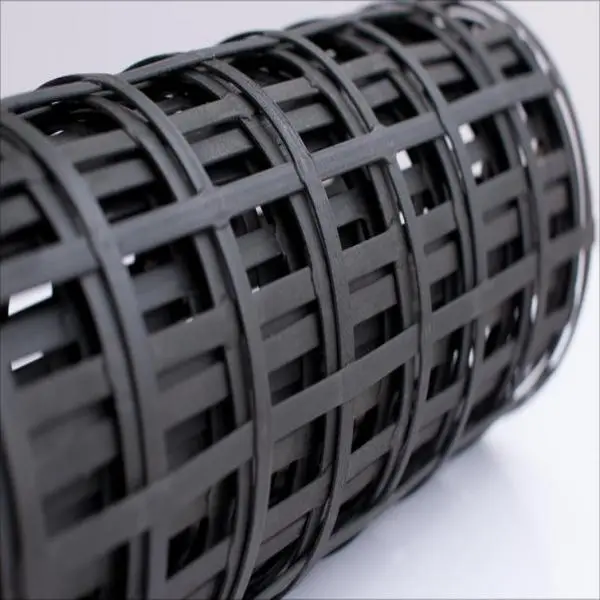
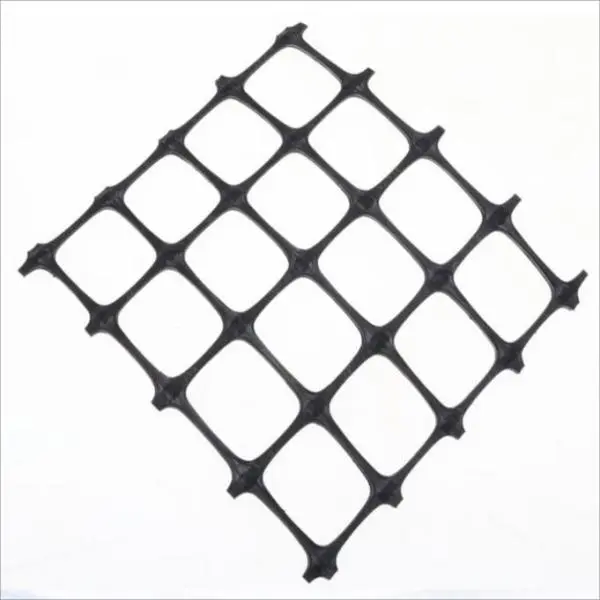
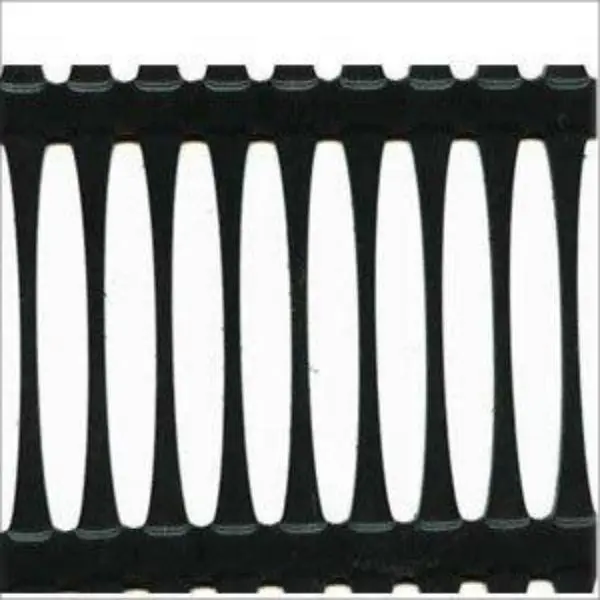
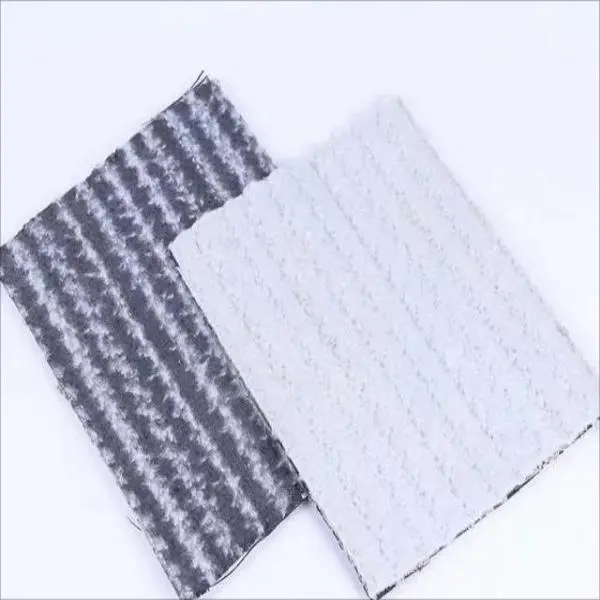
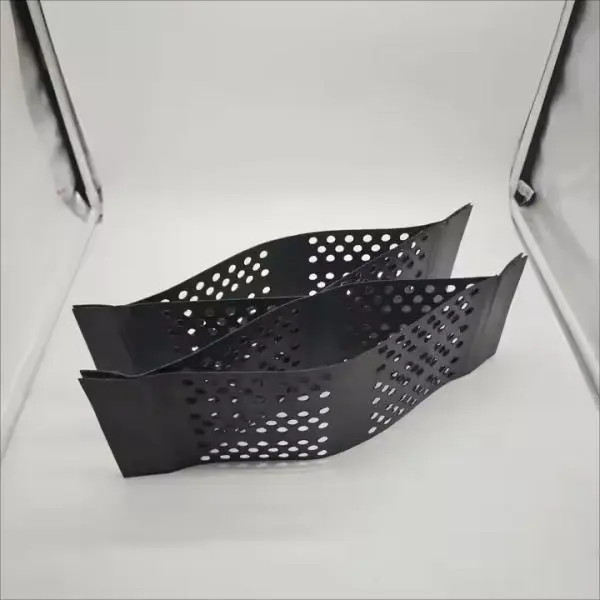
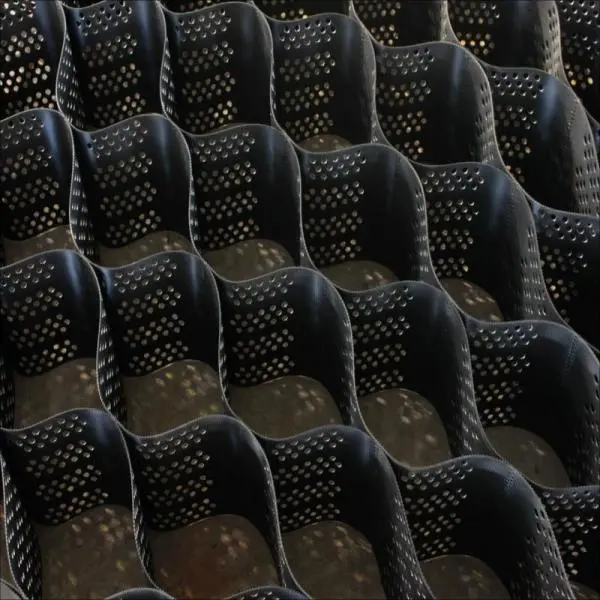
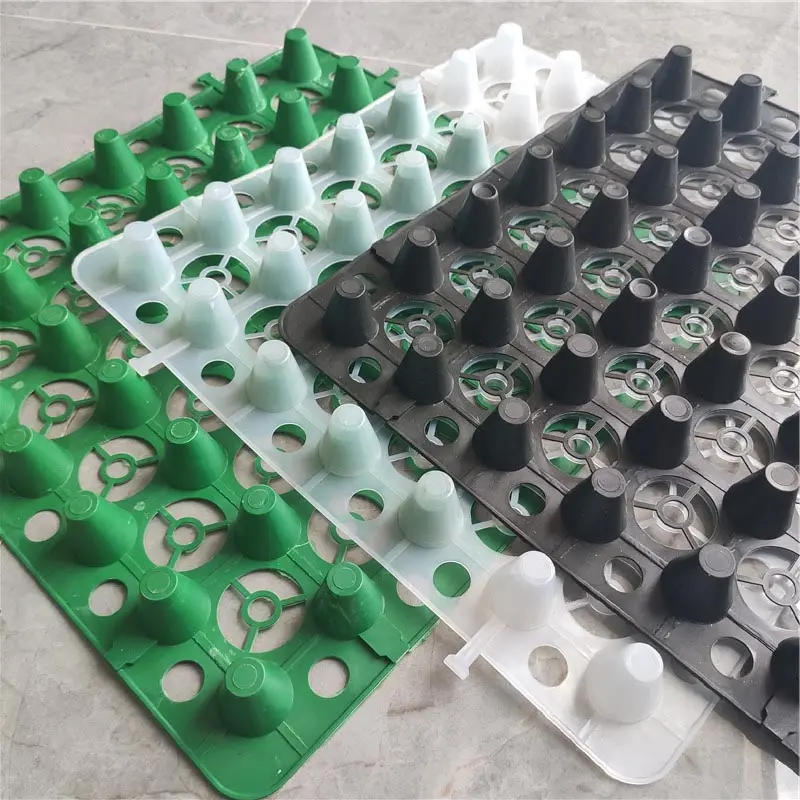
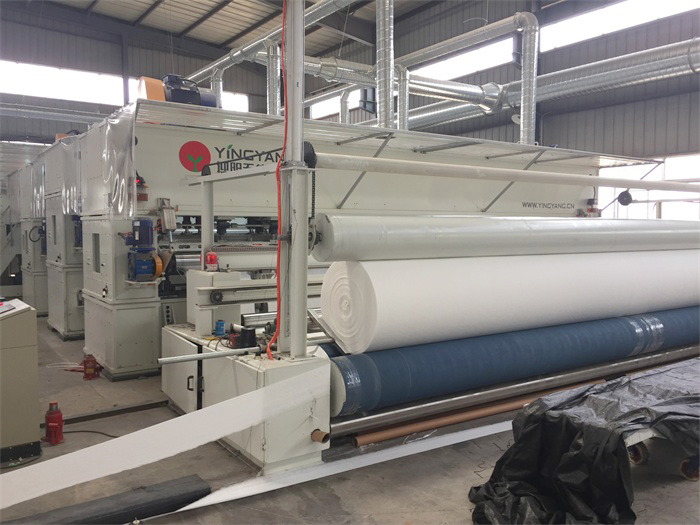
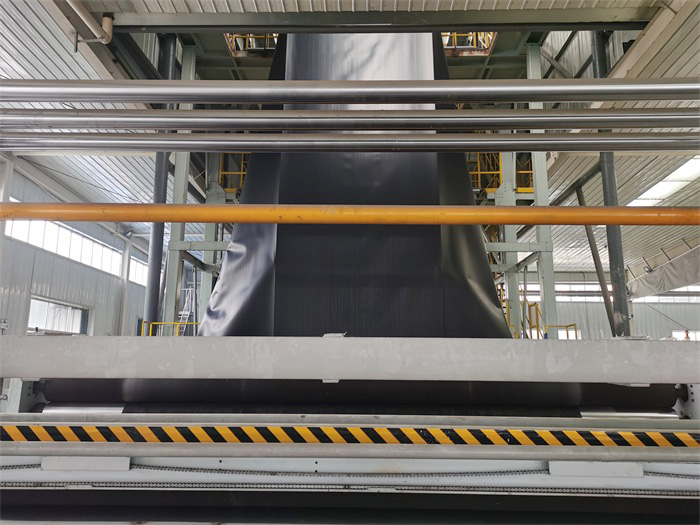
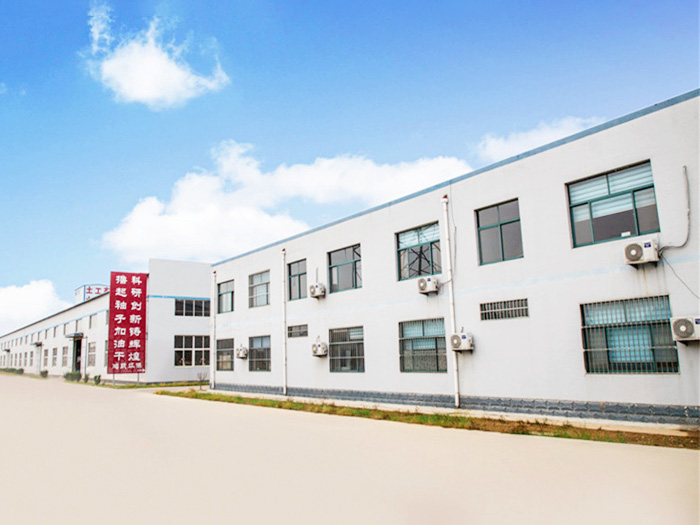
We combine advanced production machinery with rigorous in-house laboratory testing to maintain high quality standards.
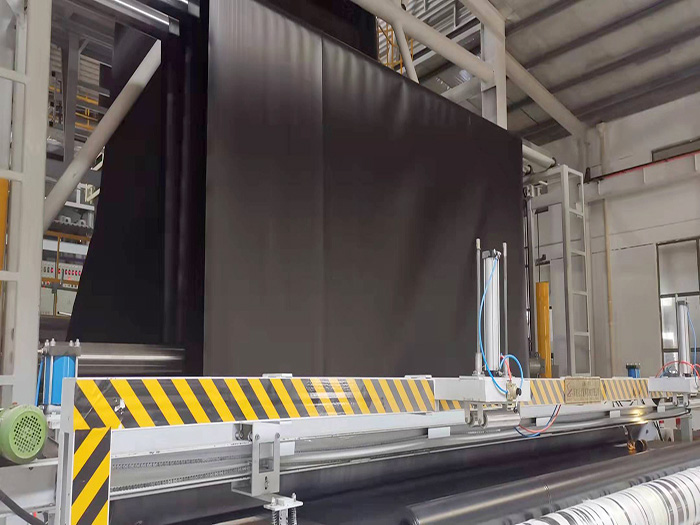
Analysis of how geomembranes serve as reliable barriers in hydraulic containment and water conservancy projects.
Geomembranes play a key role as efficient anti-seepage materials in water conservancy projects. Their low permeability, straightforward installation, and cost-effectiveness make them standard components in hydraulic engineering designs.
Because reservoirs are typically constructed in valleys or low-lying areas with complex geological conditions, minimizing subgrade seepage is critical. Installing geomembranes helps manage water loss through fractures and stabilizes the surrounding rock formations.
Levees and dikes protect downstream areas from flooding. During construction, variable soil conditions can lead to minor stability issues. Using geomembranes provides a barrier that helps mitigate internal erosion and piping within the levee structure.
Canals and rivers regulate water flow and support regional ecosystems. Runoff and shifting beds can lead to erosion or water loss. Installing geomembranes lining along these paths helps secure the channels, prevent bank failures, and control seepage.
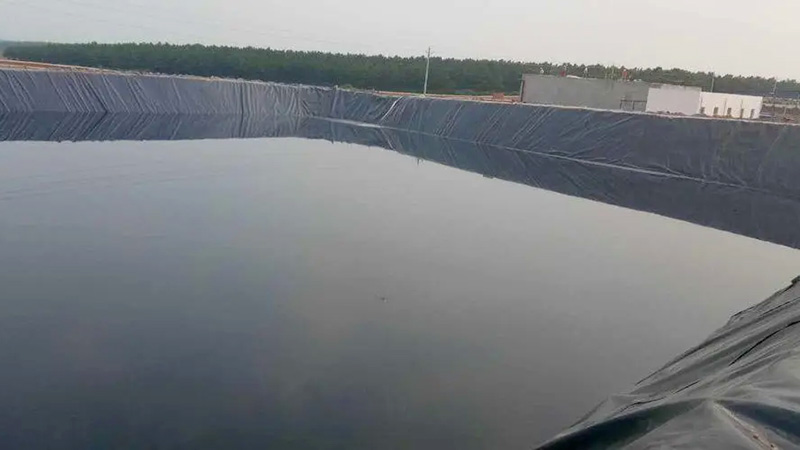
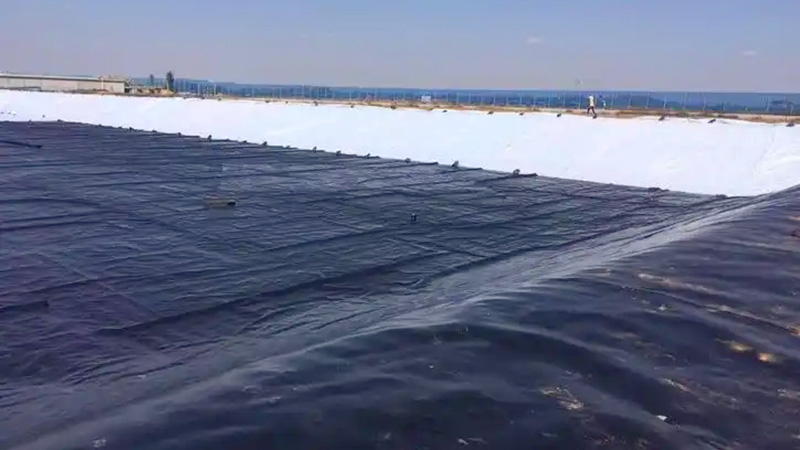
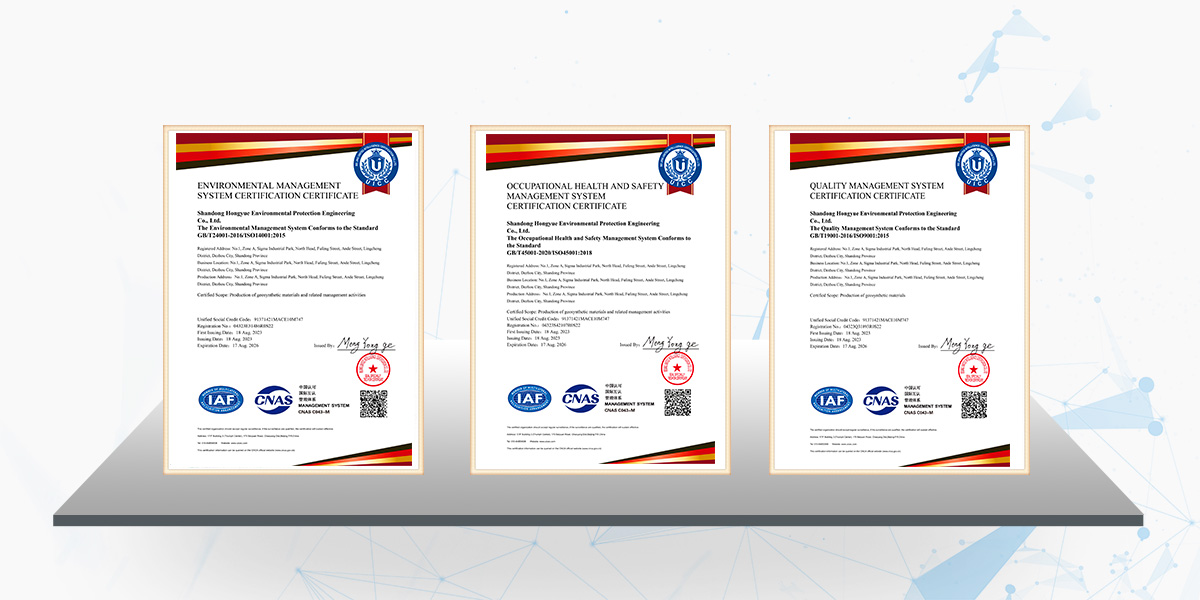
Our Quality Management System (QMS) ensures that every batch of geosynthetics complies with international performance standards.
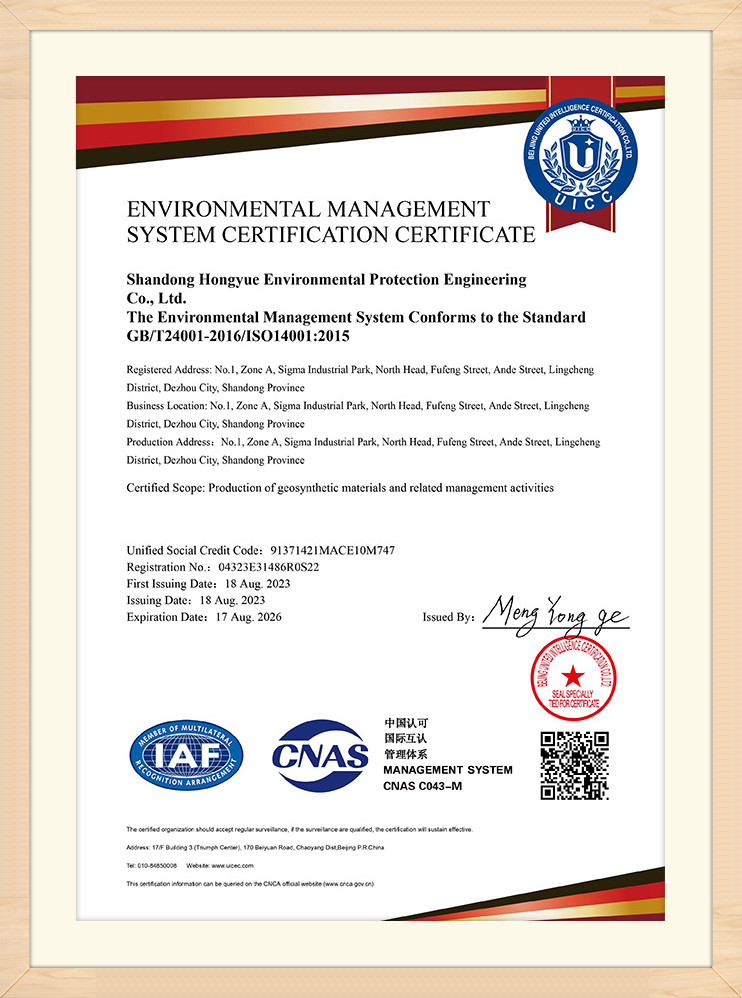
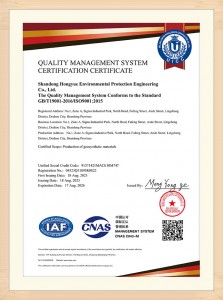
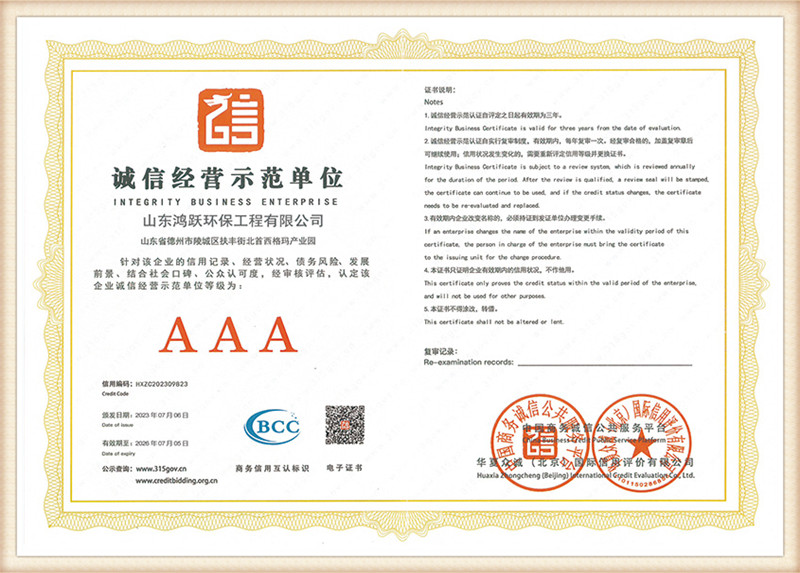
Shandong Hongyue operates under a comprehensive management system certified to ISO9001 (Quality Management), ISO14000 (Environmental Protection), and ISO45001 (Occupational Health and Safety). Our products are regularly verified by the China National Testing Center and have passed the quality inspections commissioned by the State Administration of Quality Supervision.
Our quality control laboratories perform tests on tensile properties, puncture resistance, tear strength, permeability, and carbon black dispersion. By testing both raw inputs and finished outputs, we ensure our geotextiles and geomembranes maintain consistent performance in challenging field environments.
Innovation directions in geosynthetics, focusing on sustainable polymers and high-performance composites.
Research into biodegradable and recycled polymer matrices to reduce the long-term carbon footprint of major civil infrastructure installations.
Integrating fiber-optic sensors and conductive elements directly into woven geotextiles to enable real-time monitoring of soil stress and seepage leaks.
Developing specialized coatings and polymer blends to extend material service life in highly acidic chemical storage and mining environments.
Answers to common technical, design, and procurement questions regarding woven and non-woven geomaterials.
Woven geotextiles offer high tensile strength and low elongation, making them suitable for subgrade reinforcement, stabilization, and separating soil layers. Non-woven geotextiles have higher permeability and conformability, which makes them ideal for sub-surface filtration, drainage, and protecting geomembranes from punctures.
GSM measures the mass per unit area. As GSM increases, more raw polymer (PP or PET) is used per square meter, which increases material density, thickness, and tensile performance. The unit price scales with weight, making selection of the correct GSM critical for balancing project requirements and budget.
Polypropylene (PP) is preferred for landfill applications due to its high chemical resistance, which enables it to withstand exposure to acidic and alkaline leachate. Polyester (PET) is suitable for neutral soils and civil reinforcement projects, offering reliable performance at a lower material cost.
Purchasers should verify ISO9001 (Quality Management), ISO14000 (Environmental System), and ISO45001 (Occupational Health) certifications. Additionally, compliance with international standards, such as CE marking for Europe or ASTM testing protocols, helps ensure the materials meet project specifications.
Complete your design with our high-grade drainage, stabilization, and containment products.
 Hongyue