 Hongyue
1 / 4
The addition of reinforcing materials significantly improves the overall strength of the geomembrane, enabling it to withstand greater external forces such as tensile force, pressure and shearing force, reducing deformation, damage and other situations during construction and use.
When subjected to external forces, the reinforcing materials in the reinforced geomembrane can restrain the deformation of the geomembrane, keeping it in good shape and dimensional stability. It performs outstandingly especially in dealing with uneven settlement and foundation deformation.
While having high strength and anti-deformation ability, the reinforced geomembrane still maintains the original good anti-seepage performance of the geomembrane, which can effectively prevent the leakage of water, oil, chemical substances, etc., ensuring the anti-seepage effect of the project.
The polymer materials and reinforcing materials that make up the reinforced geomembrane usually have good corrosion resistance and anti-aging properties, enabling them to work stably for a long time under different environmental conditions and prolonging the service life of the project.
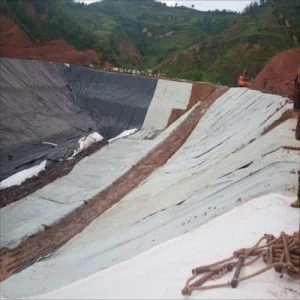
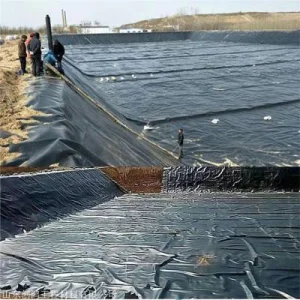
It is used for the anti-seepage and reinforcement of reservoirs, dams, canals, etc. It can withstand water pressure and the pressure of the dam soil, prevent leakage and piping problems, and improve the safety and stability of water conservancy projects.
As the anti-seepage liner of landfills, it can effectively prevent the leachate from contaminating the groundwater and soil, and at the same time bear the pressure of the garbage.
| Parameter Category | Specific Parameters | Description |
|---|---|---|
| Geomembrane Material | Polyethylene (PE), Polyvinyl Chloride (PVC), etc. | Determines the basic properties of the reinforced geomembrane, such as anti-seepage and corrosion resistance |
| Type of Reinforcing Material | Polyester fiber, polypropylene fiber, steel wire, glass fiber, etc. | Affects the strength and anti-deformation ability of the reinforced geomembrane |
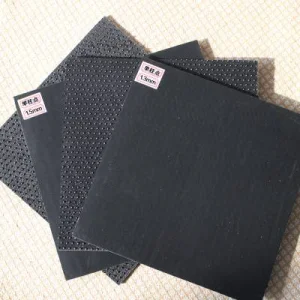
| Thickness | 0.5 - 3.0mm (customizable) | The thickness of the geomembrane affects the anti-seepage and mechanical properties |
| Width | 2 - 10m (customizable) | The width of the reinforced geomembrane affects the construction and laying efficiency and the number of joints |
| Mass per Unit Area | 300 - 2000g/m² (according to different specifications) | Reflects the material consumption and overall performance |
| Tensile Strength | Longitudinal: ≥10kN/m Transverse: ≥8kN/m |
Measures the ability of the reinforced geomembrane to resist tensile failure. The values in the longitudinal and transverse directions may be different |
| Elongation at Break | Longitudinal: ≥30% Transverse: ≥30% |
The elongation of the material at tensile break, reflecting the flexibility and deformation ability of the material |
| Tear Strength | Longitudinal: ≥200N Transverse: ≥180N |
Represents the ability of the reinforced geomembrane to resist tearing |
| Puncture Resistance Strength | ≥500N | Measures the ability of the material to resist puncture by sharp objects |
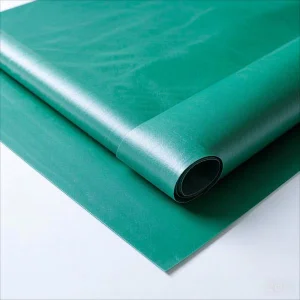
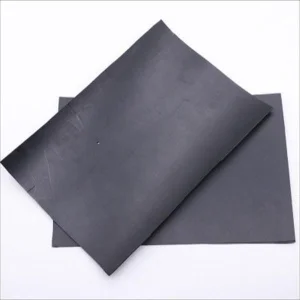
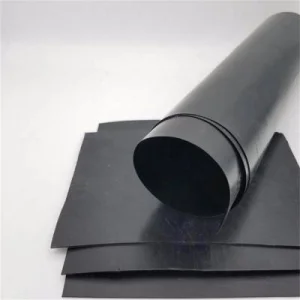
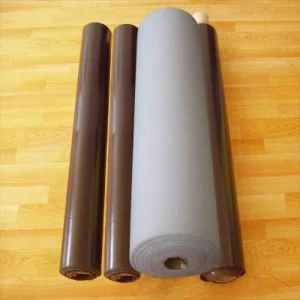
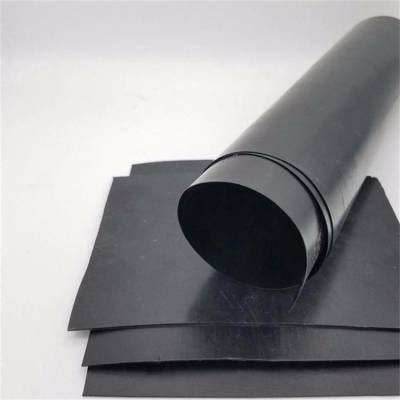
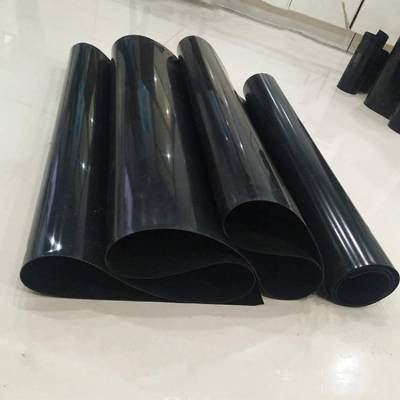
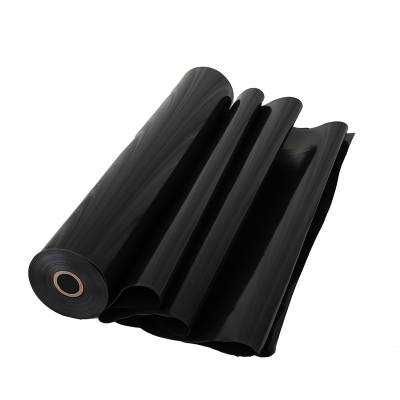
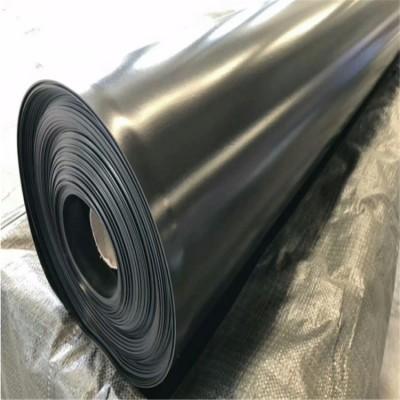
It is a composite geotechnical material created by embedding reinforcing elements (such as fibers or wires) into a standard geomembrane. This process enhances the overall mechanical properties and adaptability to challenging engineering environments.
Common reinforcing materials include polyester fiber, polypropylene fiber, steel wire, and glass fiber. The choice of material directly affects the final strength and anti-deformation characteristics of the geomembrane.
The embedded reinforcing materials restrain physical shifting and stretching under external loads. This ensures structural stability, making it highly effective for areas prone to uneven settlement or foundation deformation.
No. The reinforced geomembrane retains its excellent original anti-seepage performance, meaning it reliably prevents water, oils, and chemicals from leaking through the barrier.
The thickness typically ranges from 0.5 to 3.0mm, and widths range from 2 to 10m. Both specifications can be customized based on specific project needs to optimize laying efficiency and reduce joint seams.