 Hongyue
1 / 3
It has high longitudinal and transverse drainage capabilities, which can quickly collect and guide groundwater, seepage water, etc., and quickly lead the water flow to the designated drainage system. It can effectively prevent diseases such as softening, sinking and mud - pumping of roadbeds due to water accumulation.
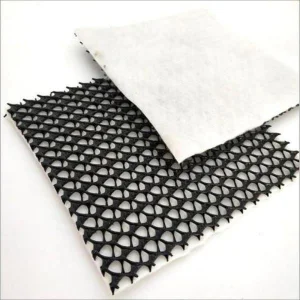
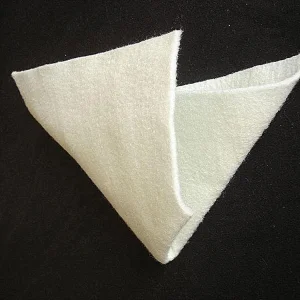
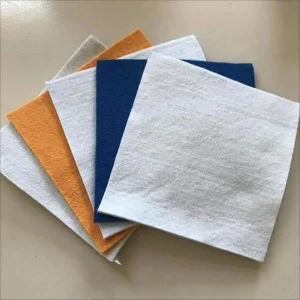
The filter membrane can prevent soil particles, impurities, etc. from entering the inside of the drainage net, avoiding the clogging of the drainage channel, thereby ensuring the long - term smoothness of the drainage system.
Both the plastic core board and the geotextile filter membrane have certain strength, which can bear a certain amount of pressure and tension, and are not easy to deform under high loads. They also have good corrosion resistance and anti - aging properties, with a long service life.
It is light in weight and small in volume, which is convenient for transportation and installation, and can greatly shorten the construction period and reduce the construction cost.
Before construction, the site needs to be cleaned and leveled, and debris, stones, etc. should be removed to ensure that the site surface is flat, so as to facilitate the laying of the drainage net.
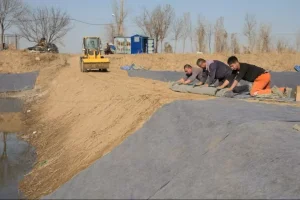
According to different engineering requirements and site conditions, it can be laid in a flat - laying, vertical - laying or inclined - laying manner. When laying, attention should be paid to the direction of the drainage net and the lap length to ensure the smoothness of the drainage channel and the firmness of the connection.
During the laying process of the drainage net, special fixing tools need to be used to fix it on the base layer to prevent it from shifting or sliding. At the same time, adjacent drainage nets should adopt appropriate connection methods, such as lapping, stitching or hot - melt connection, to ensure the tightness and stability of the connection part.
After the drainage net is laid, a protective layer usually needs to be set above it, such as laying geotextile, sand layer or concrete layer, etc., to protect the drainage net from being damaged by external factors, and it also helps to improve the drainage effect.
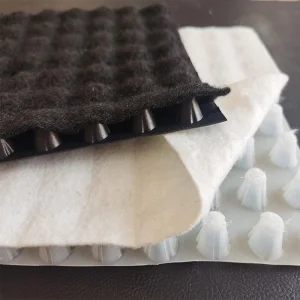
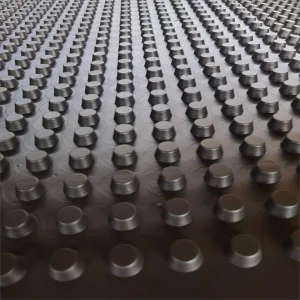
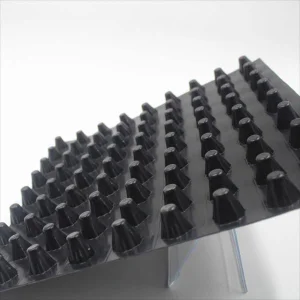
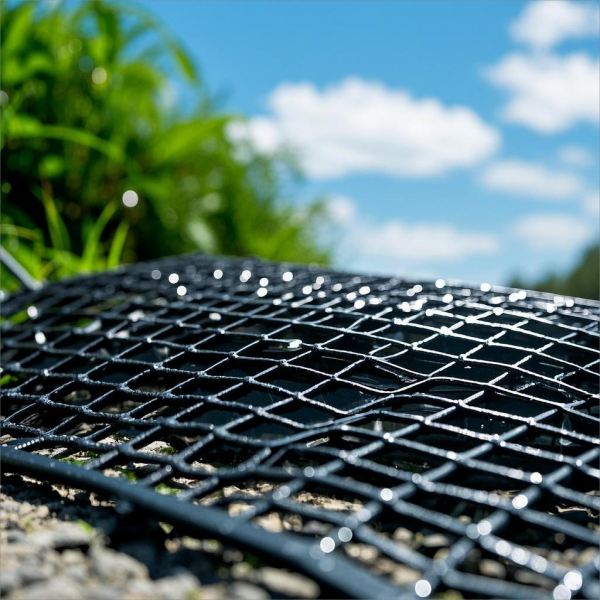
A plastic drainage net is a geosynthetic material typically composed of a plastic core board and a non-woven geotextile filter membrane wrapped around it.
It has high longitudinal and transverse drainage capabilities to quickly collect and direct water to the designated drainage system. This prevents roadbeds from softening, sinking, and mud-pumping caused by water accumulation.
The geotextile filter membrane prevents soil particles and impurities from entering the inside of the drainage net, avoiding channel clogging and maintaining long-term smooth drainage.
They are widely used in soft foundation reinforcement, landfill projects, transportation infrastructure (railways/highways), tunnel and retaining wall projects, and landscaping green space systems.
Depending on engineering requirements, the drainage net can be laid in flat-laying, vertical-laying, or inclined-laying configurations, ensuring proper direction and secure lap lengths.
Special tools are used to fix the net to the base layer to prevent shifting. Adjacent nets are secured using connection methods such as lapping, stitching, or hot-melt connection.