In modern civil engineering, environmental remediation, and structural containment, the demand for highly reliable, long-lasting barrier materials is at an all-time high. Key engineering projects, including municipal landfills, deep hydraulic canals, railway beds, and high-pressure reservoirs, depend on cutting-edge materials to prevent water migration, toxic seepage, and structural degradation. Among these options, Bentonite Waterproof Blankets (often referred to as Geosynthetic Clay Liners, or GCLs) and related composite barriers represent the pinnacle of self-healing waterproofing technologies.
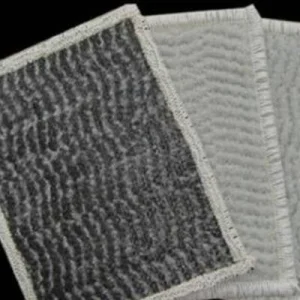
These engineered clay-polymer systems combine the strength of synthetic geotextiles with the natural, swelling impermeability of high-purity sodium bentonite. Often specified as an industrial-grade "waterproof blanket," these systems act as a protective sheath—or "hood"—over vulnerable subgrades. This whitepaper analyzes the manufacturing methodologies, engineering design parameters, and strategic supply chain factors that govern the production, selection, and deployment of premium industrial waterproofing blankets and geosynthetics on a global scale.
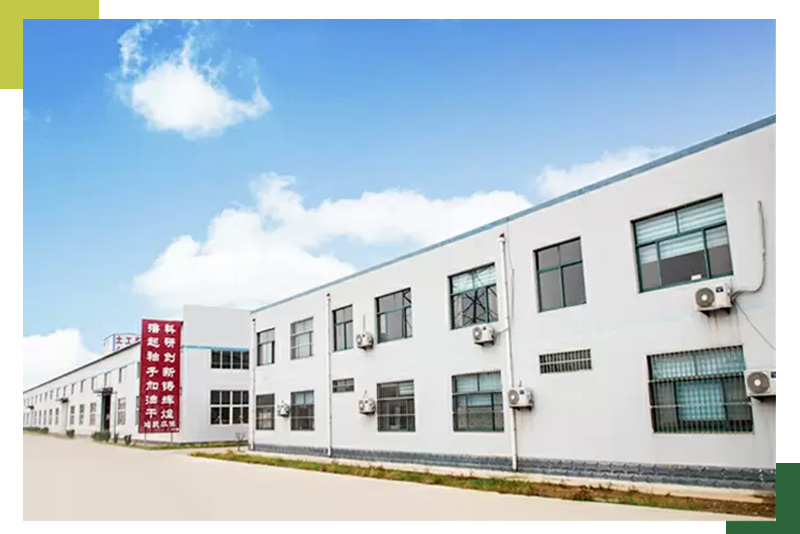
Established as a scientific and technological powerhouse, Shandong Hongyue Environmental Engineering Co., Ltd. is located at the north end of Fufeng Street, Lingcheng District, Dezhou, Shandong Province, China. Registered under the Lingcheng District Market Supervision and Administration Bureau of Dezhou City, the enterprise represents a significant manufacturing presence in the global geosynthetic material sector with a substantial registered capital of 105 million yuan.
Operating from one of China's most robust manufacturing clusters for geotechnical products, Shandong Hongyue integrates scientific research, structural engineering material production, raw material processing, and customized design-build construction services. Our strategic location in Shandong grants us direct access to major transport hubs and deepwater shipping terminals, ensuring highly efficient domestic and export logistics networks for global clients.
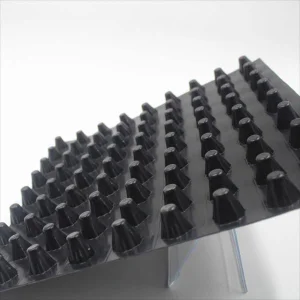
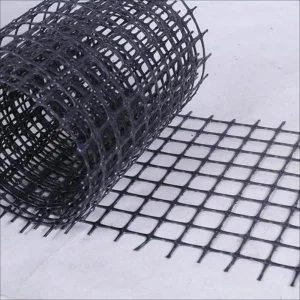
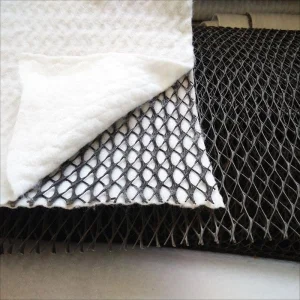
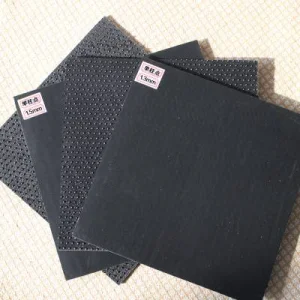
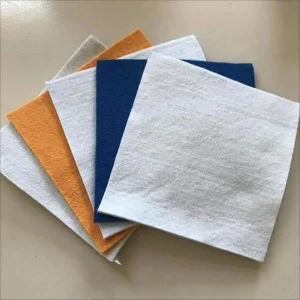
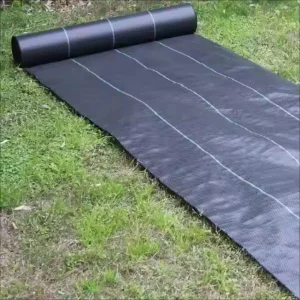
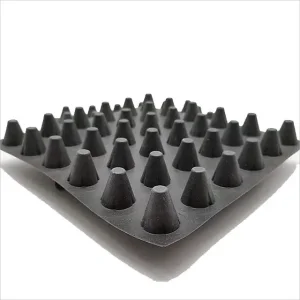
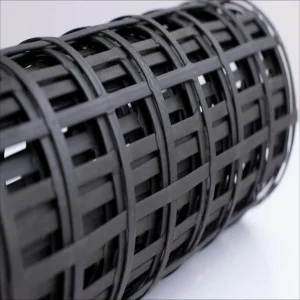
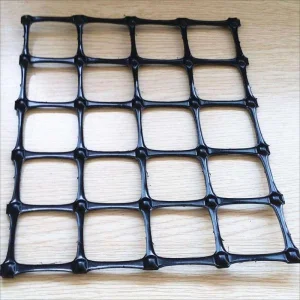
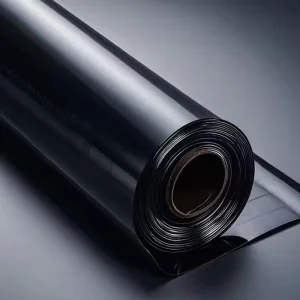
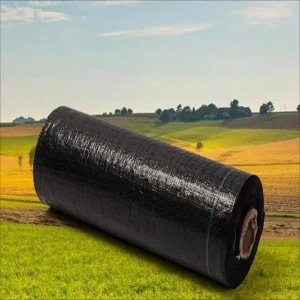
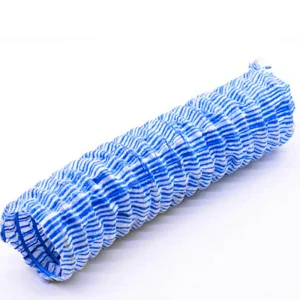
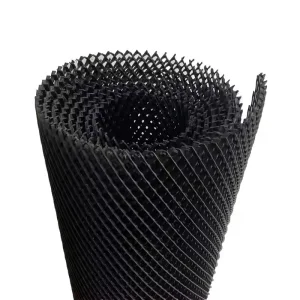
Since our inception, our business scope has scaled rapidly to cover high-specification geotextiles, geomembranes, composite geomembranes, waterproof boards, bentonite waterproof blankets (GCLs), 3D composite drainage networks, geogrids, grass-proof cloth, concrete canvases, and flexible permeable pipes. Supported by an experienced technical design and sales team, our systems undergo rigorous testing and are widely utilized in trans-continental railways, highways, artificial reservoirs, agricultural canal systems, and marine structures.
Modern geotechnical installations require different configurations depending on the chemical, structural, and geological profiles of the site. Below, we examine the primary scenarios where our industrial waterproofing mats and blankets are utilized to achieve absolute liquid containment.
Used extensively in reservoir lining, canal construction, and artificial lakes. The self-sealing characteristics of our bentonite clay blankets prevent seepage loss, conserving critical water resources and stabilizing channel banks.
Installed in solid waste and hazardous chemical landfill sites as a fundamental barrier component. Together with HDPE geomembranes, these clay blankets form a composite liner that blocks leachate from contaminating local aquifers.
Employed in highway and railway subgrade protection to control moisture movement. Preventing capillary water action minimizes frost heave and base erosion, extending the operational life of civil infrastructure.
Protects surrounding habitats from acidic mine drainage and chemicals used in mineral extraction processes. The high swelling index of our sodium bentonite ensures containment even under heavy hydrostatic pressure.
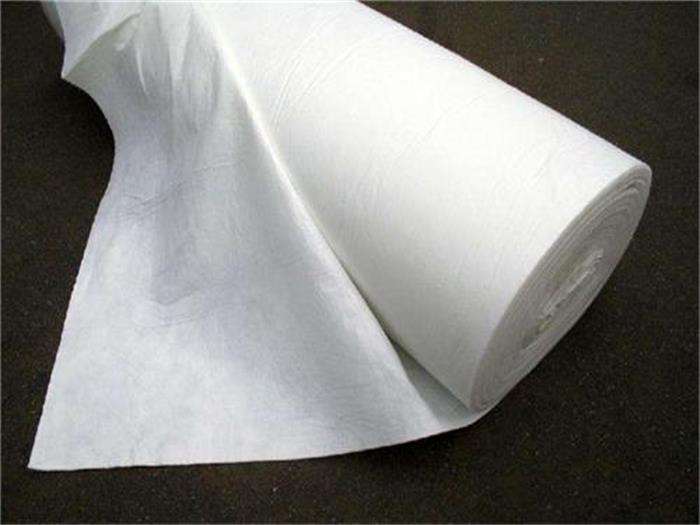
When installing industrial bentonite blankets, managing subgrade conditions is critical. A stable foundation is necessary to ensure the clay barrier functions effectively. Sharp gravel or rock outcroppings can puncture standard barrier materials, compromising their containment capabilities.
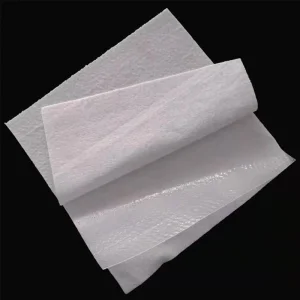
To address this, our composite systems integrate heavy-duty non-woven needle-punched geotextiles as anchoring and cushioning layers. The needle-punched fibers secure the bentonite granules, preventing lateral shifting or displacement. This design maintains a uniform, high-density clay barrier across the entire surface area, even on slopes or irregular terrains.
Manufacturing high-performance geosynthetics and waterproof blankets requires precise process control, high-purity raw materials, and advanced thermal and needle-punching machinery. The following roadmap outlines the production flow for our polymer geotextiles and composite waterproofing barriers:
High-quality polyester (PET) chips, polypropylene (PP) filament, and high-purity industrial sodium bentonite granules are selected. Each batch undergoes rigorous testing to verify polymer density, moisture content, and chemical stability.
PET or PP chips are heated to a molten state in a screw extruder and spun through fine spinnerets to form continuous filaments. Temperature and pressure are monitored continuously to maintain filament diameter uniformity.
The extruded filaments are laid in a cross-lapped configuration on a moving conveyor belt to form a web structure. High-speed needle punching mechanically interlocks the fibers, determining the tensile strength and hydraulic properties of the geotextile.
The needle-punched fiber web is routed through heating rollers. This process sets the physical structure of the geotextile, ensuring consistent elongation and dimensional stability under load.
For composite waterproofing blankets, a uniform layer of natural sodium bentonite powder is distributed between the woven and non-woven geotextile layers. High-density needle-punching locks the bentonite in place, preventing shifting during transport and installation.
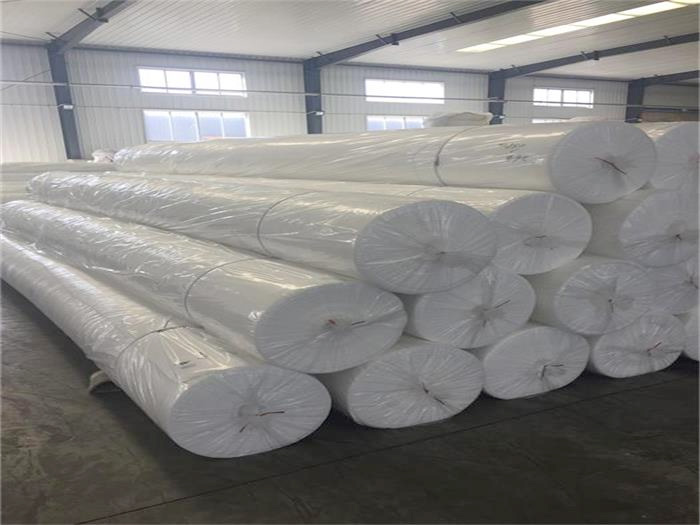
Finished rolls are trimmed, measured, and wrapped in protective UV-resistant plastic film. Every roll receives a unique batch ID linked to its laboratory test results, ensuring complete traceability.
An engineered barrier system relies heavily on proper installation and joint preparation. Below is a guide to selecting and installing bentonite waterproof blankets and geomembranes:
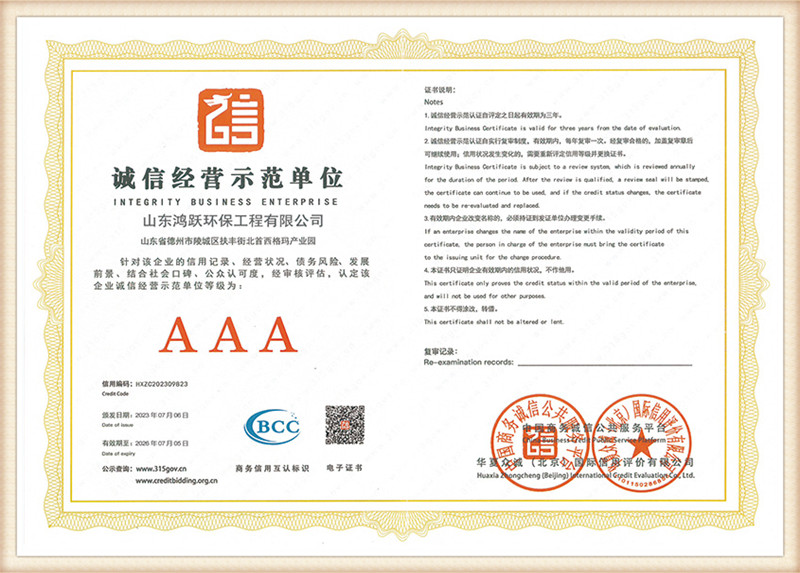
At Shandong Hongyue, quality control is integrated into every stage of our operations. The company maintains certification for the ISO9001 International Quality Management System, ISO14001 Environmental Management System, and ISO45001 Occupational Health and Safety Management System.
Our internal laboratory is equipped with precision testing instruments to evaluate key properties such as tensile strength, puncture resistance, peel strength, hydrostatic pressure rating, fluid loss, and swell index. We conduct regular physical property tests, chemical stability assays, and long-term aging simulations to ensure our materials maintain high performance throughout their design life.
Our materials conform to EN standards for geomembranes and geotextiles, allowing us to supply major infrastructure projects across the European Union.
All products are verified by the China National Testing Center, with routine sampling and testing overseen by national quality inspection departments.
Our containment materials are designed to resist biological attack, acidic runoffs, and chemical stress cracking, providing long-term reliability in harsh environments.
As engineering requirements evolve, Shandong Hongyue is investing in research and development to improve product efficiency and sustainability. Key initiatives include:
 Hongyue