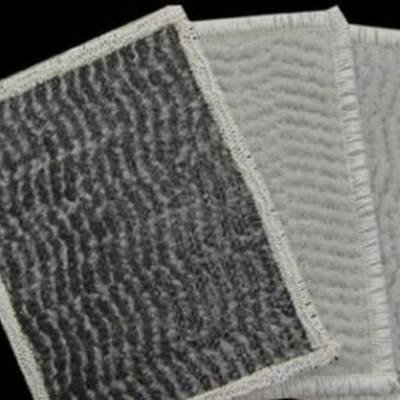
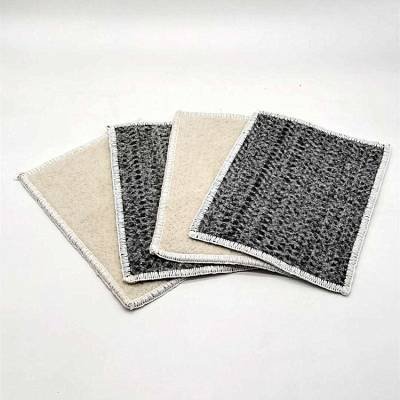
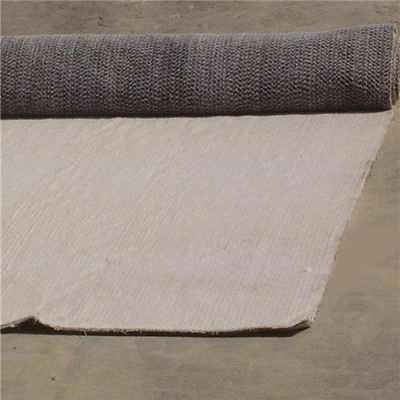
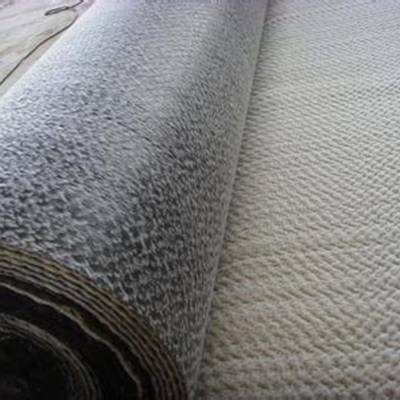
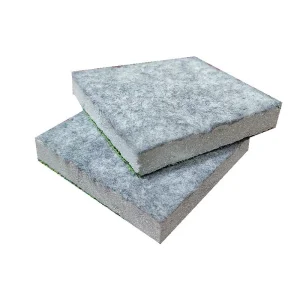
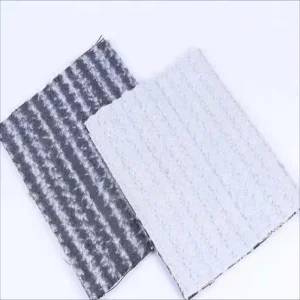
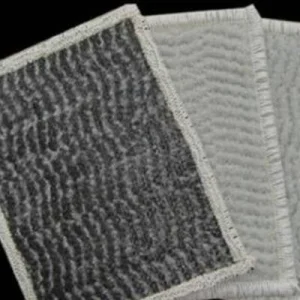
Bentonite waterproofing blanket is a kind of geosynthetic material specifically used for anti-seepage in artificial lake water features, landfills, underground garages, rooftop gardens, pools, oil depots, chemical storage yards and other places. It is made by filling highly expandable sodium-based bentonite between a specially made composite geotextile and a non-woven fabric. The bentonite anti-seepage cushion made by the needle punching method can form many small fiber spaces, which prevents the bentonite particles from flowing in one direction. When it comes into contact with water, a uniform and high-density colloidal waterproof layer is formed inside the cushion, effectively preventing water seepage.
Bentonite waterproofing blanket is a kind of geosynthetic material specifically used for anti-seepage in artificial lake water features, landfills, underground garages, rooftop gardens, pools, oil depots, chemical storage yards and other places. It is made by filling highly expandable sodium-based bentonite between a specially made composite geotextile and a non-woven fabric. The bentonite anti-seepage cushion made by the needle punching method can form many small fiber spaces, which prevents the bentonite particles from flowing in one direction. When it comes into contact with water, a uniform and high-density colloidal waterproof layer is formed inside the cushion, effectively preventing water seepage.
Material Composition and Principle
Composition
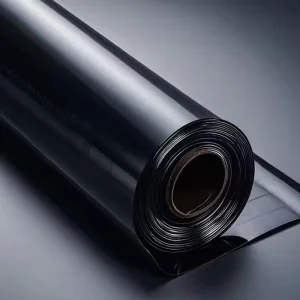
The bentonite waterproofing blanket is mainly composed of highly expandable sodium-based bentonite filled between special composite geotextiles and non-woven fabrics. It can also be made by bonding bentonite particles to high-density polyethylene plates.
Waterproof Principle
Sodium-based bentonite will absorb several times its own weight of water when it meets water, and its volume will expand to more than 15-17 times of the original. A uniform and high-density colloidal waterproof layer is formed between the two layers of geosynthetic materials, which can effectively prevent water leakage.
Performance Characteristics
Good waterproof performance:
The high-density diaphragm formed by sodium-based bentonite under water pressure has extremely low water permeability and long-lasting waterproof performance.
Easy construction:
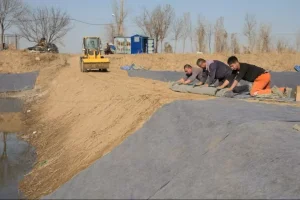
The construction is relatively simple. It does not need heating and pasting. Only bentonite powder, nails, washers, etc. are needed for connection and fixation. And there is no need for special inspection after construction. It is also easy to repair waterproof defects.
Strong deformation-adaptation ability:
The product has good flexibility and can deform with the impervious body of different terrains and foundations. Sodium-based bentonite has a strong water-swelling ability and can repair cracks within 2mm on the concrete surface.
Green and environmentally friendly:
Bentonite is a natural inorganic material, which is harmless and non-toxic to human body and has no special impact on the environment.
Application Scope
Environmental protection field
It is mainly used in projects such as landfills and sewage treatment plants to prevent the penetration and diffusion of pollutants and protect the safety of soil and water sources.
Water conservancy projects
It can be used in seepage-prevention projects such as dam bodies, reservoir banks and channels to effectively prevent soil erosion and ensure the safe operation of reservoirs and water channels.
Construction industry
It plays an important role in the waterproofing and seepage-prevention of basements, roofs, walls and other parts, and can adapt to various complex building structures and shapes.
Landscape architecture
It is widely used in the waterproofing and seepage-prevention of artificial lakes, ponds, golf courses and other areas to ensure the ornamental effect and safety of water landscapes.
Frequently Asked Questions
Q: What is a bentonite waterproofing blanket made of?
A: It is mainly composed of highly expandable sodium-based bentonite filled between special composite geotextiles and non-woven fabrics, or by bonding bentonite particles to high-density polyethylene plates.
Q: How does the waterproofing principle work?
A: When sodium-based bentonite comes into contact with water, it absorbs the water and expands to more than 15-17 times its original volume. This forms a uniform, high-density colloidal waterproof layer that blocks water leakage.
Q: Is the installation process complicated?
A: No, construction is relatively simple. It does not require heating or pasting. It only needs bentonite powder, nails, and washers for connection and fixation, and it is easy to repair any defects.
Q: Can it adapt to uneven ground and repair cracks?
A: Yes. The product is flexible and adapts well to different terrains. Its strong water-swelling capability also allows it to self-repair cracks within 2mm on concrete surfaces.
Q: Is the material safe for the environment?
A: Yes, bentonite is a natural inorganic material. It is non-toxic and harmless to the human body and has no special impact on the surrounding environment.
Q: Where is this material commonly applied?
A: It is widely applied in environmental projects (landfills, sewage plants), water conservancy (dams, channels), construction (basements, roofs), and landscape architecture (artificial lakes, ponds).
 Hongyue