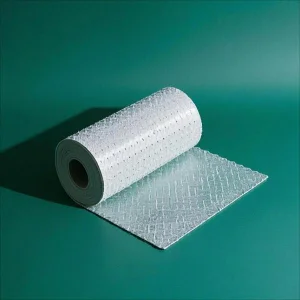
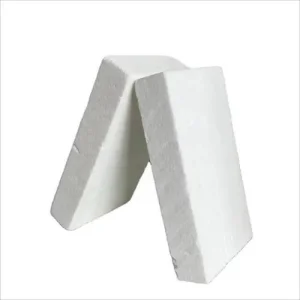
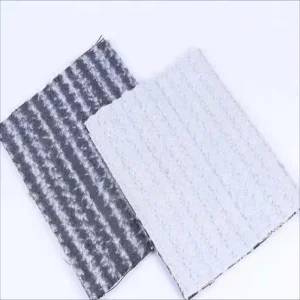
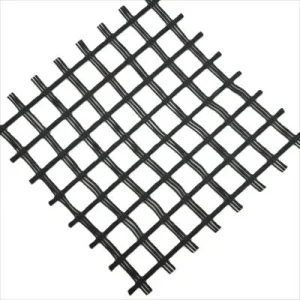
In the contemporary era of global transport networks, civil engineering projects face unparalleled challenges. Unstable subgrades, moisture fluctuation, seismic stresses, and extreme structural heavy-axle loadings call for highly advanced structural foundations. In modern road development schemes, traditional asphaltic layers must rely on deep-seated stabilization technologies. Standard raw soil structures are fundamentally vulnerable to mechanical shearing, aggregate intermixing, and fluid erosion.
High-tensile geotextile structures provide the required stabilization. Acting as a mechanical barrier and tension-bearing component, geotextiles manage structural stresses directly above problematic subgrades, such as soft clays and organic soils. By distributing static and dynamic traffic loads across larger lateral surface areas, geotextiles minimize rutting and subgrade degradation, reducing long-term pavement maintenance costs.
Globally, government transport ministries and municipal engineering departments require suppliers to meet precise physical and chemical standards. For international procurement managers, securing long-lasting, high-durability geotextile rolls at a competitive B2B wholesale pricing scale is essential. Quality must comply with rigorous design life profiles of over 50 years under diverse environmental exposure parameters.
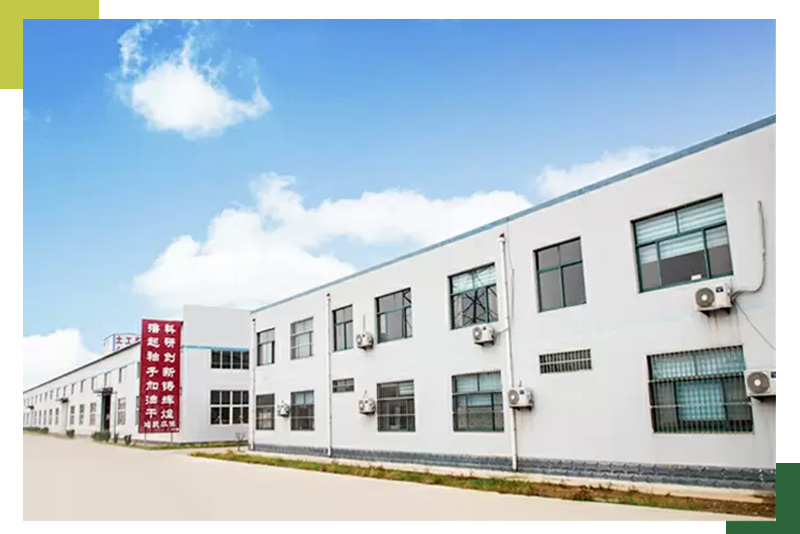
Located at the north end of Fufeng Street, Lingcheng District, Dezhou, Shandong Province, Shandong Hongyue Environmental Engineering Co., Ltd. is a scientific and technological geotechnical manufacturer integrating professional geotechnical production, sales, design, and construction services. The company was registered under the Lingcheng District Market Supervision and Administration Bureau of Dezhou City on April 6, 2023, with a registered capital of 105 million yuan. It represents one of the largest modern manufacturing and logistical clusters of geotechnical materials in China.
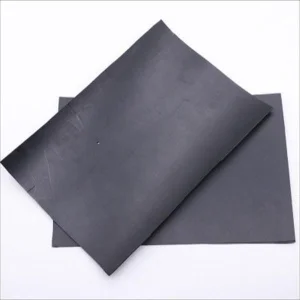
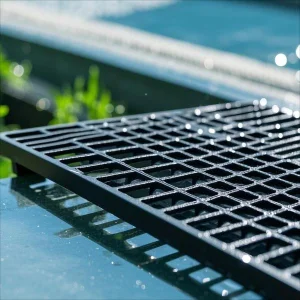
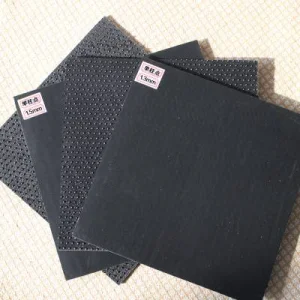
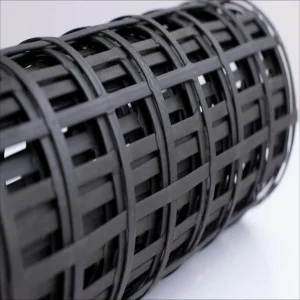
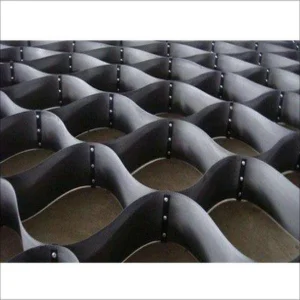
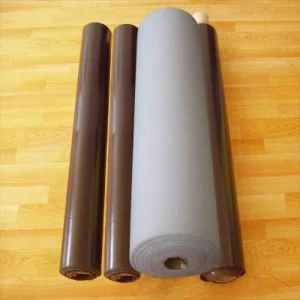
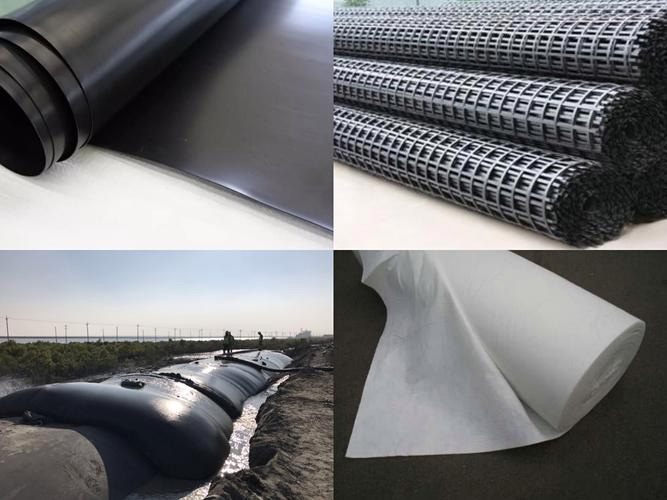
Shandong Hongyue specializes in the production of high-performance geosynthetics, including nonwoven and woven geotextiles, geomembranes, composite geomembranes, waterproof boards, bentonite waterproof blankets (GCL), 3D composite drainage nets, geocells, geogrids, ecological bags, and cement blankets. The company has a skilled sales and technical service division to assist clients, from initial design inquiries to final system installation on-site. Shandong Hongyue is also a member of the Dezhou Geotextile Association, contributing to industry-standard quality assurance programs for infrastructure components.
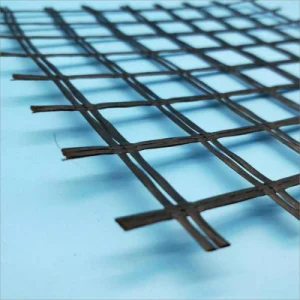
Using structural geocells and high-strength geogrids to distribute localized shear stresses in low-bearing-capacity soils. This system mitigates structural fatigue, reduces base layer thickness, and prevents differential settling under dynamic highway transport loads.
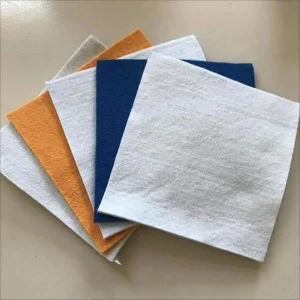
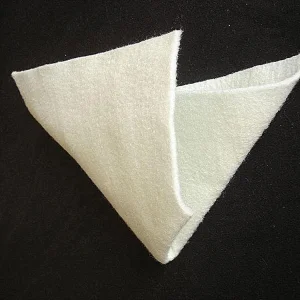
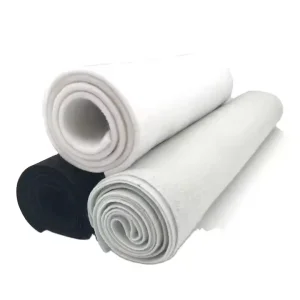
Our needle-punched non-woven polyester geotextiles provide long-term high hydraulic conductivity while retaining fine soil particles. This makes them ideal for sub-surface French drains, highway shoulders, and railway ballast structures.
Combining high-density polyethylene (HDPE) geomembranes with GCL bentonite blankets to prevent hazardous leachate infiltration. These multi-layer barriers offer reliable environmental protection in complex landfill and chemical containment facilities.
Using 3D composite drainage networks, geocells, and ecological vegetation bags to reinforce steep highway embankments. This design prevents topsoil erosion from high rainfall while supporting vegetative root growth for natural slope stability.
Sourcing premium polyester (PET) chips, polypropylene (PP) filaments, and viscose fibers. Every incoming batch undergoes strict inspection to verify chemical stability and polymer density.
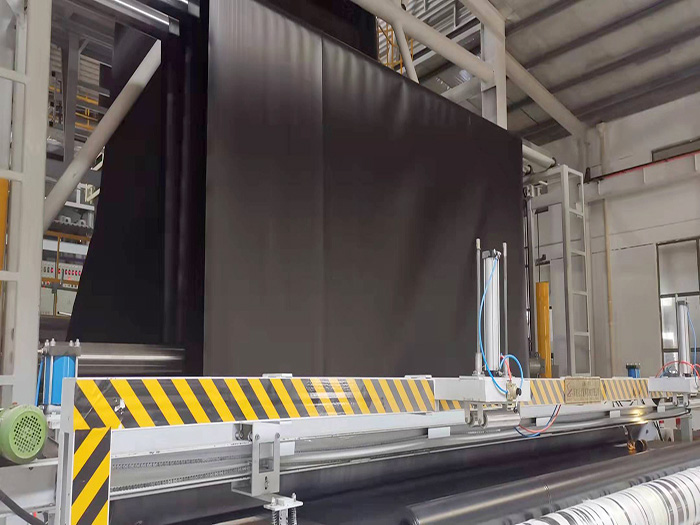
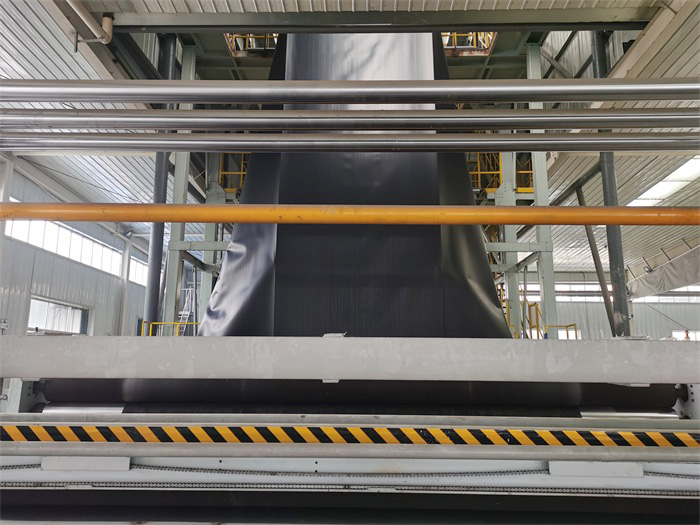
Polymer chips are processed in a high-precision screw extruder. Under monitored pressure, the melted polymer is extruded through spinnerets to produce fine filaments.
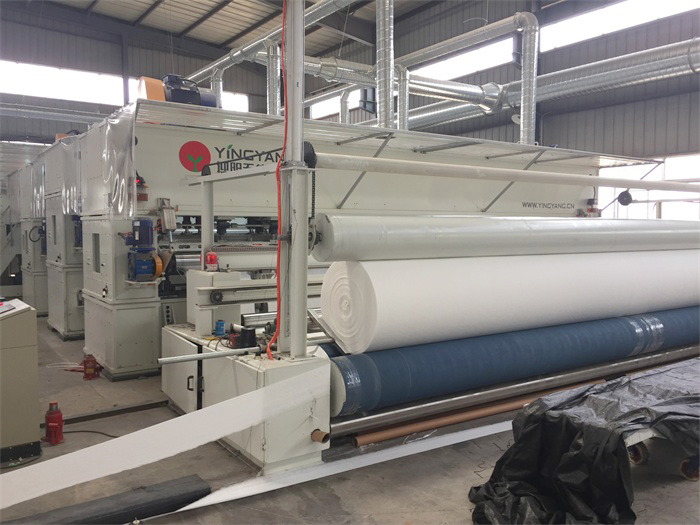
The continuous filaments are laid uniformly on conveyor systems. They are consolidated through mechanical needle-punching to lock the fibers into a robust 3D matrix.
The consolidated web undergoes controlled thermal calendering and stretching to optimize tensile strength, elongation limits, and structural integrity.
Edge-trimming and sizing systems cut the material to project-specified widths. Integrated sensors monitor thickness consistency across the entire roll width.
Finished rolls are wrapped in protective UV-resistant layers. Batch samples undergo final testing in our laboratory for grab tensile strength and water permeability before shipping.
Implementing geosynthetic materials requires precise field engineering practices to achieve the intended performance and longevity. The installation process follows three key stages:
1. Subgrade Preparation: The soil surface must be graded, compacted, and cleared of sharp rocks, roots, or debris that could puncture the polymer barrier. Standing water must be drained to ensure a stable working base.
2. Layout and Joint Seaming: Roll out the geotextiles smoothly, avoiding folds or wrinkles. Adjacent sheets should overlap by 300mm to 500mm, depending on soil stability. For geomembranes, joint sealing must be completed using specialized thermal welding equipment to prevent any risk of fluid leakage.
3. Maintenance and Protection: Cover the laid geosynthetics with structural aggregate layers as soon as possible to prevent prolonged UV exposure. Perform regular physical inspections along drainage paths to clear any accumulated silt or foreign debris, maintaining long-term permeability.
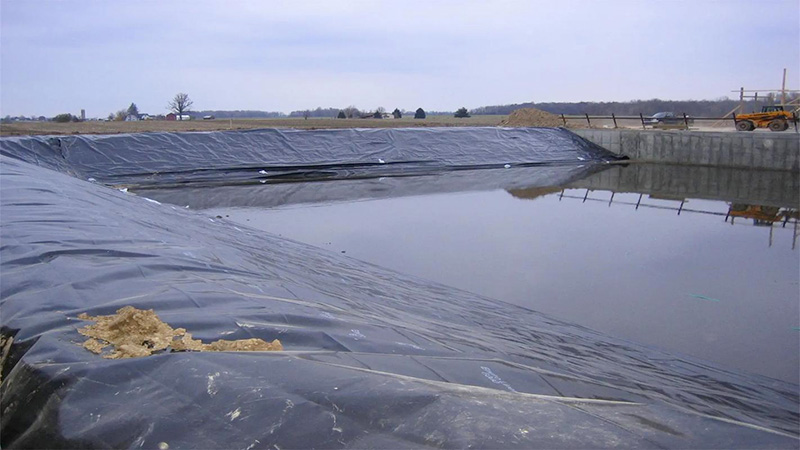
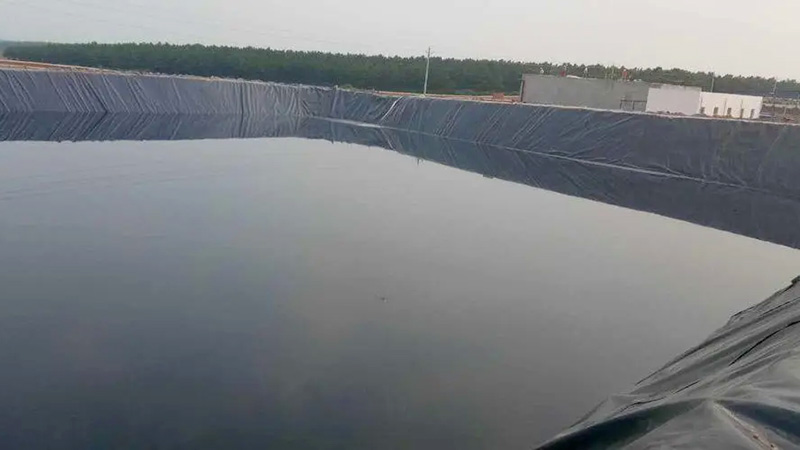
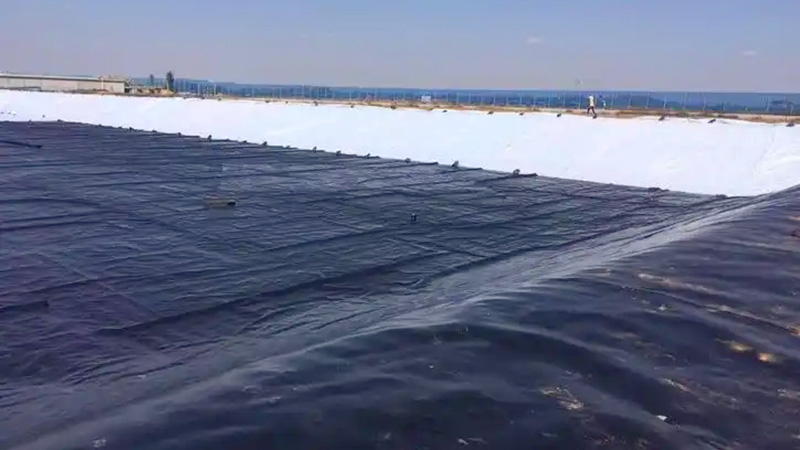
Geomembranes and composite geosynthetics are critical in hydraulic structures like reservoirs, canal systems, and levee embankments. Our high-density polyethylene (HDPE) linings create a reliable, low-permeability barrier. This minimizes water loss through subsoil seepage, stabilizes embankments against hydraulic pressure, and prevents internal soil piping. Our materials provide durable containment solutions for canal systems, reservoir basins, municipal water channels, and secondary containment structures.
Woven geotextiles are manufactured by weaving synthetic fibers together, resulting in high tensile strength and load capacity. This makes them ideal for subgrade reinforcement, stabilization, and road base applications. Nonwoven geotextiles are produced by bonding fibers mechanically (needle-punching) or thermally. They offer excellent water permeability and filtration, making them best suited for drainage, erosion control, and separating different soil layers.
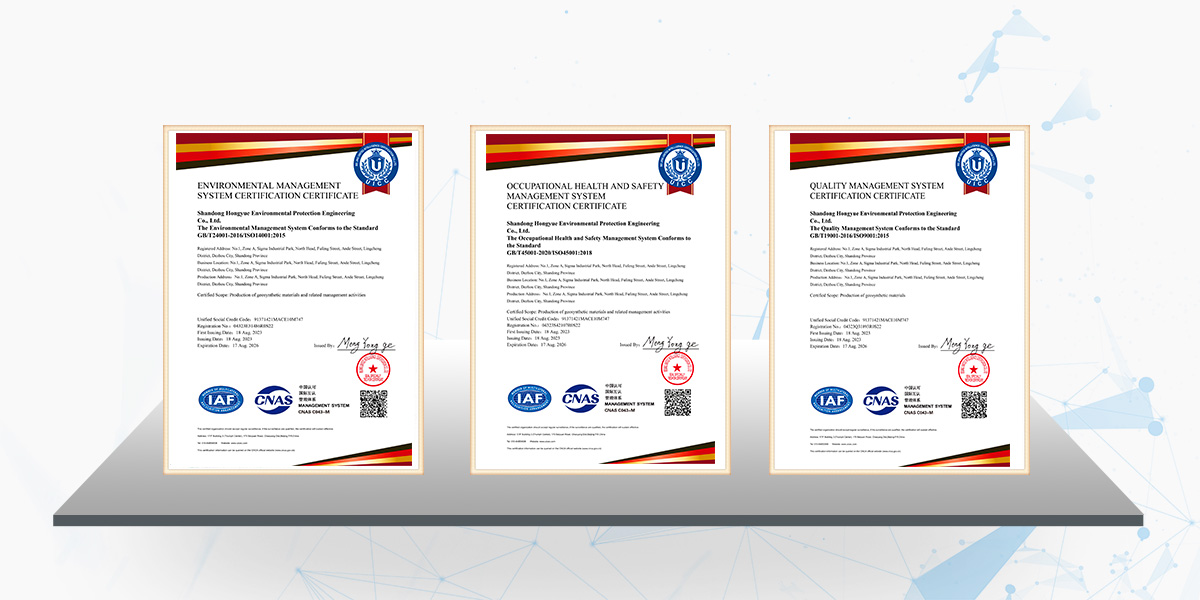
We maintain complete, systematic quality control certified under ISO9001, ISO14000, and ISO45001 standards. Our manufacturing facility uses automated production lines that continuously monitor material thickness, density, and consistency. Additionally, our on-site laboratory tests samples from every production batch for tensile strength, puncture resistance, and permeability. All products meet or exceed national and international civil engineering standards.
High-Density Polyethylene (HDPE) is the industry standard for environmental containment and landfill lining. It offers excellent chemical resistance, low permeability, and outstanding long-term durability against UV exposure and biochemical degradation. For projects requiring greater flexibility on irregular surfaces, Linear Low-Density Polyethylene (LLDPE) is also used.
The overlap joint width directly impacts the structural integrity of the geotextile barrier. Unstable subgrades with lower California Bearing Ratio (CBR) values require wider overlaps (typically 500mm to 900mm) or physical sewing to prevent soil intermixing. For stable subgrades, standard overlaps of 300mm to 500mm are sufficient to maintain reliable filtration and separation.
Yes. Shandong Hongyue can customize roll widths, lengths, thicknesses, and tensile properties to meet specific project designs. We can also add UV stabilizers, chemical-resistant treatments, and anti-aging compounds to ensure the materials perform reliably under challenging thermal, acidic, or alkaline soil conditions.
 Hongyue