 Hongyue
1 / 3
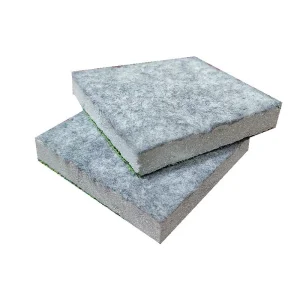
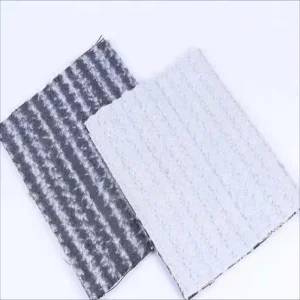
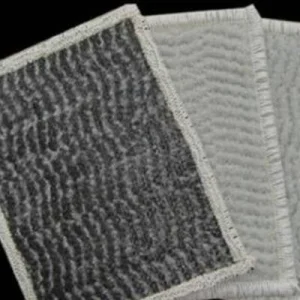
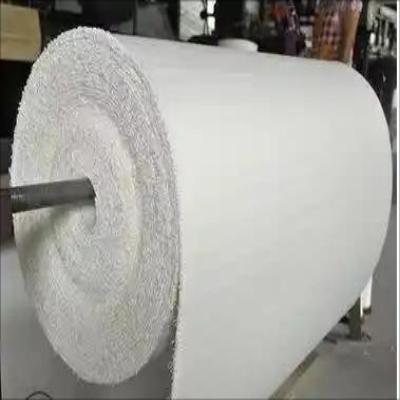
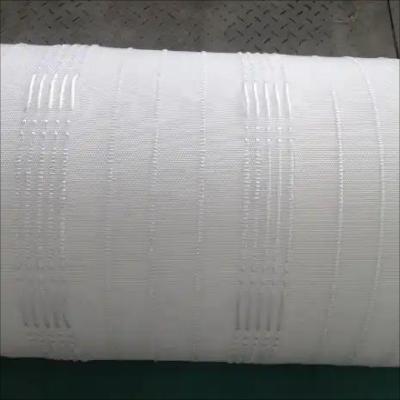
In its dry state before coming into contact with water, the cementitious composite mat is just like an ordinary blanket. It can be easily rolled up, folded, or cut, which facilitates transportation and storage. This flexibility enables it to adapt to various complex terrains and irregular construction sites. For example, in some small water conservancy projects in mountainous areas, the cementitious composite mat can be laid along the winding ditches with ease, without the need for complicated formwork setting like traditional concrete.
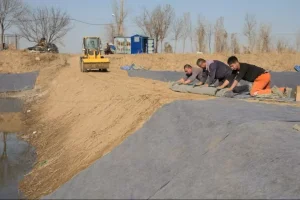
The construction process is relatively simple and quick. All you need to do is lay the cementitious composite mat in the required position and then water it. After watering, the cementitious composite mat will gradually harden within a certain period of time (usually depending on the product specifications and environmental conditions, generally within a few hours). Compared with traditional concrete construction, this greatly reduces complex procedures such as mixing and pouring, and does not require large construction equipment, thus reducing the difficulty and cost of construction.
Once in contact with water, the cementitious composite mat can set rapidly and form a structure with a certain strength. The setting time can be adjusted by means of additives to meet the needs of different projects. In some emergency repair projects, such as road repairs and temporary reinforcement of dams, this characteristic of rapid setting can play a huge role, enabling the project to restore its basic functions in a short time.
Since its main component includes cement, the hardened cementitious composite mat has good waterproof performance. It can effectively prevent water penetration and is widely used in lining canals in water conservancy projects, waterproofing the bottoms of ponds, and so on. Moreover, some specially treated cementitious composite mats have even better waterproof performance and can withstand a certain amount of water pressure.
They are widely used in the construction and repair of canals, water troughs, small reservoirs, ponds, and other water conservancy facilities. For example, for the leakage repair of some old canals, the cementitious composite mat can be directly laid on the inner wall of the canal. After watering and hardening, a new anti-seepage layer will be formed, which can effectively improve the water conveyance efficiency of the canal and reduce the waste of water resources.
They are used for temporary road repairs, simple paving of rural roads, and ground hardening of parking lots. When there are potholes or local damages on the road, the cementitious composite mat can be used as a quick repair material to reduce the impact of road maintenance on traffic. In rural road construction, the cementitious composite mat can provide a simple and economical ground hardening solution.
They are applied in waterproofing treatments for building foundations, basement waterproofing, and ground hardening of roof gardens. For waterproofing around building foundations, it can prevent groundwater from eroding the foundation; in basement waterproofing, it can enhance the waterproof barrier of the basement; in roof gardens, the cementitious composite mat can be used as a ground material, meeting both the hardening and waterproofing requirements.
They play a role in slope protection in garden landscapes, flower beds, and landscape footpaths. In slope protection projects, the cementitious composite mat can prevent soil erosion on the slope and protect the vegetation on the slope; in flower bed construction, it can be used as the wall and bottom material of the flower bed, providing structural support and waterproofing functions; in landscape footpath paving, the cementitious composite mat can be cut and laid according to design requirements to create beautiful and practical footpaths.