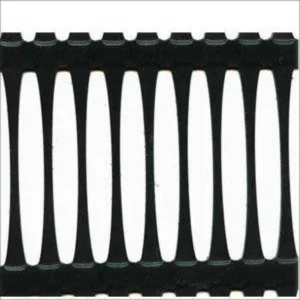
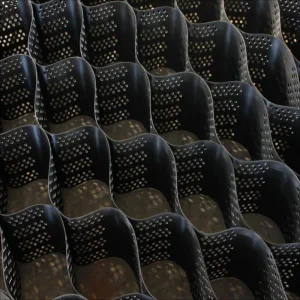
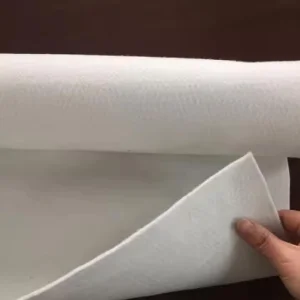
Direct from Manufacturer - High-load structures, engineered to DIN standards and fully CE-compliant.
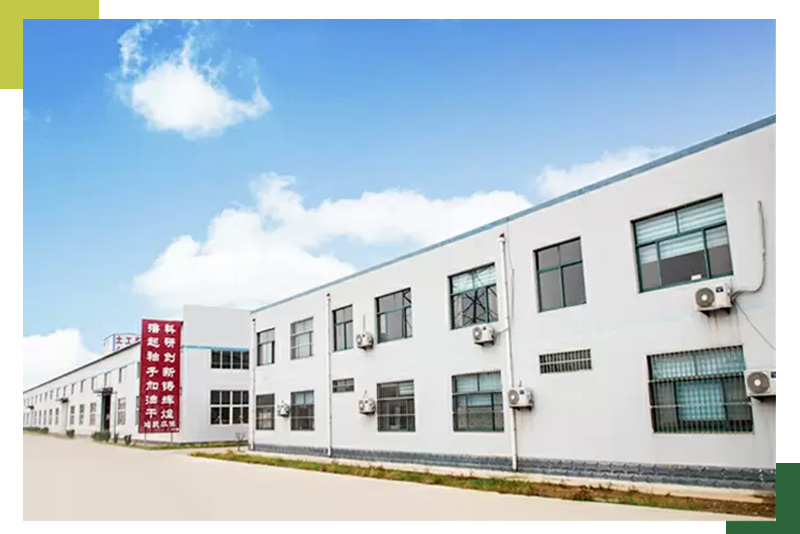
Established with a registered capital of 105 million RMB, Shandong Hongyue is a premier scientific and technological geotechnical material manufacturer integrating custom design, state-of-the-art production, global distribution, and professional engineering consultancies.
Operating from Dezhou, Shandong Province, we leverage localized production hubs, a dedicated research team, and advanced polymer extruders to meet strict Western European and German infrastructure metrics. Our proximity to global transport corridors allows rapid delivery of high-volume consignments directly to construction sites throughout Germany.
How Modern Geotechnical Systems Address Germany's Evolving Civil Engineering & Environmental Standards
In recent years, Central Europe—and Germany in particular—has experienced severe meteorological shifts. Extreme precipitation events, such as the catastrophic floods in Rhineland-Palatinate and North Rhine-Westphalia, have exposed the vulnerability of traditional concrete-bound drainage designs. The response is a regulatory push toward the **Schwammstadt (Sponge City)** model. This philosophy dictates that urban landscapes must function like sponges, absorbing, retaining, and filtering rainwater locally rather than channeling it directly to overloaded river systems.
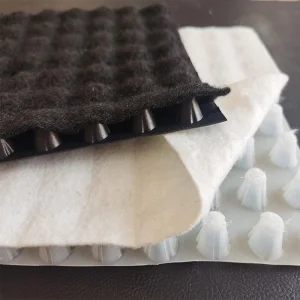
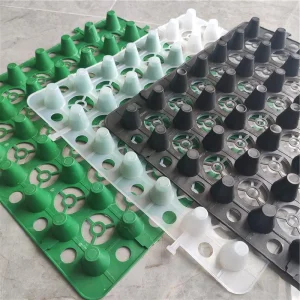
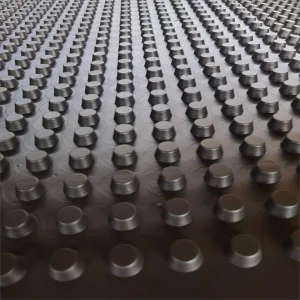
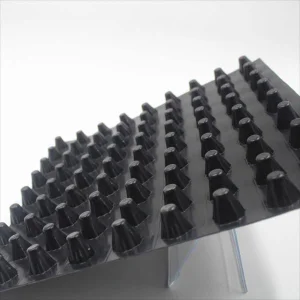
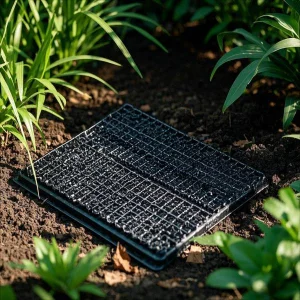
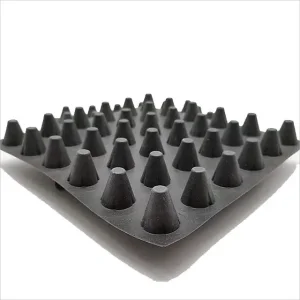
Our composite drainage boards and dimpled sheets play a pivotal role in this. By combining high-void storage layers with robust geotextiles, they enable efficient attenuation and natural filtration, protecting underground basements and urban foundations from hydrostatic buildup.
German contractors are bound by some of the world's most stringent environmental and civil planning laws. The **Bundes-Bodenschutzgesetz (BBodSchG)** (Federal Soil Protection Act) mandates strict mitigation of soil erosion and water contamination. Consequently, all geosynthetic materials must demonstrate zero chemical leaching, high resistance to localized microbiological decay, and reliable longevity (often exceeding 50 or 100 years).
Furthermore, structural drainage designs must conform to **DIN 4095** (Planning, design and installation of drainage systems protecting structures against water in ground) and **DIN 18195** (Waterproofing of buildings). Our materials undergo rigorous shear, tensile, and long-term compressive creep tests to verify compliance with these German standards, ensuring smooth approval processes with building inspectors (Bauaufsicht).
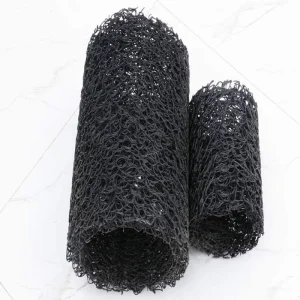
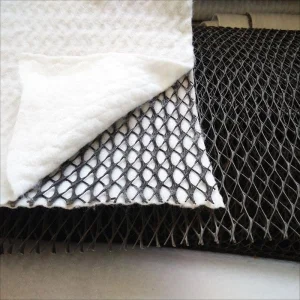
The German Sustainable Building Council (DGNB) drives carbon reduction targets for new developments. Excavating deep foundations and backfilling with heavy natural gravel drains incurs a massive carbon footprint due to transportation and aggregate processing. By utilizing lightweight **HDPE dimpled drainage boards and geonets**, logistics costs are slashed up to 90%. One container of our composite geosynthetic drainage net provides equivalent hydraulic flow to dozens of truckloads of traditional drainage gravel, optimizing project carbon budgets.
Advancing structural drainage dynamics through polymer chemistry and multi-layer composites
We use 100% virgin High-Density Polyethylene (HDPE) and Polypropylene (PP) resins. This prevents environmental stress cracking (ESCR) and guarantees structural integrity under heavy cyclic loads.
Unlike glued products that experience premature delamination, our geotextile layers are thermally welded directly onto the plastic dimples or geonets, maintaining steady filtration paths under soil pressure.
Designed to handle high hydraulic gradients. Our geonets and dimpled boards offer predictable flow rates even under sustained compressive stresses of up to 400 kPa, exceeding standard civil engineering safety margins.
From raw chemical compounds to high-integrity structural drainage rolls
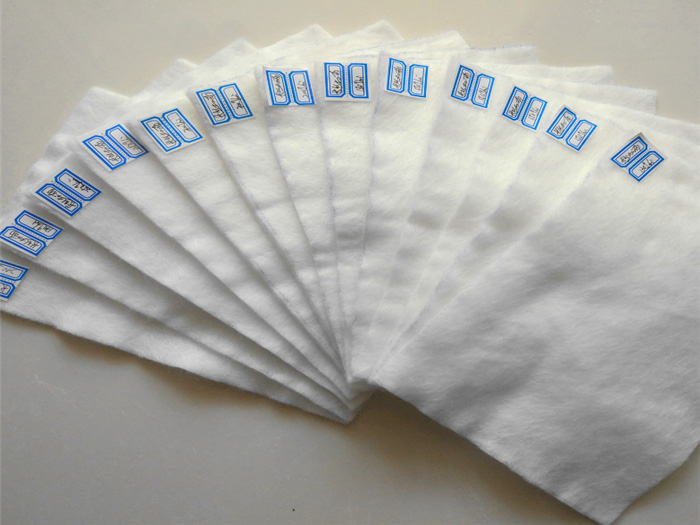
Precision automatic fiber extruders in operation
In-house testing labs verify melt flow index (MFI), density, and chemical purity of incoming polymers. Only verified raw materials are passed to the automated extrusion silos.
Polyester and polypropylene chips are melted at precise temperatures, then combined with UV stabilizers and anti-microbial additives to protect against long-term subterranean degradation.
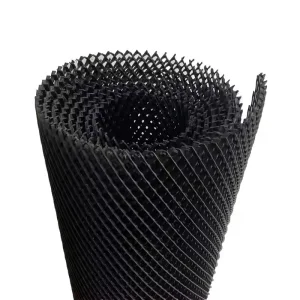
Advanced vacuum rollers mold high-strength dimpled sheets and three-dimensional geonet arrays. Exact dimensional controls guarantee consistent depth and uniform wall thickness.
The core material is stabilized through controlled draft curing. If a composite product is scheduled, a non-woven geotextile is thermally bonded onto the core under high-pressure lamination.
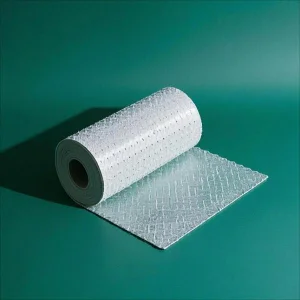
Heavy-duty winding machines roll up finished products to precise lengths (custom lengths available for deep German infrastructure designs to minimize seam overlapping). All rolls are tightly sealed to prevent moisture and UV entry during transit.
Every single batch undergoes testing for wide-width tensile strength, static puncture resistance (CBR test), water permeability, and hydraulic flow capacity. Detailed certificates are archived for full audit trace compliance.
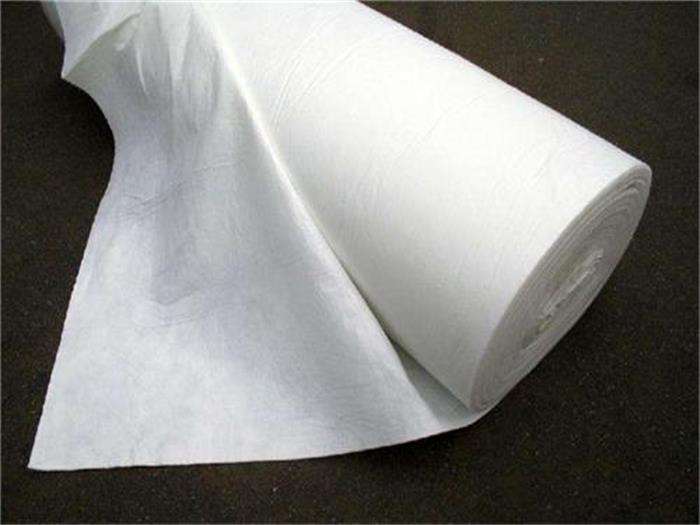
Automated roll packaging line meeting international shipping protection standards
Professional installation guidelines matching Germany's strict building execution frameworks
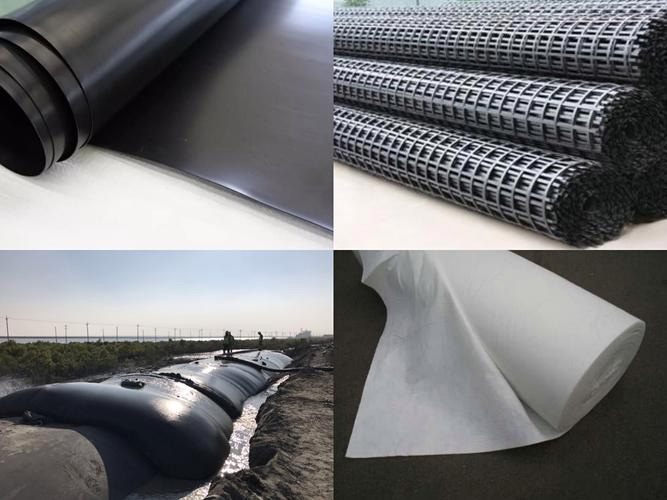
Before laying, the subgrade must be compacted to the specified Proctor density and cleared of all sharp aggregates, tree roots, or protruding objects. In Germany, a protective non-woven geotextile cushion (typically Class GRK 4 or GRK 5) is placed directly on the prepared ground to safeguard the waterproofing layer.
Geomembranes must be joined using dual-track hot-wedge welding machines. This creates a split channel that can be pressure-tested with air to verify joint integrity. For detailing around pipe penetrations, structural corners, and terminations, specialized manual extrusion welding guns are used with matching HDPE welding rods.
Installations are checked using non-destructive spark tests or pressure testing. For underground basement applications, the drainage board must extend above the ground surface line, terminating with specialized profiles to prevent backfill soil from washing behind the dimple structure.
Tested performance across major hydraulic, municipal, and commercial developments
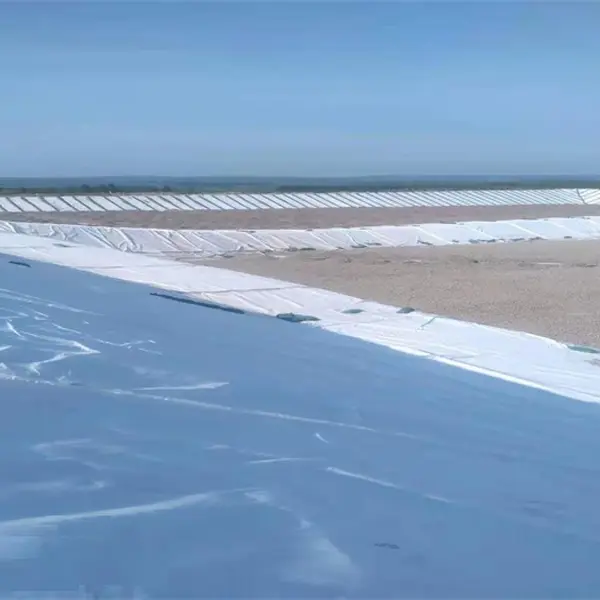
Our geomembranes and protective geotextiles offer highly reliable barrier layers for reservoirs, agricultural canals, and containment basins. By optimizing permeability indices, they stop water loss and keep surrounding soil embankments stable.
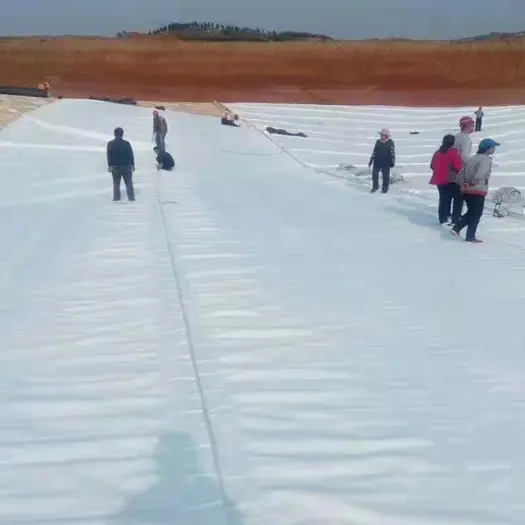
Stabilizing slopes and preventing lateral erosion along riverbanks. Combining geocells and concrete canvas enables rapid bio-engineering of channels that blend into natural floodplains while standing up to high water velocities.
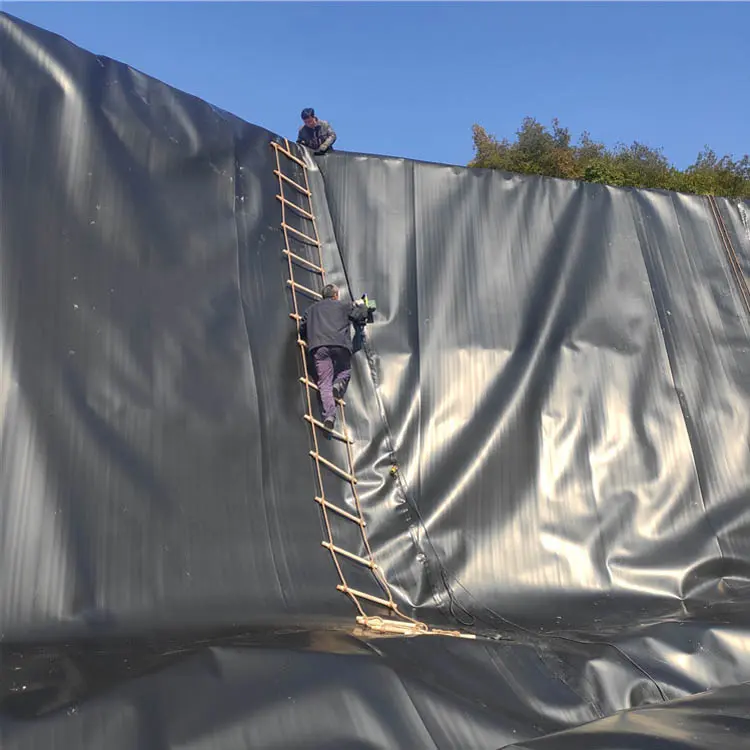
Meeting zero-pollution mandates for hazardous municipal landfill waste containment. Our composite drainage networks and bentonite blankets form redundant barrier layers that block leachate migration into local aquifers.
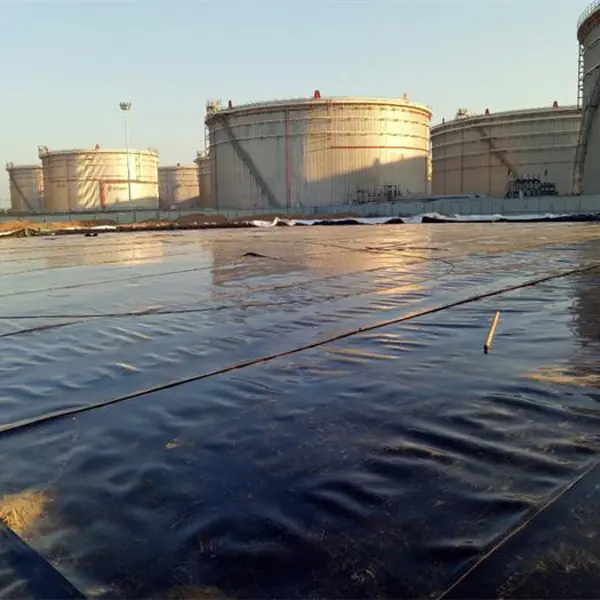
Providing secondary containment barriers for oil storage fields, manufacturing zones, and mining leach pads. Engineered with excellent chemical resistance, our products withstand heavy hydrocarbons, strong acids, and bases.
Explore our complete range of certified drainage boards, geonet grids, and slope protection systems
Crucial information on drainage specifications, logistics, certifications, and product handling
Get a direct manufacturer quote, customized product data sheets, and free samples for your German infrastructure or building project. Our engineering team is ready to assist you.
Request Technical Quote & Samples Hongyue