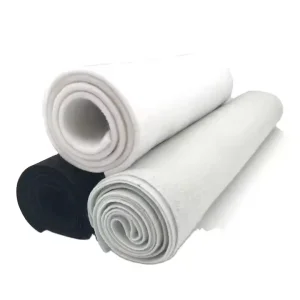
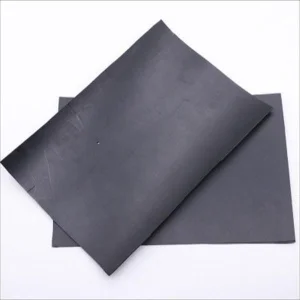
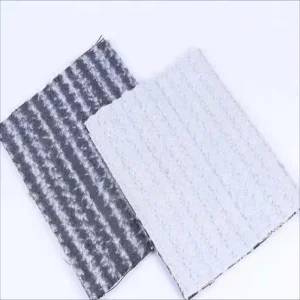
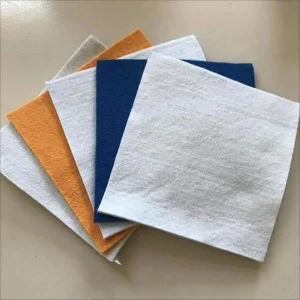
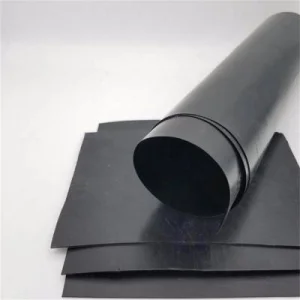
In modern civil engineering, infrastructure longevity is heavily dependent on subgrade stability. The 500g/m² non-woven geotextile stands as a critical industry benchmark for heavy-duty applications. Fabricated predominantly from virgin Polyester (PET) or Polypropylene (PP) polymers via state-of-the-art needle-punched processes, this weight class offers a high-performance balance of high tensile strength, exceptional CBR puncture resistance, and optimum water permeability.
The role of a 500g/m² geotextile spans across four fundamental pillars of engineering: filtration, separation, drainage, and mechanical protection. By placing this high-density barrier between dissimilar soil strata, engineers prevent intermixing, preserve soil load-bearing capacities, and establish structural relief channels for groundwater. As a direct result of these physical capabilities, the 500g/m² specification is commonly deployed in hydraulic works, dam walls, highway construction, and landfill liner protection layers globally.
Across global markets, geotechnical designs demand site-specific solutions. A 500g/m² needle-punched non-woven geotextile provides crucial load distribution and filtration capabilities across diverse environments:
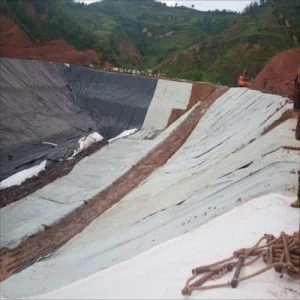
In international waste management projects, 500g/m² geotextiles act as a heavy-duty cushion. Positioned directly over smooth geomembranes, they protect the impermeable barrier from puncture by sharp gravel or waste fragments, ensuring long-term containment integrity.
High-speed rail corridors utilize 500g/m² geotextiles to prevent the migration of fine clay subgrade into clean railway ballast. This maintains drainage pathways and avoids structural subgrade settlement under dynamic axle loads.
Under harsh tidal currents, marine retaining walls rely on geotextiles to hold back sandy backfills while allowing water to pass. The 500g/m² specification prevents erosion beneath riprap or concrete blocks along coastlines and river channels.
The table below outlines the core technical parameters for typical 500g/m² Polyester (PET) and Polypropylene (PP) needle-punched non-woven geotextiles. These values conform to global ASTM and ISO testing standards required for high-risk infrastructure projects:
| Property / Unit | Test Method Standard | PET Non-Woven (500g/m²) | PP Non-Woven (500g/m²) |
|---|---|---|---|
| Mass Per Unit Area (g/m²) | EN ISO 9864 / ASTM D5261 | 500 ± 5% | 500 ± 5% |
| Tensile Strength MD (kN/m) | EN ISO 10319 / ASTM D4595 | ≥ 30.0 | ≥ 38.0 |
| Tensile Strength CMD (kN/m) | EN ISO 10319 / ASTM D4595 | ≥ 28.0 | ≥ 35.0 |
| CBR Puncture Resistance (kN) | EN ISO 12236 / ASTM D6241 | ≥ 4.8 | ≥ 6.2 |
| Elongation at Break MD / CMD (%) | EN ISO 10319 | 40 / 70 | 50 / 80 |
| Water Permeability Coefficient (cm/s) | EN ISO 11058 / ASTM D4491 | 1.0 - 5.0 × 10⁻¹ | 1.0 - 3.5 × 10⁻¹ |
| Pore Size O95 (mm) | EN ISO 12956 / ASTM D4751 | 0.07 - 0.12 | 0.06 - 0.11 |
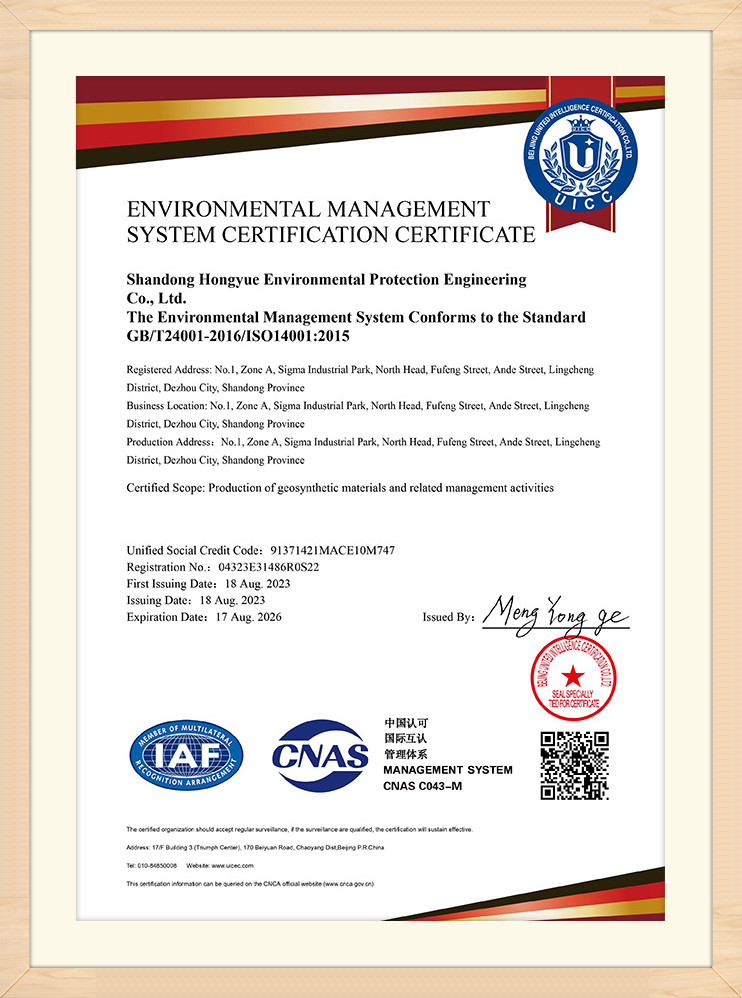
CE certification serves as a mandatory passport for construction products destined for the European Economic Area (EEA). For geotextiles, it represents compliance with the EU Construction Products Regulation (CPR) No 305/2011, ensuring standard performance criteria across Europe.
This certification confirms that products are manufactured under a registered Factory Production Control (FPC) system and regularly tested for critical characteristics like mechanical strength, durability, and hydraulic properties. For international buyers, CE-marked geotextiles signify verified, consistent quality, reducing onsite risks and meeting demanding regional construction regulations.
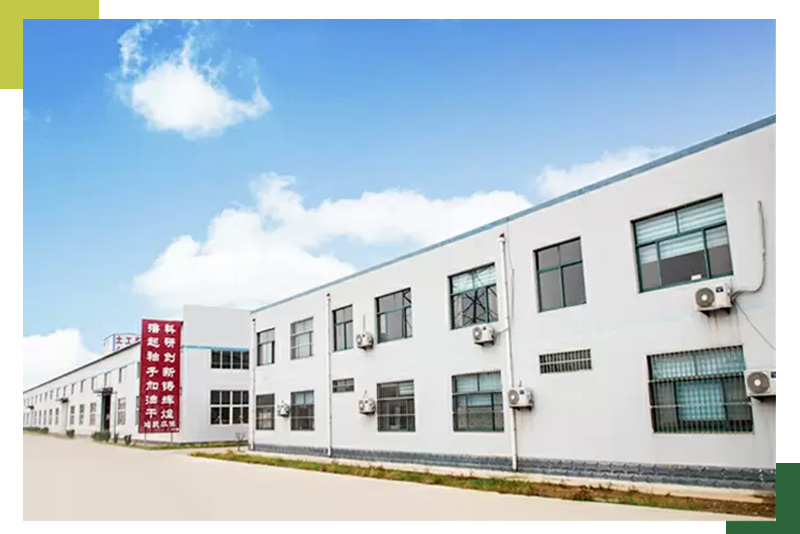
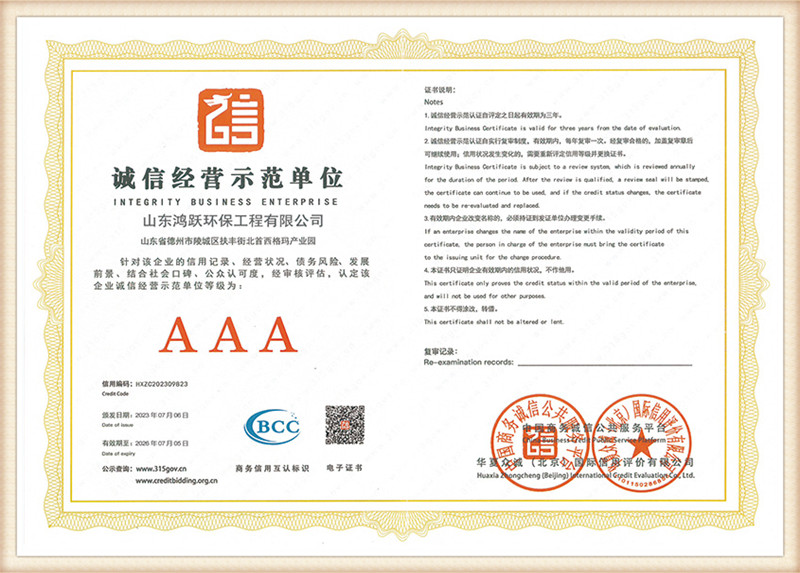
Located at the north end of Fufeng Street, Lingcheng District, Dezhou, Shandong Province, Shandong Hongyue Environmental Engineering Co., Ltd. is a leading manufacturer of geotechnical materials. Registered on April 6, 2023, with a registered capital of 105 million yuan, our facility operates in one of China's largest geosynthetic hubs.
Registered Capital (RMB)
9001, 14001, 45001 Certifications
Years Average Engineer Experience
Global Export Target Countries
Shandong Hongyue Environmental Engineering Co., Ltd. employs modern needle-punched production lines capable of manufacturing wide-width geotextiles up to 6 meters. This wide width minimizes overlap waste during installation, improving onsite efficiency.
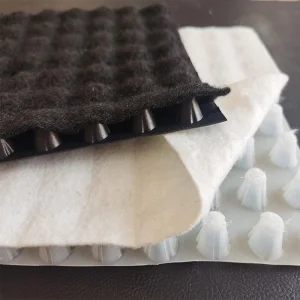
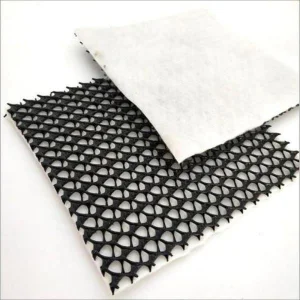
Our facility produces a comprehensive range of geosynthetics, including non-woven geotextiles, geomembranes, composite drainage networks, and bentonite waterproof blankets. This diversified capability ensures integrated supply chain solutions for large-scale engineering projects worldwide.
High-performance 500g/m² non-woven geotextiles require precise manufacturing steps. Below is the detailed roadmap utilized in Shandong Hongyue's facility:
High-grade polyester chips, polypropylene filaments, or viscose fibers are inspected and categorized to ensure consistent polymer quality.
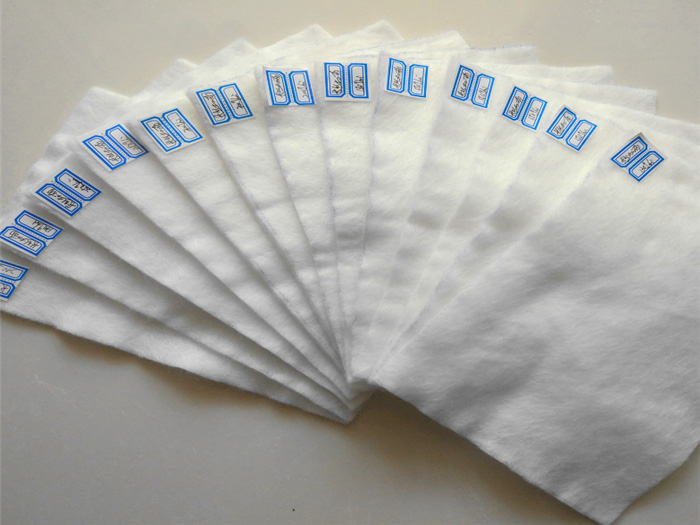
Polymers are melted and extruded into fine fibers, which are mechanically carded and layered to create a uniform, multi-directional web structure.
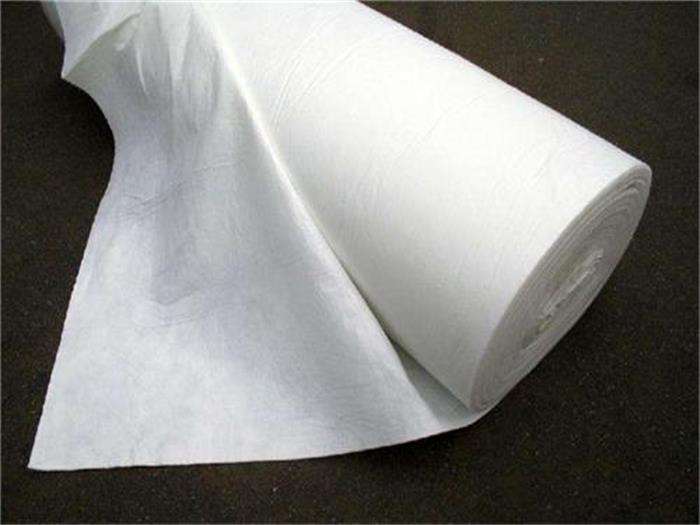
Thousands of barbed needles mechanically entangle the fibers, compacting the web into a highly stable geotextile roll ready for shipping.
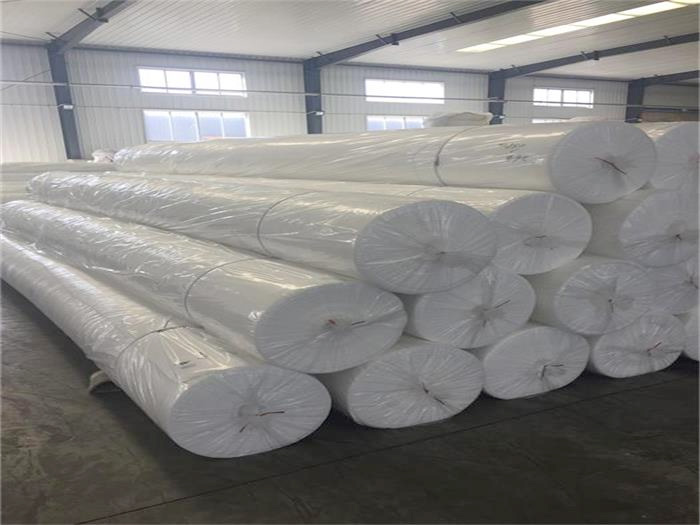
Proper installation is critical to achieving the design performance of a 500g/m² non-woven geotextile. Subgrade preparation, overlap margins, and protection from UV exposure during construction must be carefully managed.
Key Installation Practices:
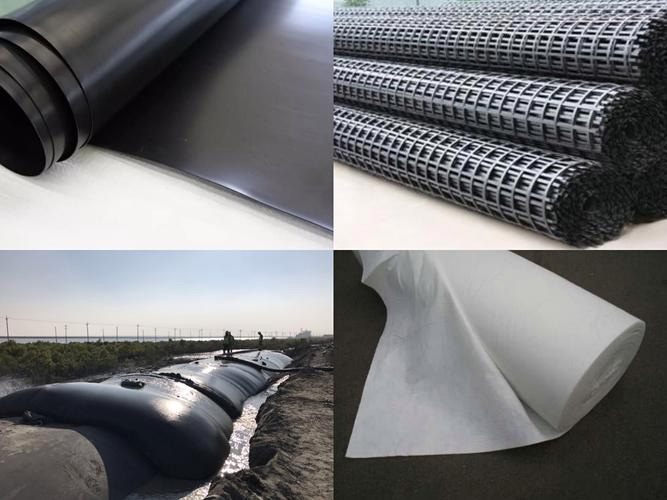
The cost of 500g/m² non-woven geotextiles varies based on raw materials, manufacturing standards, and shipping variables:
Polypropylene (PP) provides higher chemical resistance and tensile strength, typically commanding a higher price than Polyester (PET) geotextiles.
Virgin polymers offer consistent longevity and physical performance, while recycled options can reduce costs for less critical applications.
Large-volume container orders reduce unit shipping costs, helping stabilize pricing for long-distance international projects.
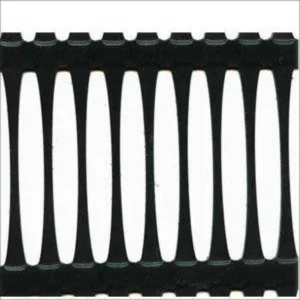
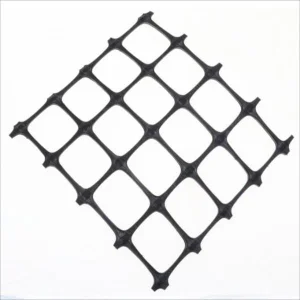
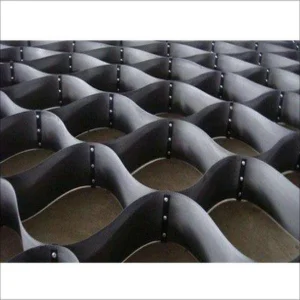
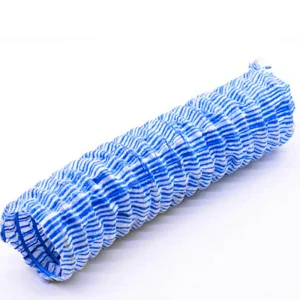
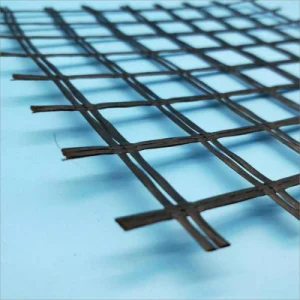
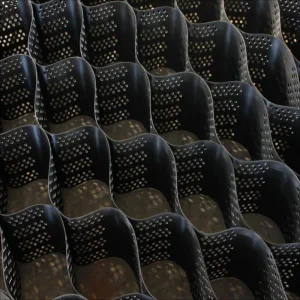
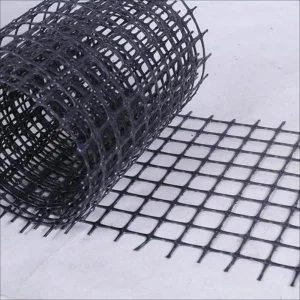
Geotextiles are rarely used in isolation. They form part of integrated environmental protection systems that combine geomembranes, drainage networks, and geocells:
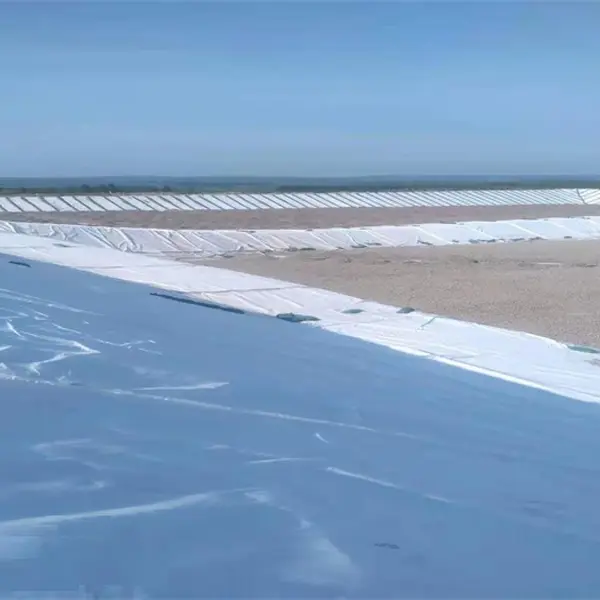
Integrating non-woven geotextiles with geomembranes creates durable water containment structures for reservoirs and canals.
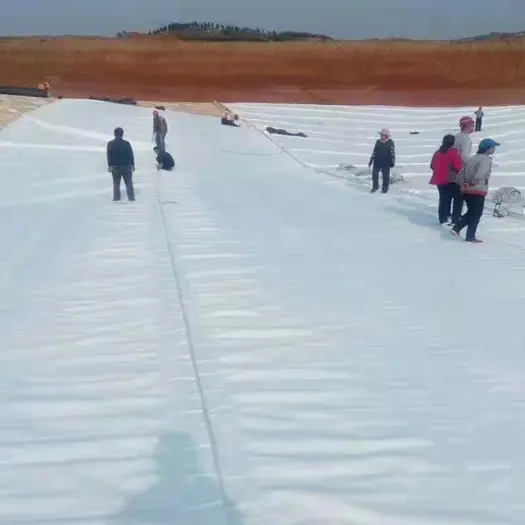
Non-woven geotextiles prevent fine soil loss while letting water pass, preventing erosion along river channels and canals.
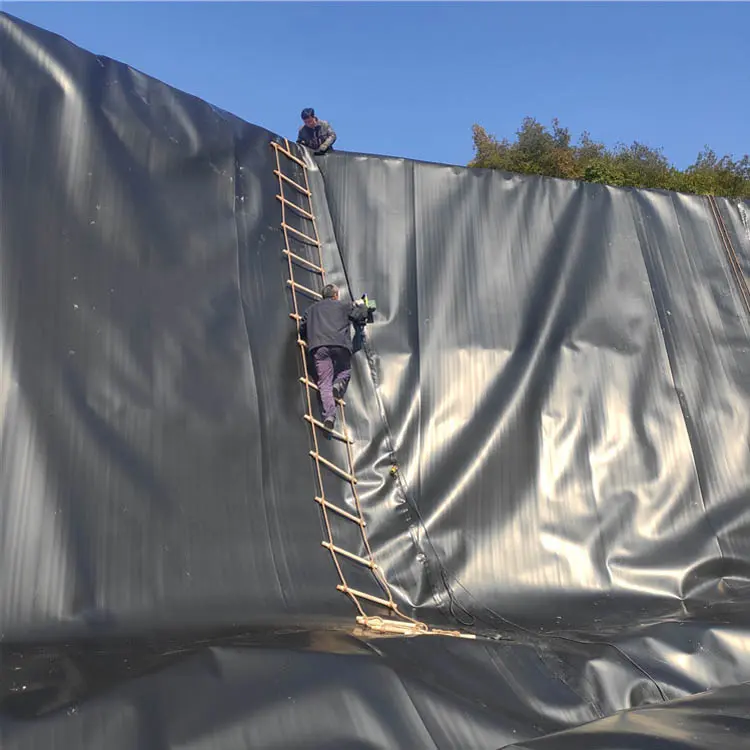
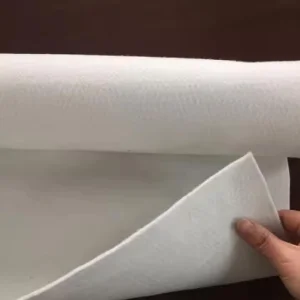
500g/m² geotextiles act as heavy-duty cushion layers, protecting primary geomembrane liners from puncture by angular gravel.
 Hongyue