 Hongyue
Industrial Whitepaper: Drainage System Dynamics in Korea
Analyzing localized geomorphic challenges, regulatory frameworks, and advanced geosynthetic technology pathways.
1. The Industrial and Commercial Landscape of Geotechnical Drainage in South Korea
South Korea's modern civil construction sector demands high-specification geo-drainage materials due to two defining factors: mountainous terrain (covering over 70% of the peninsula) and severe seasonality, specifically characterized by the annual monsoon ("Jangma") and typhoons. These extreme weather patterns deliver substantial rain volumes in compact periods, causing localized flooding and slope instability. Consequently, Korean engineers prioritize materials with outstanding planar flow capacity, high compressive resistance, and robust longevity.
In urban zones like the Seoul Metropolitan Area, Songdo International Business District, and Busan, massive underground space optimization projects (such as deep basement parking structures and underground commercial malls) require continuous moisture mitigation. Simultaneously, the country’s high-speed railway networks (KTX) and highway networks require structural soil stabilization and sub-grade drainage to prevent frost heave during freezing winters. High-density polyethylene (HDPE) and polypropylene (PP) composite systems have thus transitioned from optional additions to mandatory engineering standards.
2. Localized Application Scenarios Across Korean Provinces
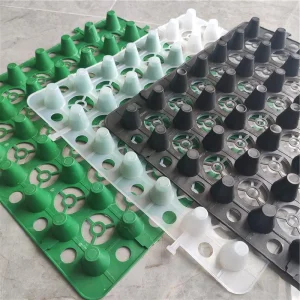
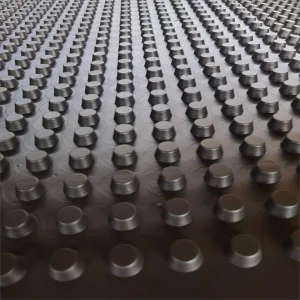
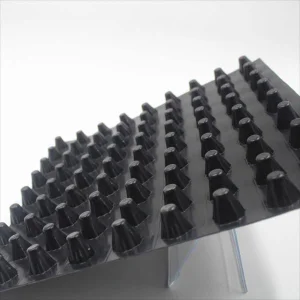
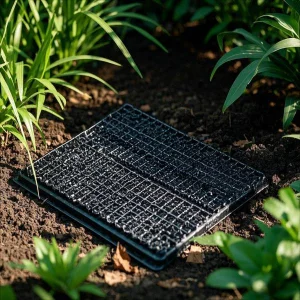
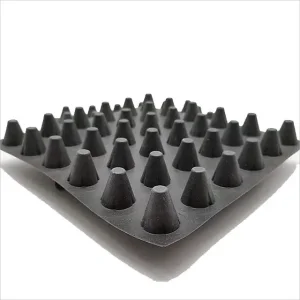
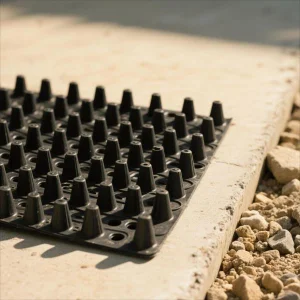
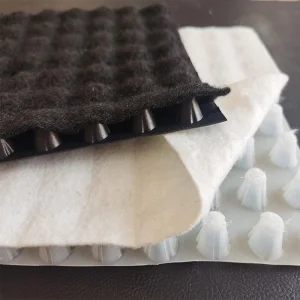
- Urban Underground Spaces & Roofing: The Korean housing paradigm heavily features high-rise residential complexes with extensive underground parking structures. Storage and drainage boards (such as the dimpled HDPE boards) are applied on roof gardens and basement walls to guide water away rapidly, preventing structural seepage and supporting green roof systems.
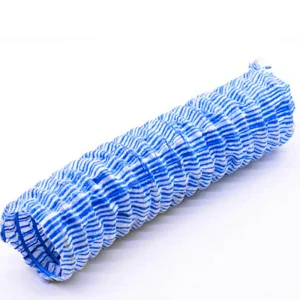
- High-Speed Railways (KTX) & Expressways: Sub-grade systems require specialized soft permeable pipes and plastic blind ditches. These elements collect and discharge sub-base water, reducing pore water pressure and preventing structural deterioration under high dynamic loads.
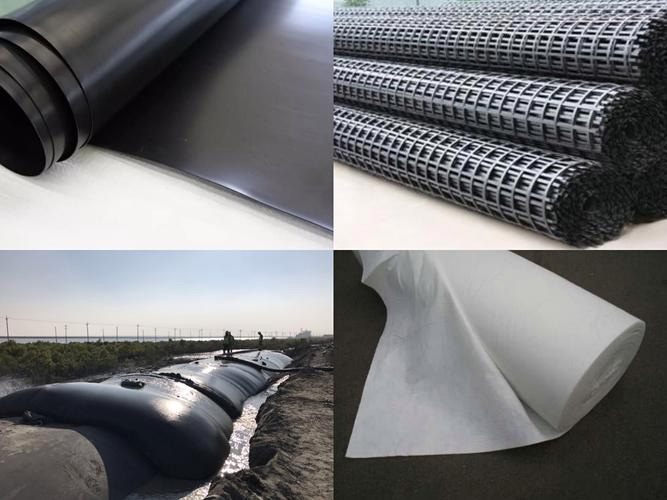
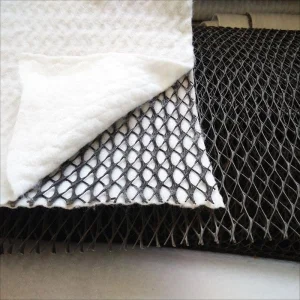
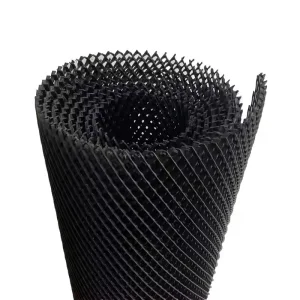
- Reclaimed Lands & Ports (Incheon & Gwangyang): Land reclamation works along the western and southern coastlines feature marine soils with poor consolidation profiles. Multi-dimensional geonets are deployed alongside vacuum consolidation processes to channel pore water out, speeding up consolidation.
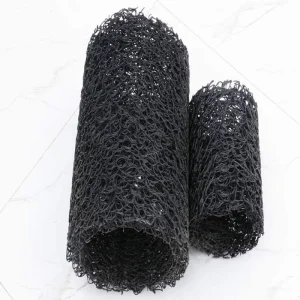
- Eco-Friendly Municipal Landfills & Mining Sites: The installation of double-layer geomembranes combined with tri-dimensional composite geonets forms the primary drainage and barrier system, preventing toxic leachate from polluting local water tables.
3. Future Technology Roadmap for Drainage Geosynthetics
The industry is shifting toward smart, high-durability polymers. Future product iterations emphasize recycled plastic integration to lower carbon footprints, aligned with Korea's Net-Zero goals. Modern manufacturing systems also incorporate anti-microbial additives to prevent geotextile clogging by biological films. Additionally, integrating fiber-optic sensors directly into geo-drainage structures allows engineers to monitor structural deformation and flow efficiency in real-time, changing structural maintenance protocols from reactive to predictive.