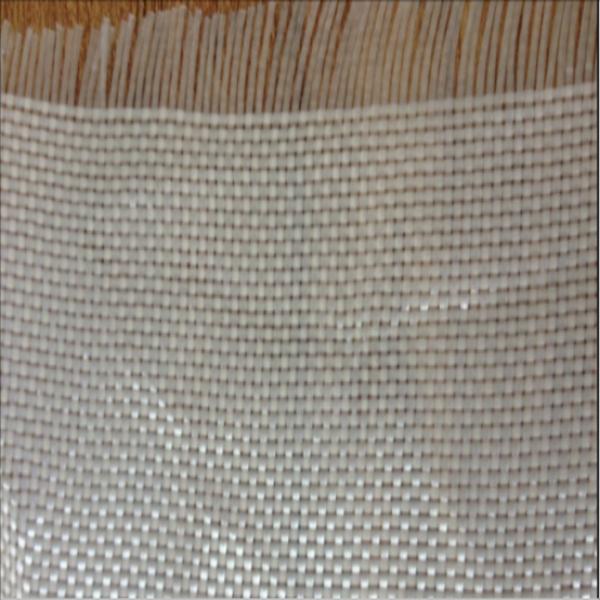
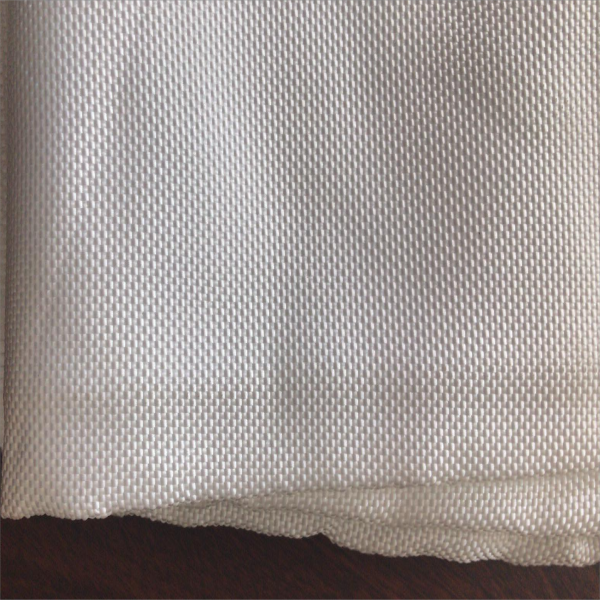
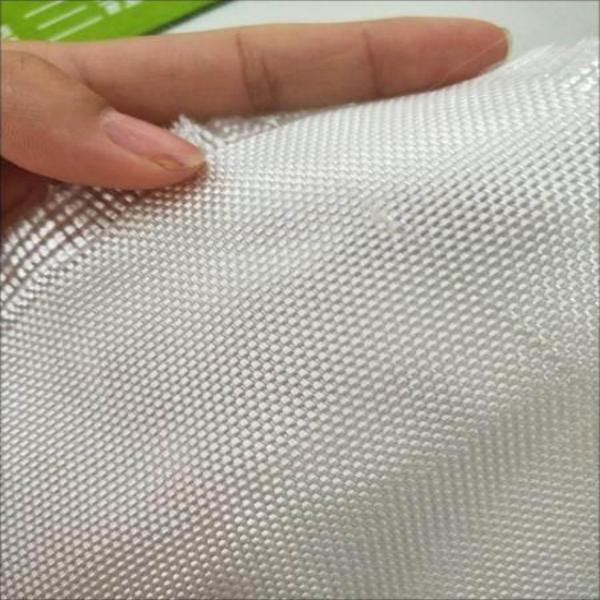
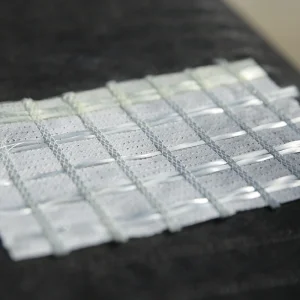
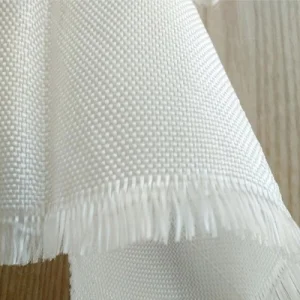
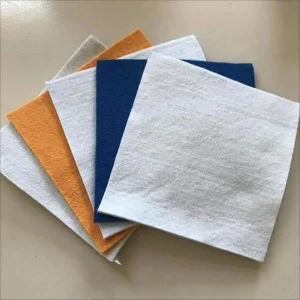
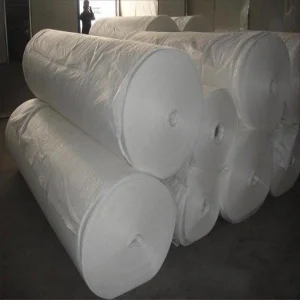
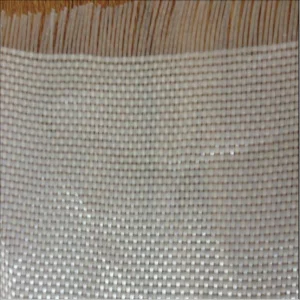
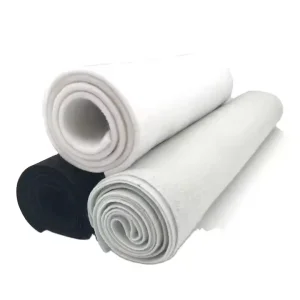
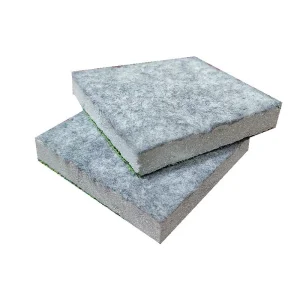
Woven geotextile is a kind of geosynthetic material made by interweaving two or more sets of yarns (or flat filaments) according to a certain pattern. The warp and weft yarns cross each other to form a relatively regular network – like structure. This structure, similar to woven fabric, has high stability and regularity.
Woven geotextile has a relatively high tensile strength, especially in the warp and weft directions, and its strength can meet the mechanical requirements of various engineering projects. For example, in water conservancy projects such as dams and cofferdams, it can withstand water pressure and earth pressure and prevent the destruction of structures. Generally speaking, its tensile strength can reach the level of several thousand Newtons per meter (kN/m). Its tear-resistance performance is also quite good. When subjected to external tearing force, the interwoven structure of the yarns can effectively disperse the stress and reduce the degree of tearing.
Due to its regular interwoven structure, woven geotextile has good dimensional stability. Under different environmental conditions, such as temperature and humidity changes, it will not easily deform. This makes it very suitable for projects that require long-term shape and position maintenance, such as in railway ballast bed reinforcement projects, where it can play a stable role.
The pore size and distribution of woven geotextile are relatively regular. The porosity can be adjusted according to the weaving process and can generally be effectively controlled within a certain range. This regular pore structure enables it to have good filtration performance, allowing water to pass freely while preventing soil particles from being carried away by the water flow. For example, in coastal protection projects, it can filter seawater and prevent the loss of sea sand.
In water-conservancy structures such as dams and embankments, woven geotextile can be used to reinforce the dam body and embankment. It can enhance the anti-sliding stability of the soil mass and prevent the embankment from landslides and other damages under the action of water flow scouring and earth pressure. At the same time, as a filter layer, it can prevent the fine particles inside the dam body from being washed away by seepage and ensure the seepage stability of the dam body. In canal lining projects, woven geotextile can be laid between the lining material and the soil foundation to play a role of isolation and filtration, protect the lining material and extend its service life.
In the subgrade construction of highways and railways, woven geotextile can be laid at the bottom or on the slope of the subgrade. It can enhance the bearing capacity of the subgrade, distribute the vehicle load transmitted from the road surface and prevent the subgrade from being damaged due to uneven settlement. In the treatment of soft soil foundation, woven geotextile can be used in combination with other reinforcement materials. For example, it can be used as a reinforcement material in the reinforced earth retaining wall to improve the stability of the retaining wall.
In the foundation engineering of buildings, woven geotextile can be used to isolate the foundation from the surrounding backfill. It can prevent the impurities in the backfill from corroding the foundation and at the same time avoid the mixing of the foundation material and the backfill, ensuring the bearing capacity and stability of the foundation. In the basement waterproofing project, woven geotextile can be used as an auxiliary material, in combination with the waterproof layer to enhance the waterproof effect.
Frequently Asked Questions (FAQ)
What is a woven geotextile?
Woven geotextile is a geosynthetic material made by interweaving two or more sets of yarns or flat filaments (warp and weft) in a regular pattern. This structure offers outstanding dimensional stability and regularity, similar to standard woven fabrics.
How does a woven geotextile achieve high strength?
It features high tensile strength along its warp and weft directions, capable of reaching several thousand Newtons per meter (kN/m). The interwoven pattern also disperses stress efficiently to provide high resistance against tearing and physical damage.
How does environmental stability affect the geotextile?
Due to its regular interwoven structure, it exhibits excellent dimensional stability. It does not deform easily under changing environmental factors, such as shifts in temperature and humidity, making it ideal for projects requiring long-term shape retention.
Can woven geotextiles filter water while holding back soil?
Yes. The geotextile features a regular, adjustable pore structure that allows water to flow through freely while preventing fine soil particles or sea sand from being washed away, serving as an effective filtration and erosion control layer.
Where are woven geotextiles commonly applied?
They are widely used in water conservancy projects (dams, embankments, canal linings), road and traffic engineering (highway/railway subgrade reinforcement), and general construction (foundation isolation and basement waterproofing protection).
 Hongyue