Direct factory supply solutions customized for global infrastructure, water conservancy, and site stabilization projects.
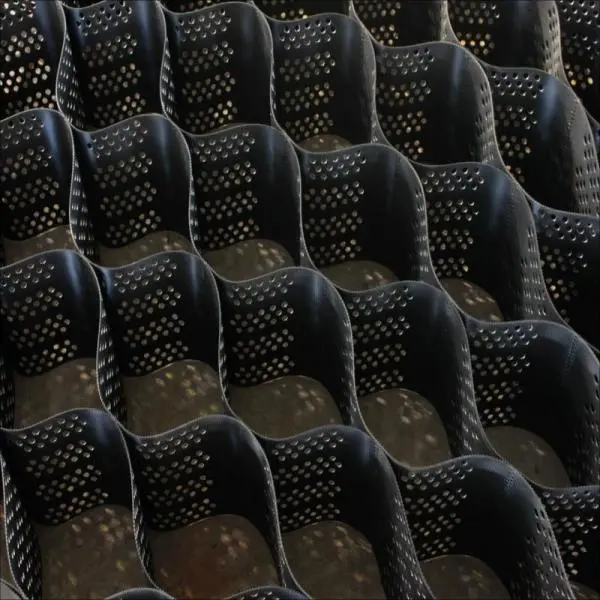
Geocell materials represent one of the most significant breakthroughs in modern geotechnical engineering. By employing a three-dimensional honeycomb structure constructed from high-density polyethylene (HDPE) or other advanced polymers, Geocellular Confinement Systems (GCS) fundamentally alter the stress-strain behavior of infill soils.
Under loading, the geocell walls exert a lateral confining force on the infill particles, establishing a state of three-dimensional confinement. This constraint dramatically increases the shear strength of poor load-bearing soils, decreases lateral deformation, and creates a stiff mattress foundation that distributes vertical loads over a wider area. Known as the beam effect, this mechanism mitigates differential settlement and prevents localized shear failure.
By incorporating engineered perforations in the geocell cell walls, modern designs maintain optimal hydraulic conductivity. Water drains freely through the system while fine soil particles remain confined, preventing erosion while simultaneously supporting vegetative growth for green embankments.
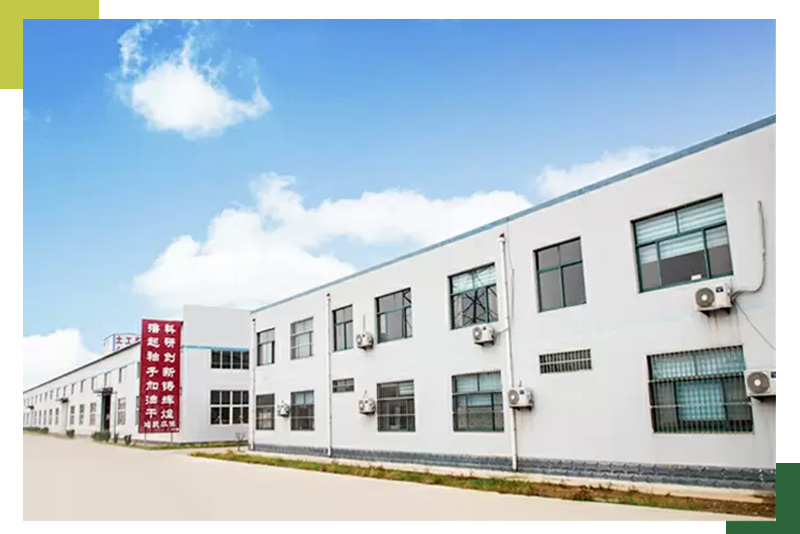
Leveraging localized raw material access, unparalleled production scalability, and rigorous quality control protocols.
Shandong Province, particularly the Lingcheng District of Dezhou City, stands at the absolute center of the global geosynthetics supply chain. As exemplified by Shandong Hongyue Environmental Engineering Co., Ltd., registered with a substantial capital of 105 million Yuan, the regional industrial cluster hosts some of the largest, most technologically advanced production lines in the world. This geographical specialization offers distinct strategic advantages for global OEM buyers:
Proximity to key petrochemical refineries guarantees direct access to premium virgin HDPE, LLDPE, and specialized polypropylene materials, isolating production from extreme price fluctuations.
Equipped with high-output multi-layer extrusion and automated ultrasonic welding systems, local factories can scale from prototype specifications to container-level shipments in days.
Global infrastructure demands tailored engineering solutions. Chinese factories accommodate strict specs for cell depth (50mm to 300mm), weld spacing (330mm to 1000mm), and color variations.
Evaluating HDPE, LLDPE, and Fiberglass Geocell variants for environmental stress cracking and structural life span.
The operational lifespan of a Geocellular Confinement System is directly tied to the polymeric raw material and additive ratios used during extrusion. In civil projects designed for a 50 to 100-year design life, selecting the appropriate base polymer is critical. Below is a professional breakdown of the primary materials used in modern geocell manufacturing:
| Material Type | Primary Advantages | Ideal Application Scenario | Typical Design Life |
|---|---|---|---|
| High-Density Polyethylene (HDPE) | Excellent chemical resistance, high seam weld strength, outstanding ESCR (Environmental Stress Cracking Resistance). | Highway subgrade reinforcement, steep railway embankments, heavy load-support platforms. | 50 - 100 Years |
| Linear Low-Density Polyethylene (LLDPE) | High flexibility, ease of installation on irregular terrains, superior low-temperature performance. | Landfill caps, flexible canal lining, complex erosion control in cold regions. | 40 - 70 Years |
| Fiberglass Geocell | Ultra-high tensile modulus, near-zero creep under continuous stress, extreme temperature stability. | Asphalt reinforcement, heavy industrial foundations, high-stress retaining walls. | 60 - 100 Years |
Visualizing the manufacturing capability and quality monitoring systems of Shandong Hongyue's factory floor.
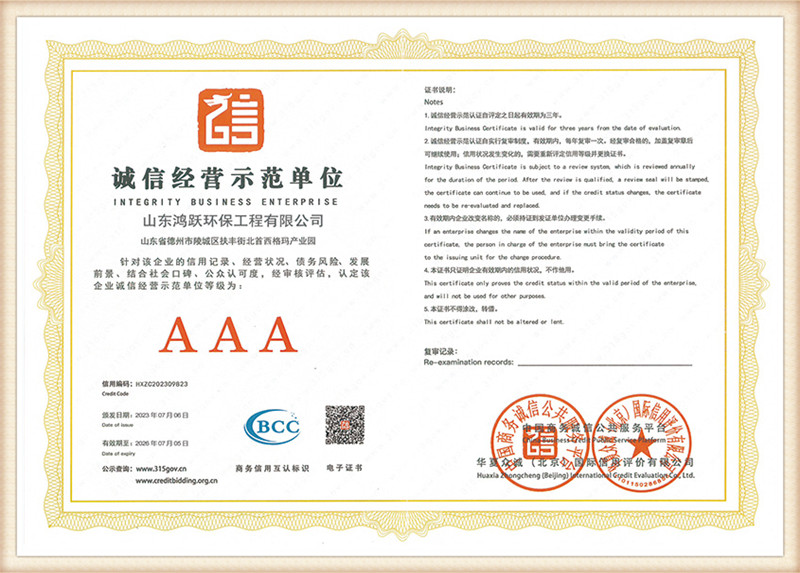
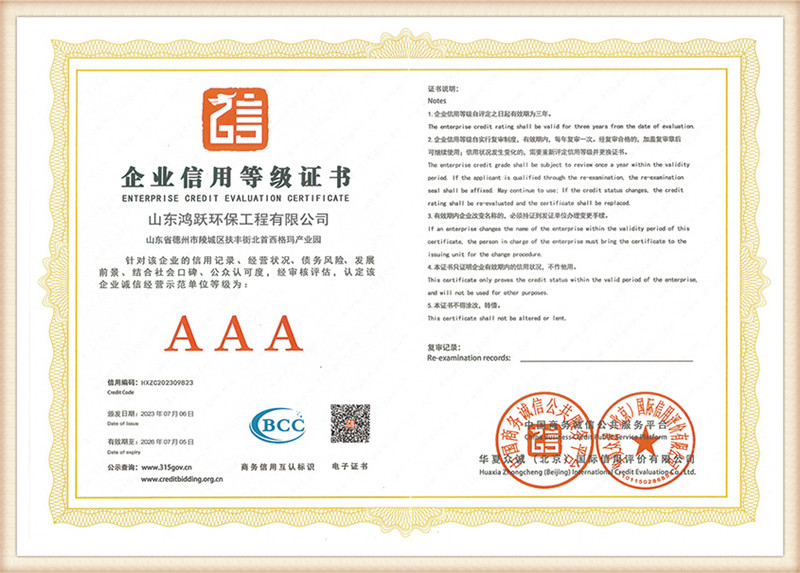
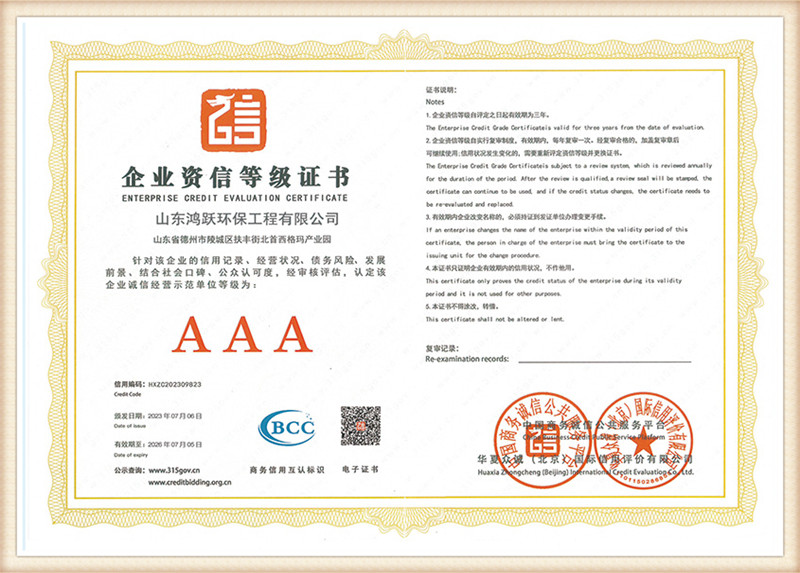
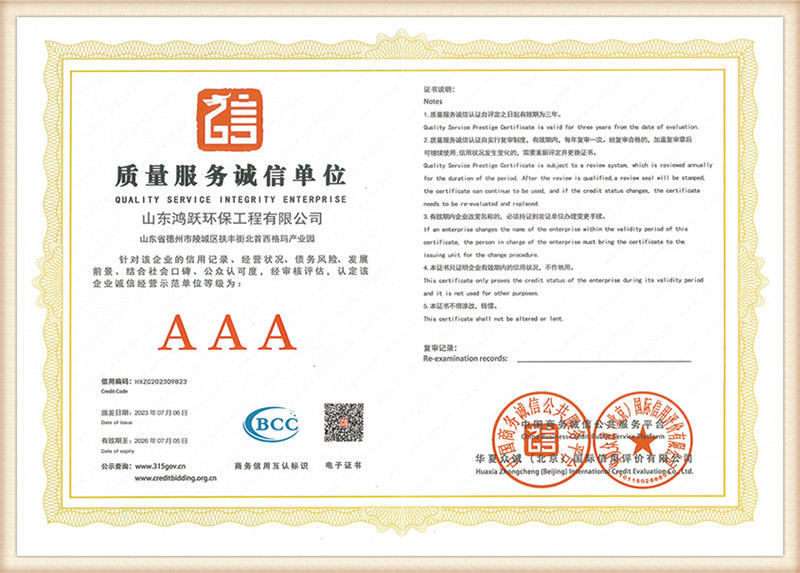
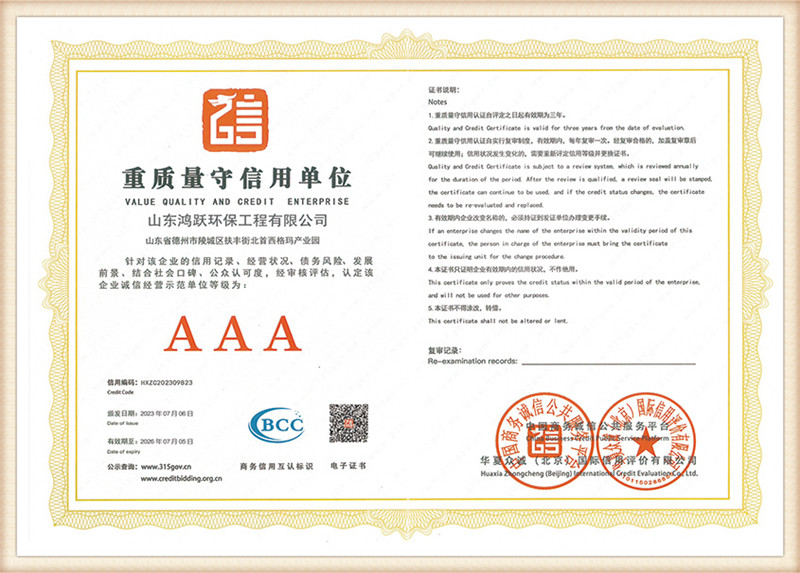
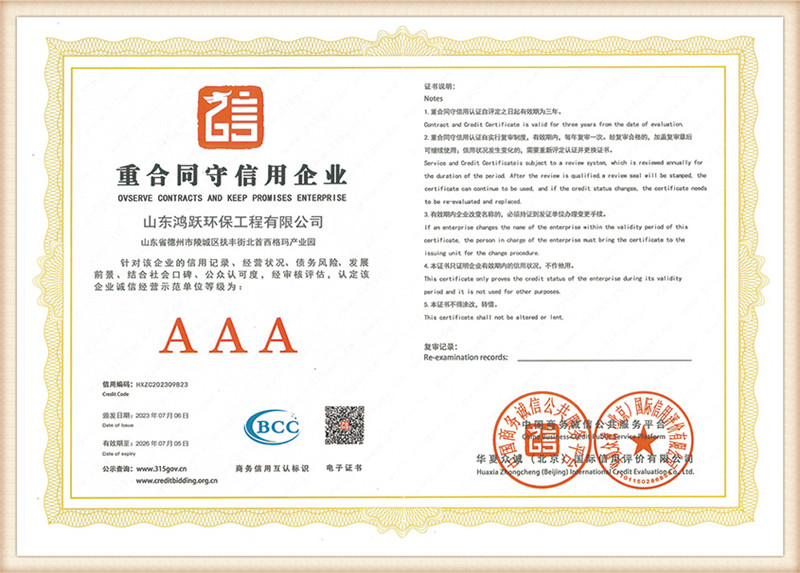
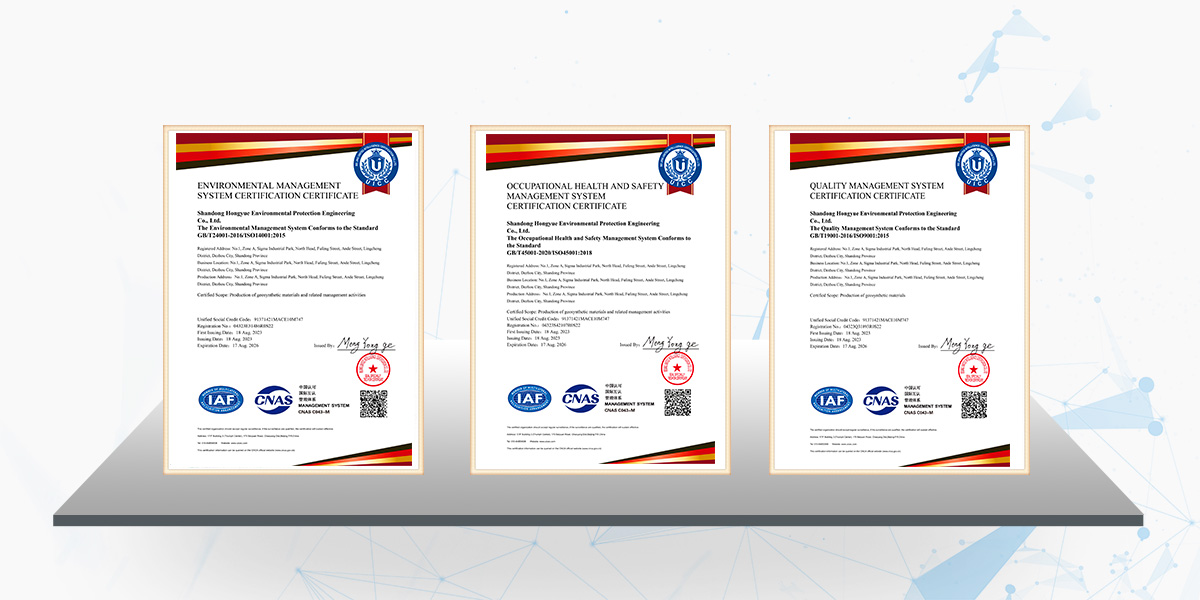
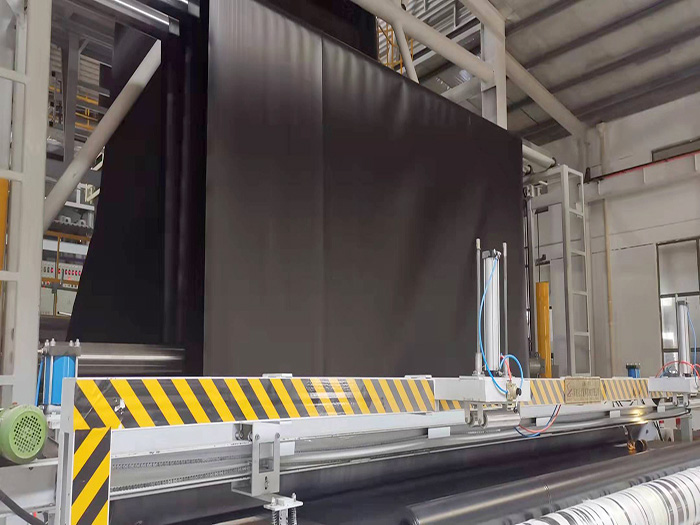
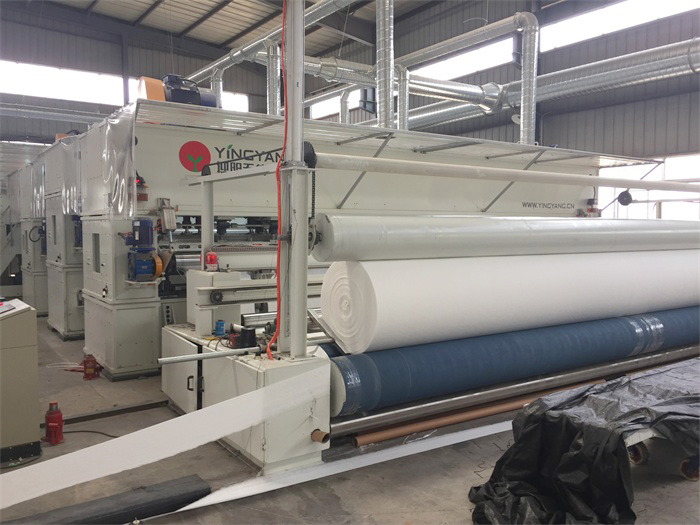
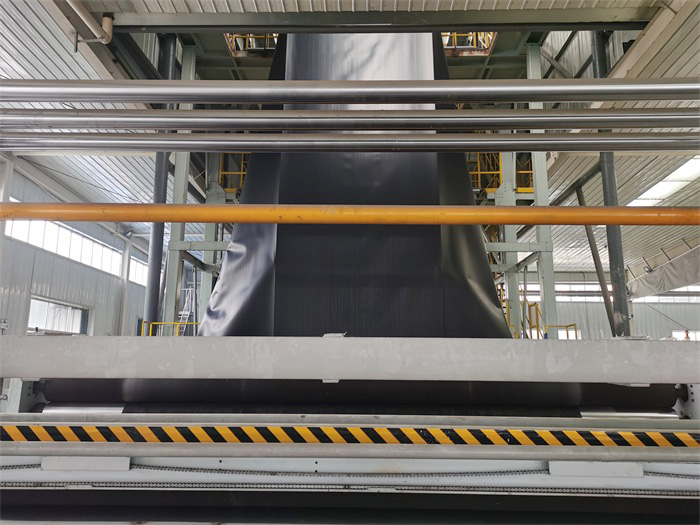
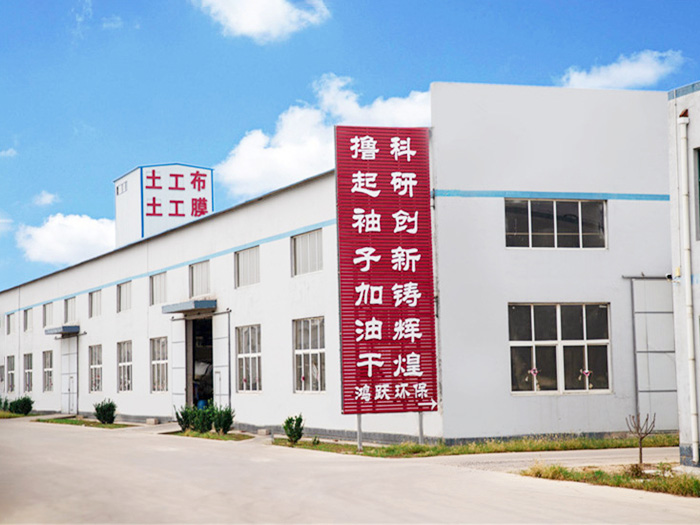
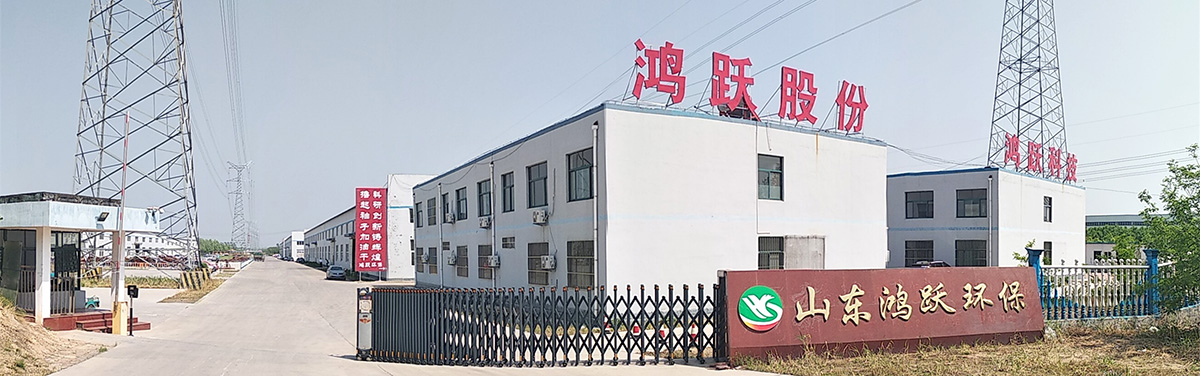
From raw polymer compounding to precise ultrasonic welding and national quality checks.
Polyester chips, premium HDPE pellets, or viscose fibers are inspected for moisture, melt flow index, and density. Stabilization additives such as Carbon Black and antioxidants are blended to guarantee UV and oxidation resistance.
The material undergoes high-temperature melting and is extruded through die heads to form continuous sheets. Textured rollers apply custom structured micro-patterns onto the sheet surface to increase soil-cell friction.
Extruded plastic strips are passed through high-precision mechanical punch presses to create optimized perforation layouts. Perforations facilitate cross-cell lateral drainage, reducing hydrostatic build-up behind slopes.
Individual strips are aligned and joined using computerized ultrasonic welding arrays. Specialized ultrasonic heads apply localized high-frequency energy to melt the polymer boundaries, creating high-strength structural joints.
Every batch undergoes testing in accordance with ASTM and ISO standards. The joint seam peel strength, tensile strength of the base polymer, and structural dimensional tolerances are analyzed before release.
Approved sheets are compacted, rolled, and strapped for dense shipping configurations. Protective outer packaging prevents damage during ocean transport, delivering the geocells directly to global project sites.
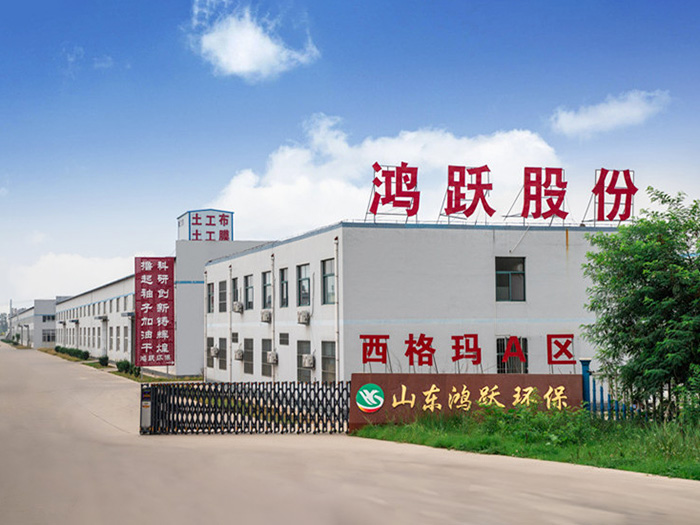
Continuous quality monitoring ensures that each component meets project-specific designs. At Shandong Hongyue, physical properties are validated at the China National Testing Center, and certifications are provided for seam peel strength, environmental stress crack resistance, and oxidation induction time.
This level of rigor is vital, especially when dealing with complex infrastructure like high-speed railways or dams, where any polymer degradation could compromise structural safety.
How geocell systems and geomembranes solve complex engineering problems worldwide.
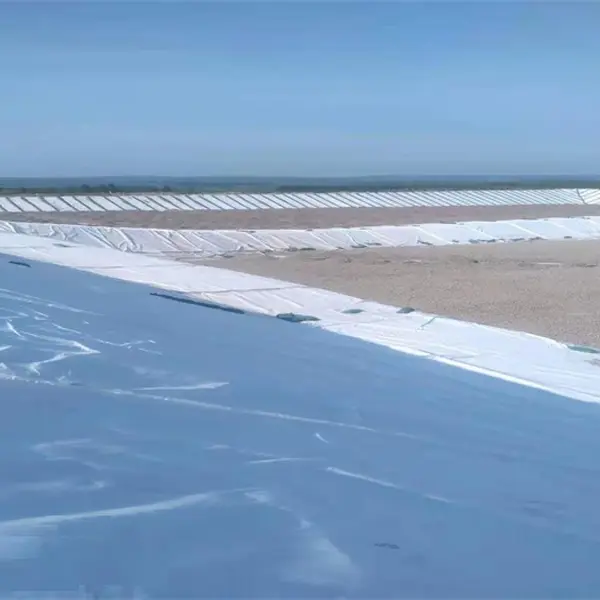
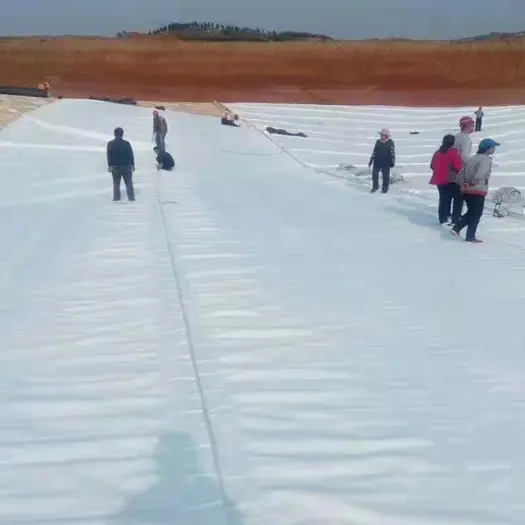
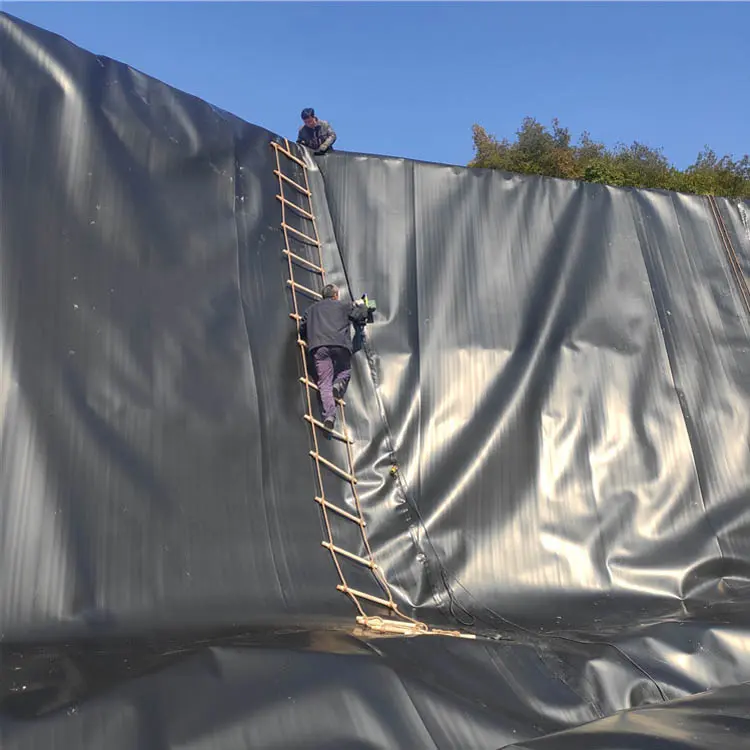
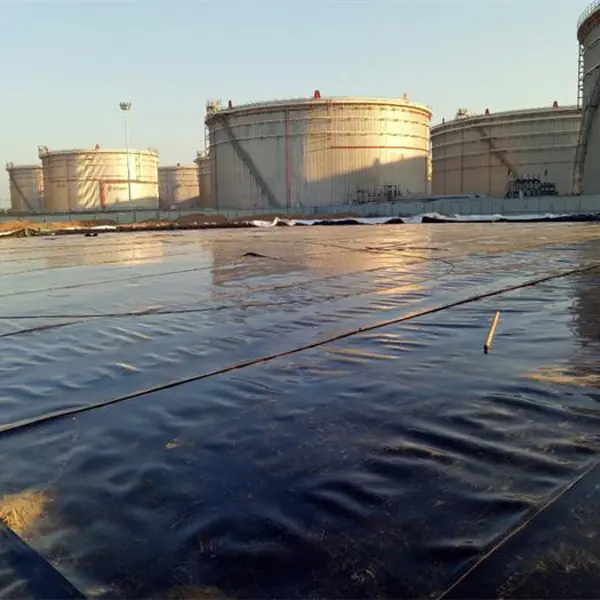
In water conservancy projects, channels, and canal linings, flowing water induces high shear stress on banks, leading to structural erosion. Installing a geocell structure filled with vegetation-supporting soil mitigates these forces. The plant roots intertwine with the geocell pockets, creating a composite vegetative armoring system that resists hydraulic velocities exceeding 6 m/s.
Subgrades situated over weak organic clays or soft silts present risks of severe settlement. Conventional excavation and replacement are cost-prohibitive. Geocell structures distribute heavy wheel loads, reducing vertical stress on the subgrade. This allows engineers to utilize locally sourced granular infill instead of expensive imported aggregates, reducing overall material costs.
Constructed in layers, geocells filled with compacted soil function as flexible gravity retaining walls. These structures accommodate differential settlement without cracking, unlike rigid concrete panels. Permeable front cells promote rapid internal drainage, relieving hydrostatic pressure and ensuring wall stability.
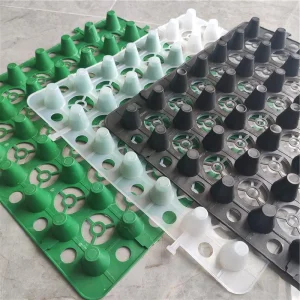
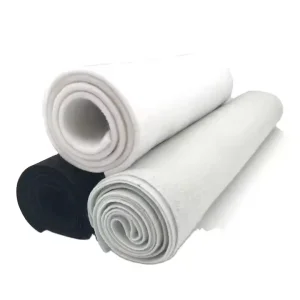
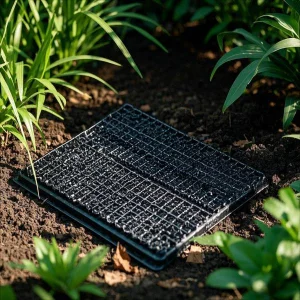
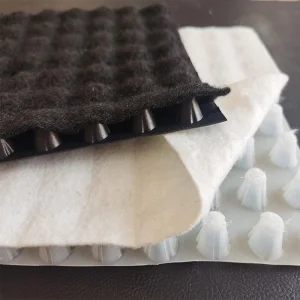
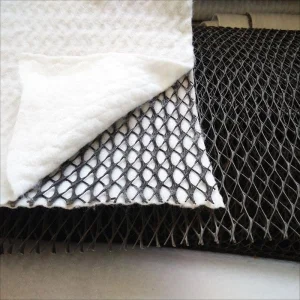
Explore our custom composite geomembrane drainage networks, concrete drainage boards, and geotextiles.
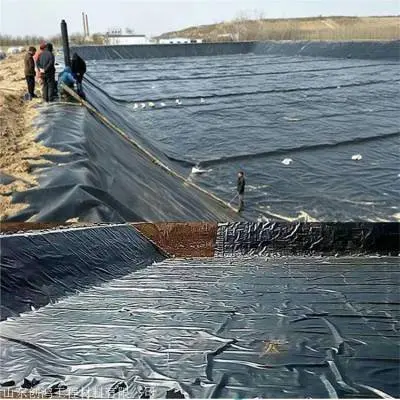
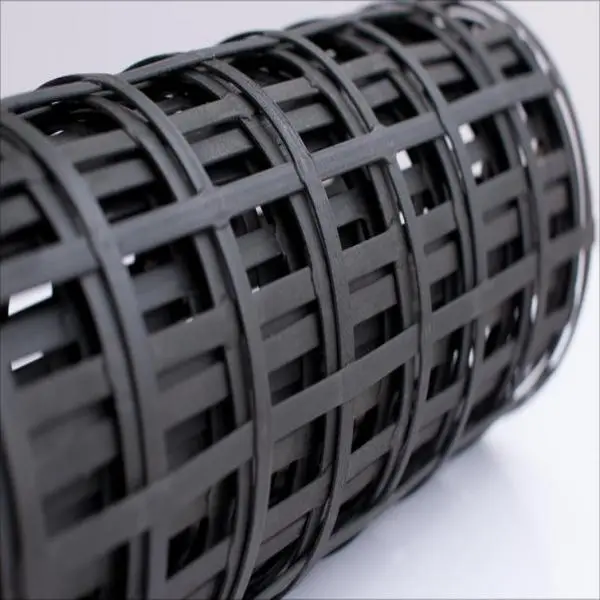
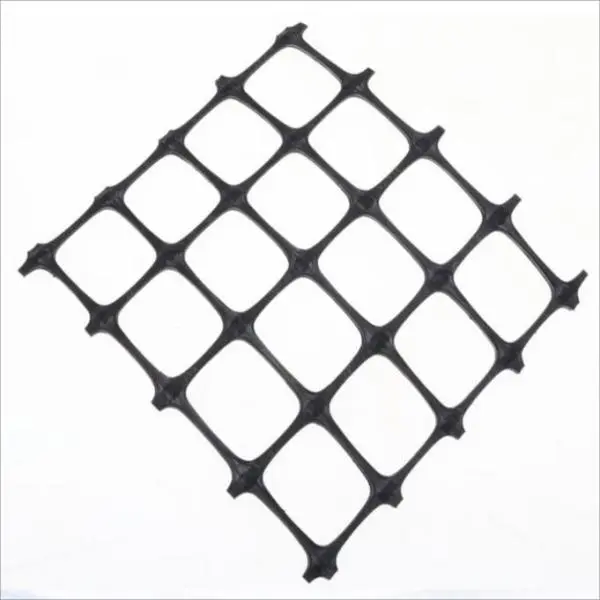
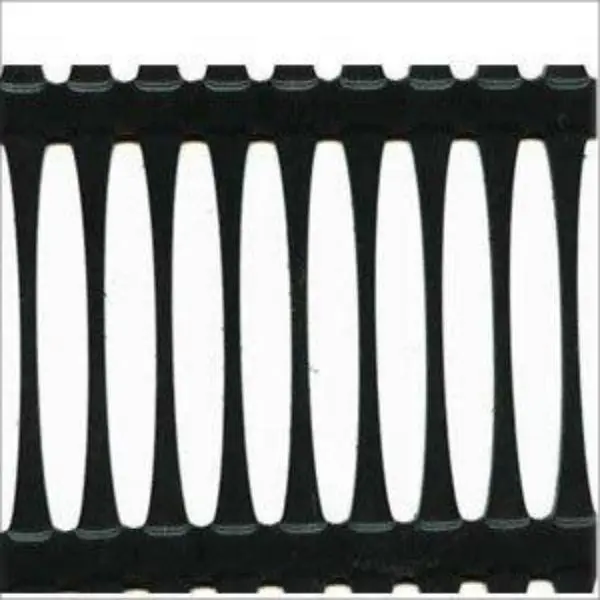
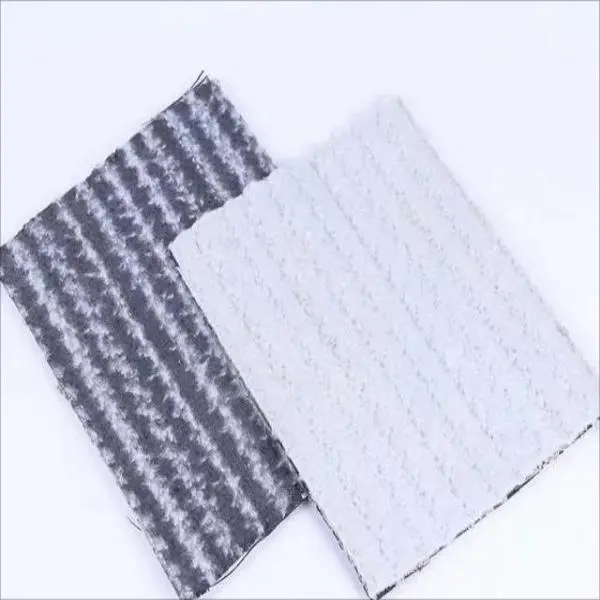
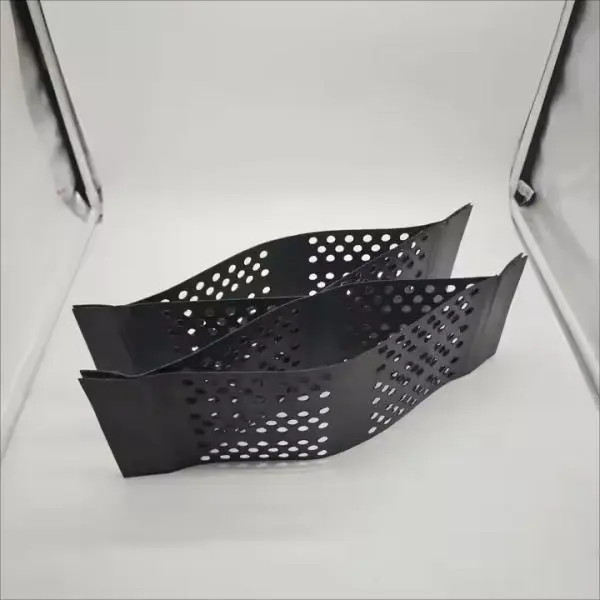
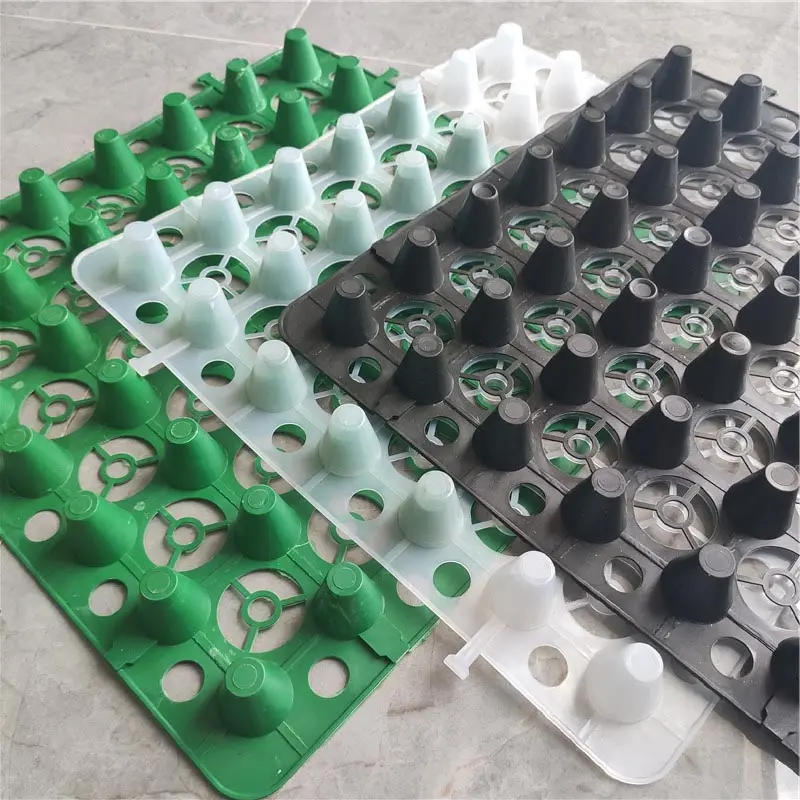
Civil engineering structures demand strict adherence to regulatory standards. Materials must retain their physical characteristics under constant UV exposure, extreme pH environments, and cyclic temperatures.
Our OEM manufacturing lines align with GRI-GM13 specifications for HDPE and GRI-GM17 for LLDPE. This alignment ensures that parameters such as Carbon Black content (2.0-3.0%), tensile strength, and Environmental Stress Crack Resistance (exceeding 400 hours) consistently meet or exceed international limits.
We provide full verification from national and third-party laboratories. Every container is marked with trace codes linked back to raw material batch profiles and QA records, guaranteeing project security.
In-depth answers to engineering, specifications, procurement logistics, and system integration queries.
Seam weld strength is a primary indicator of geocell performance. It is evaluated via tensile shear testing under ASTM D5199 and ASTM D6693 standards. It measures the force required to shear the ultrasonic weld joint. High-performance OEM geocells typically specify a weld peel strength of >1000 N for a 100mm cell height, ensuring the cells do not split under load.
Unprotected polyethylene degrades rapidly under solar UV radiation. Our standard formulations incorporate 2.0% to 3.0% finely dispersed Carbon Black (particle size <25 nanometers). This additive acts as a light absorber, converting UV photons into thermal energy and extending the design life of exposed installations to over 50 years.
Textured cell walls feature micro-embossed patterns that increase the interface friction angle between the plastic wall and soil infill. Smooth walls are prone to slippage, whereas textured walls improve structural lock-up. This reduces cell deformation under heavy wheel loads and helps prevent slope washouts.
In low-bearing-capacity soils, vertical loads create lateral displacement. Geocells contain soil particles within three-dimensional pockets, transforming lateral forces into vertical reactions. This constraint generates a rigid slab effect, increasing the California Bearing Ratio (CBR) and allowing for thinner aggregate base layers.
Yes. Our OEM capabilities support customizable configurations. Common cell depths range from 50mm to 300mm. Weld spacing (which defines cell diameter) can be adjusted from 330mm to 1000mm. Perforation layouts and plastic strip colors are customized to match slope and site conditions.
Lead times vary based on configuration. Standard configurations (100mm depth with 400mm weld spacing) typically ship within 10 to 15 days of order confirmation. Custom raw materials or non-standard configurations may extend lead times to 20-25 days to accommodate production setup and QA validation.
Every shipment is accompanied by a Mill Test Certificate (MTC) detailing raw material properties, tensile strength, seam shear strength, and thickness checks. Third-party certifications from China National Testing Center, ISO 9001, ISO 14001, and ISO 45001 are provided to meet international project requirements.
For steep slopes or high hydraulic flows, we recommend using perforated geocells combined with a non-woven geotextile backing. The perforations allow water to drain laterally through the cells, relieving hydrostatic pressure, while the non-woven geotextile acts as a filter layer to prevent soil erosion.
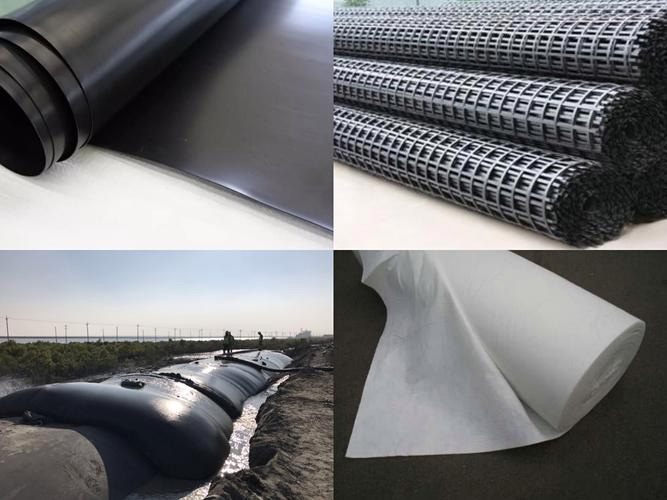
High-specification geosynthetic liners, geonets, and drainage matrices for infrastructure projects.
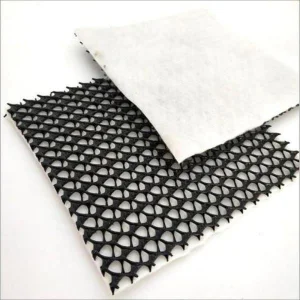
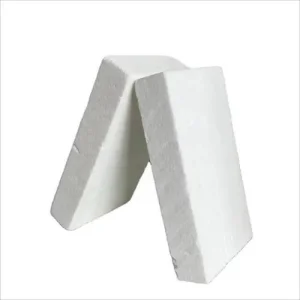
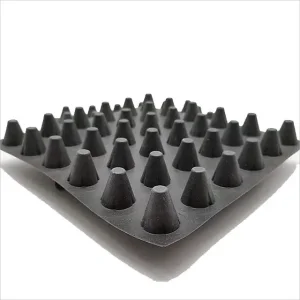
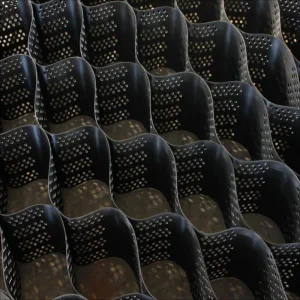
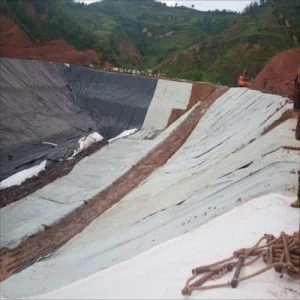
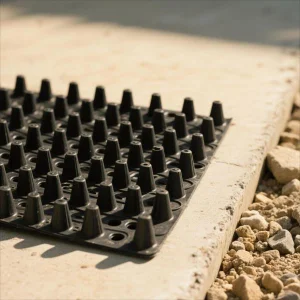
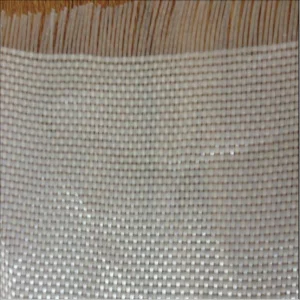
Modern infrastructure design rarely relies on a single geosynthetic material. High-performance structures require an integrated approach where geocells, geomembranes, and drainage matrices function as a cohesive system.
For example, in waste containment systems, a composite barrier consisting of an HDPE geomembrane layer, a bentonite clay liner (GCL), and a protective non-woven geotextile is typically required. The geocell layer sits above this barrier, confining the soil and protecting the underlying geomembrane from mechanical damage caused by maintenance equipment or environmental forces.
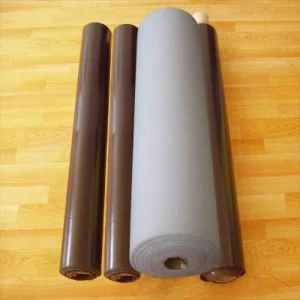
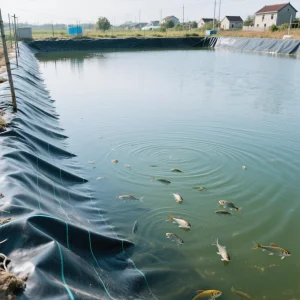
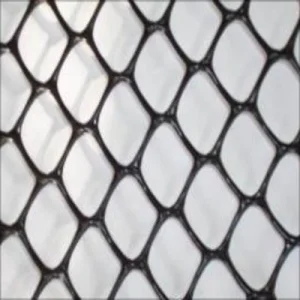
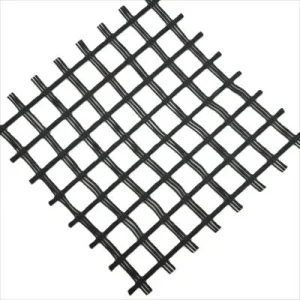
Shandong Hongyue's factory in Dezhou, Shandong Province, supports this integrated engineering model. Our product portfolio spans anti-seepage geomembranes, high-performance geogrids, fiberglass geocells, and complex 3D composite drainage networks, providing clients with comprehensive solutions for challenging geological environments.
This systematic design approach simplifies procurement, reduces material incompatibility risks, and ensures consistent quality control across all project components.
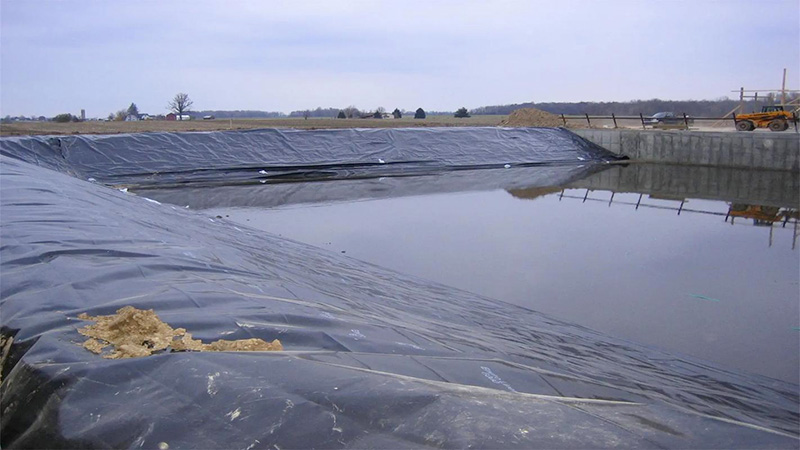
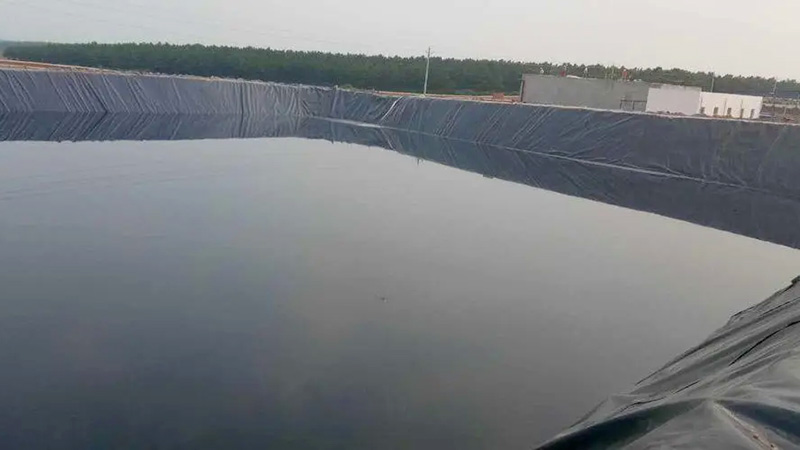
We believe that high-quality materials represent only half of a successful installation. Correct site preparation, cell deployment, and anchoring methods are essential to structural performance.
Our engineering support teams bring over a decade of field experience to assist clients globally. From initial site evaluation and design to on-site installation support, we work with project engineers to ensure that every geocellular structure is deployed correctly, safely, and efficiently.
 Hongyue