Discover our premier selection of structural reinforcement materials optimized for Central European geotechnical standards.
Slovakia's diverse topography, characterized by the rugged Carpathian Mountains and the vast river plains of the Danube basin, demands advanced geostructural interventions. The expansion of critical transportation networks—such as the D1 highway connection from Bratislava to Košice, regional expressways in northern mountainous terrains (Žilina, Prešov), and modern industrial hubs—faces constant challenges from unstable soils, flysch belt landslides, and intense seasonal freeze-thaw cycles.
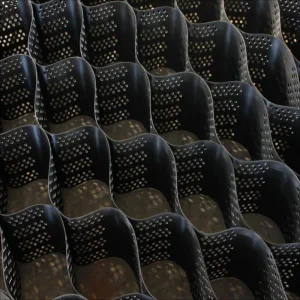
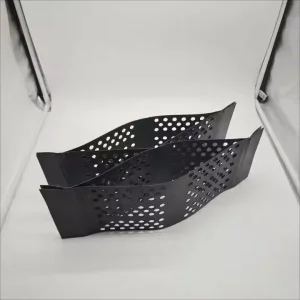
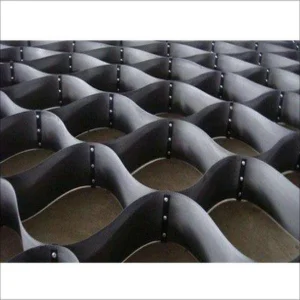
Implementing Cellular Confinement Systems (CCS), colloquially known as **Geocells**, has transformed the approach to soil stabilization, erosion mitigation, and retaining wall design in Central Europe. As a leading manufacturer and strategic global partner, Shandong Hongyue Environmental Engineering Co., Ltd. provides certified geocells engineered specifically to meet European (EN) standards. Our confinement technologies ensure structural longevity, prevent downslope migration, and optimize the load distribution capacity of weak subgrades.
Highly effective in stabilizing clay-rich soils and flysch rock formations prone to geological shifting under heavy rainfalls and snow melts.
Allows green vegetative finishes in place of massive concrete structures, promoting biodiversity and complying with Natura 2000 regulatory guidelines.
The global construction industry is actively shifting toward low-carbon footprint and resilient design paradigms. Traditional civil engineering methods, such as utilizing mass concrete or heavy rip-rap structures, are increasingly being replaced by polymer-based geocellular confinement systems. This transition is driven by three main factors:
Geocells enable the usage of locally sourced, lower-quality soil or recycled aggregates for infill, reducing the emissions associated with transporting quarry-stone base materials by up to 60%.
Advanced high-density polyethylene (HDPE) blends incorporate sophisticated carbon black formulations and anti-oxidants, preventing polymer degradation and sustaining mechanical tension for over 100 years.
Perforated cell walls allow lateral drainage, dissipating pore water pressure swiftly. This action eliminates washouts along riverbanks, canals, and high-flow runoffs during storms.
| Polymer Type | Tensile Strength at Seam (kN/m) | UV Resistance Rating | Typical Slovak Project Application | Service Temperature Range (°C) |
|---|---|---|---|---|
| Virgin HDPE (High-Density Polyethylene) | > 22 kN/m | Excellent (>2.5% Carbon Black) | Highways, Railway Subgrades, Heavy Duty Slope Stabilization | -40 to +80 |
| Polypropylene (PP) | 18 - 20 kN/m | Good (With stabilizer packages) | Erosion control channels, retaining structures | -20 to +60 |
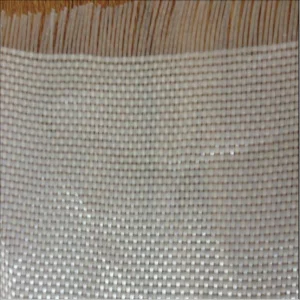
| Polyester & Fiberglass Composites | > 25 kN/m | Excellent | Soft ground foundations, extreme load structural support | -50 to +120 |
Our R&D division has pioneered the integration of high-performance polymer compounds with smart monitoring systems. By providing precise physical dimensions and verified mechanical limits, we enable European designers to build with predictable safety factors.
Different environments demand specific cell heights, cell wall textures, and perforation ratios. Here are the prominent implementation methodologies recommended for the Slovak market:
For subgrade reinforcement along the R2 and D3 Slovak motorway networks, geocells are laid over a high-strength geotextile. The cellular matrix is filled with coarse crushed stone, creating a rigid composite slab. This slab distributes point loads, increases subgrade modulus, and prevents reflective cracking of the upper asphalt layers.
Along the banks of the Váh and Hron Rivers, rapid currents erode riverbanks. Geocells filled with concrete or heavy gravel create a flexible, armor-like system. Unlike rigid concrete paving, geocells remain flexible to adjust to minor ground settlements without structural cracking.
In the High Tatras, seasonal temperature variations challenge infrastructure. The flexible, high-tensile HDPE cell walls absorb soil expansion and contraction, preventing structural failure. This minimizes maintenance costs on high-altitude roads.
Rapid development around industrial centers like Trnava and Nitra requires robust foundation layers for warehouses. Geocells distribute heavy structural loads from columns and high-capacity forklifts, preventing uneven settling on poor foundation soils.
At Shandong Hongyue, we employ automated, high-precision extrusion systems and advanced ultrasonic seam welding rigs. Our Quality Assurance protocol spans from incoming resin testing to finished product tensile verification.
Virgin HDPE pellets are blended with thermal stabilizers and premium carbon black. This combination resists oxidation and prevents degradation under extreme UV exposure.
Extruded polymer sheets are embossed to increase friction against infill materials. High-speed mechanical punches create perforated configurations, ensuring optimal water flow without sacrificing tensile strength.
Sheets are joined with automated ultrasonic welding rigs, ensuring consistent joint spacing and high peel strength. Weld spacing ranges from 330mm to 1000mm to match varied engineering designs.
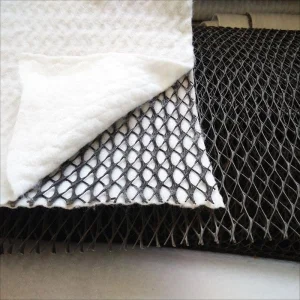
Modern civil engineering projects require comprehensive containment, drainage, and barrier designs. Integrating multiple geosynthetic components in a single design improves system performance.
For landfills and mining operations in Slovakia, combining geomembranes with drainage boards creates a highly secure containment barrier. The geomembrane acts as an impermeable barrier, and the drainage board channels water away, protecting the primary seal from excessive hydraulic pressure.
Our bentonite waterproof blankets self-heal minor installation punctures. They are widely used for sealing subgrades in Slovakia's highway projects, preventing groundwater contamination.
Browse our full range of certified geotechnical materials, designed for civil infrastructure, structural drainage, and environmental protection projects across Slovakia.
Explore expert insights on engineering specifications, regulatory compliance, and installation best practices for central European projects.
 Hongyue