 Hongyue
1 / 1
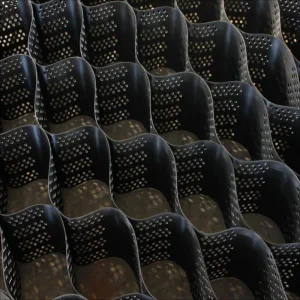
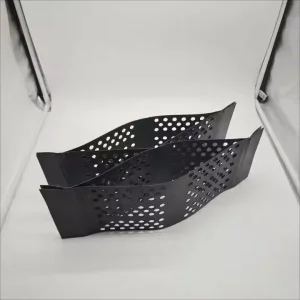
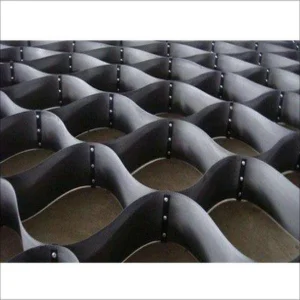
Its unique honeycomb structure consists of multiple interconnected cells, forming an integral three-dimensional spatial network. This structure can effectively disperse stress and improve the load-bearing capacity and stability of the material.
Polypropylene geocells have a certain degree of expandability when not filled with materials. They can be stretched or compressed according to engineering needs, facilitating construction and installation.
The polypropylene material itself has relatively high strength and modulus. The geocells made of it can withstand large loads and are not prone to deformation and damage. During long-term use, they can maintain good mechanical properties and provide reliable support for the project.
Polypropylene has good chemical stability and a certain tolerance to chemicals such as acids and alkalis, and is not prone to corrosion. At the same time, it also has good aging resistance. When exposed to the natural environment for a long time, it can resist the influence of factors such as ultraviolet rays and temperature changes, and has a long service life.
The honeycomb structure of the geocell has a certain degree of permeability, allowing water to freely penetrate and drain within the cells, avoiding water accumulation that may cause damage to the engineering structure and also facilitating the growth of vegetation.
In the treatment of soft foundations, laying geocells on the surface of the foundation and then filling with suitable materials, such as sand and gravel, can effectively restrain the lateral deformation of the foundation soil, improve the bearing capacity of the foundation, and reduce foundation settlement.
When used for slope protection, geocells can be combined with vegetation to form a composite protection system. It can fix the soil on the slope surface, prevent soil loss and landslides, and at the same time provide a good environment for the growth of vegetation, enhancing the ecological stability of the slope.
In projects such as roads and railways, geocells can be laid on the subbase or base course to evenly disperse the upper load over a larger area, reducing stress concentration in the base course and improving the load-bearing capacity and service life of the road surface.
Widely used in subgrade treatment, pavement base course reinforcement, and old road reconstruction in expressways, first-class highways, urban roads, etc., which can effectively solve problems such as settlement of soft soil subgrades and reflection cracks on the pavement.
It plays an important role in the reinforcement and protection of railway subgrades and can be used to deal with weak subgrades and prevent subgrade diseases, improving the stability and safety of railway lines.
Used for the reinforcement and protection of dams, riverbanks, canals and other water conservancy facilities to prevent water erosion and soil loss and improve the disaster resistance ability of water conservancy projects.
In municipal projects such as urban squares, parking lots, and airport runways, it is used for subgrade treatment and pavement reinforcement to improve the load-bearing capacity and service life of the site.
Polypropylene geocells are three-dimensional, honeycomb-like structures made from polypropylene (PP) sheets connected by ultrasonic welding. They are designed to contain soil, gravel, or sand to stabilize and reinforce various engineering structures.
By confining fill materials within their three-dimensional cell structure, geocells restrict lateral soil movement. This mechanical confinement effectively distributes heavy loads over a wider area and reduces settlement.
Yes, polypropylene possesses exceptional chemical stability, allowing the geocells to resist corrosion from acids, alkalis, and other environmental agents. They are also designed with UV and aging resistance for a prolonged service life outdoors.
Absolutely. When installed on slopes and filled with soil, they prevent soil erosion and landslides. They also allow water penetration and provide a stable structure that supports vegetation growth, establishing an ecological protection barrier.
Geocells feature high expandability, meaning they can be collapsed flat for easy transportation and storage. During installation, they are stretched out on-site, secured, and then filled with materials like sand, gravel, or soil.
They are widely applied in road building (subgrade reinforcement), railways, water conservancy projects (embankments, canal linings), and municipal projects like parking lots and runways.