What Is Natte Geotextile Used For?

Time:2026-10-16 Author:Amelia
0%

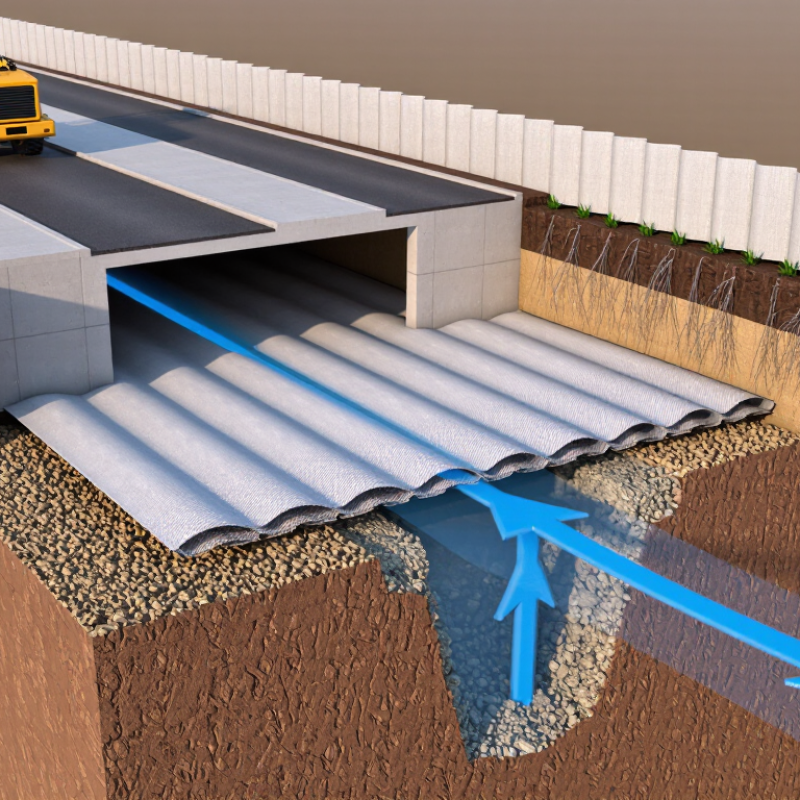
What Is Natte Geotextile Used For? The answer begins with its drainage, separation, filtration, and protection functions. Natte Geotextile is commonly installed beneath roads, behind retaining walls, under foundations, and around drainage systems. Its textured structure can create flow paths for water. It can also reduce soil migration between different construction layers.

The Grand View Research report, Geotextiles Market Size, Share and Trends Analysis, valued the global geotextiles market at approximately USD 7.1 billion in 2023. It forecasts continued growth through 2030. MarketsandMarkets also identifies transportation, drainage, and waste management as important application areas. These findings show strong demand. They do not prove that every Natte Geotextile product suits every project.

Dr. Robert M. Koerner, founder of the Geosynthetic Institute, states, “Geosynthetics are synthetic materials used in geotechnical engineering applications.” This principle keeps the discussion practical. Engineers must check tensile strength, puncture resistance, permeability, transmissivity, and long-term durability. ASTM D4716 and EN ISO 12958 can support drainage performance evaluation.

The detail matters.

A Natte Geotextile may help prevent clogged drainage layers. However, poor overlaps, damaged surfaces, or unsuitable soil can reduce its effectiveness. Installation quality is often underestimated. Water pressure, ultraviolet exposure, chemical contact, and construction loading also require review. Therefore, this article examines where Natte Geotextile performs well, how it functions, and which limitations deserve honest attention. The product is useful, but it is not a universal fix.
What Is Natte Geotextile Used For?

What Is Natte Geotextile?

Natte geotextile is a mat-like geosynthetic used in soil and water-control work. “Natte” generally describes its netted or three-dimensional structure. It is usually made from durable polymer fibers, filaments, or strips. The open texture allows water to pass while helping retain soil particles. Its exact construction can vary, so the technical datasheet matters.

On a construction site, installers may place natte geotextile beneath roads, drainage layers, slopes, or retaining structures. It can separate fine soil from gravel and reduce the risk of mixing. It may also support drainage by creating small channels for water movement. In erosion-control work, the mat can hold surface soil while vegetation becomes established. Some products provide limited reinforcement, but not every natte geotextile is designed for structural loading.

Installation experience shows that performance depends heavily on contact with the ground. Wrinkles, gaps, trapped stones, or poor overlaps can reduce effectiveness. The soil type, water flow, load, ultraviolet exposure, and expected service life should be checked before selection. I would not treat every open mesh as a drainage geotextile. That assumption can cause trouble. Engineers often review opening size, permeability, tensile strength, puncture resistance, and chemical stability. A field trial may reveal unexpected clogging or movement, especially on wet, fine-grained soil.

How Natte Geotextile Works in Soil and Drainage Systems

What Is Natte Geotextile Used For?

How Natte Geotextile Works in Soil and Drainage Systems

Natte geotextile creates a controlled interface between soil layers. Its fibers form pores that retain soil particles while allowing water to pass. This separation helps beneath roads, retaining walls, green roofs, and drainage trenches. Without it, fine soil can migrate into aggregate. The drainage layer then clogs. Not always immediately.

The Federal Highway Administration’s FHWA-NHI-07-092 guideline identifies four geosynthetic functions: separation, filtration, drainage, and reinforcement. Natte geotextile mainly supports filtration and drainage. In a trench, water passes through the fabric and moves along clean stone. During heavy rain, this pathway can reduce pore-water pressure around a structure. Performance depends on slope, soil type, compression, and installation quality. The fabric cannot replace a correctly sized outlet.

Field experience shows that small details often decide performance. Wrinkles can create bypass channels. Muddy backfill may seal the pores before operation begins. Designers should check apparent opening size, permittivity, and transmissivity through recognized ASTM test methods. FHWA guidance also emphasizes site-specific testing over generic product labels. That point deserves more attention. The 2023 Report Card for America’s Infrastructure assigned U.S. infrastructure a C-minus grade. Its findings reflect continuing drainage and maintenance challenges. Natte geotextile cannot correct poor grading, but it can preserve the intended soil-water boundary when installation is precise.

What Is Natte Geotextile Used For? - How Natte Geotextile Works in Soil and Drainage Systems

Function or System How the Geotextile Works Typical Soil or Project Condition Main Performance Requirement Common Application Important Design Note
Separation Creates a stable barrier between dissimilar soil layers while allowing water to pass through. Soft subgrade beneath aggregate, sand, or a road base. High puncture resistance, adequate tensile strength, and suitable apparent opening size. Roads, parking areas, unpaved access roads, and working platforms. Preventing soil mixing helps preserve the thickness and performance of the aggregate layer.
Filtration Retains soil particles while permitting pore water to flow through the fabric. Fine-grained or silty soil next to a drain, pipe, or permeable aggregate. Balanced pore opening size and normal-direction permeability. French drains, trench drains, retaining-wall drainage, and underdrains. The opening size must be compatible with the soil gradation; a single value is not suitable for every soil.
Drainage Conveyance Provides a controlled path for water to move within or along a drainage layer, usually with a drainage core or clean aggregate. Behind retaining walls, beneath slabs, or in edge-drain systems. In-plane transmissivity, compressive resistance, and clogging resistance. Vertical drainage composites, foundation drainage, and pavement edge drains. Flow capacity can decrease when the material is compressed or when fine particles migrate into the drainage path.
Erosion Control Limits soil loss by stabilizing the surface and reducing particle movement caused by flowing water. Slopes, channels, embankments, and exposed soil surfaces. Surface coverage, hydraulic stability, durability, and adequate anchoring. Temporary soil-cover systems, drainage channels, and slope protection. Geotextiles may be combined with vegetation, rock, or other erosion-control measures depending on flow conditions.
Reinforcement Develops tensile resistance that helps distribute loads and restrict lateral movement in weak soil. Low-bearing-capacity subgrade or areas subject to rutting and settlement. Design tensile strength, strain behavior, installation survivability, and interface friction. Embankments, haul roads, reinforced soil slopes, and foundation platforms. Reinforcement design requires soil parameters, loading data, geometry, and construction conditions.
Capillary Break Helps interrupt upward movement of water when used with a properly graded, free-draining layer. Slabs, foundations, roads, and areas affected by shallow groundwater. Compatibility with the drainage aggregate and resistance to installation damage. Under-slab drainage layers and pavement subbase systems. A geotextile alone is not a waterproofing membrane and should not replace a designed moisture barrier.
Drainage Pipe Protection Surrounds or separates the pipe trench from surrounding soil, reducing the entry of fine particles into the aggregate and pipe openings. Perforated pipe installed in sandy, silty, or mixed backfill. Filtration compatibility, puncture resistance, and long-term permeability. French drains, foundation drains, agricultural drains, and roadway underdrains. Overlap, end closure, and protection from tearing during aggregate placement are essential for performance.
Landfill and Containment Support Protects drainage layers or liners from puncture and helps separate soil from engineered drainage materials. Waste containment systems and soil-cover layers. High puncture resistance, durability, chemical compatibility, and verified filtration performance. Leachate collection layers, cover systems, and protective cushioning layers. Projects normally require site-specific testing and compliance with applicable environmental regulations.
Common Material Types Needle-punched nonwoven fabrics provide flexibility and filtration; woven fabrics generally provide higher tensile efficiency and lower elongation. Selection depends on whether filtration, separation, reinforcement, or protection is the primary function. Mass per unit area, tensile strength, elongation, puncture resistance, and permeability. Nonwoven drainage fabrics, woven separation fabrics, and composite drainage products. “Natte” or mat-like products should be evaluated by their tested engineering properties rather than appearance alone.
Installation Control Maintains the designed function by keeping the fabric continuous, correctly overlapped, and protected from construction damage. Earthworks involving aggregate placement, equipment traffic, or uneven subgrade. Specified overlap, seam strength, anchoring, and survivability under installation loads. All soil and drainage applications. Do not drive equipment directly on exposed fabric unless the installation design specifically permits it.
Selection reminder: Geotextile performance depends on soil gradation, hydraulic conditions, expected loads, installation method, and required service life. Product selection should be based on tested properties and project-specific design criteria rather than fabric appearance or mass alone.

Key Functions of Natte Geotextile

What Is Natte Geotextile Used For?

Natte geotextile is a permeable textile mat placed between soil, gravel, concrete, or drainage layers. Its key function is separation. It stops fine soil from mixing with aggregate, helping maintain a stable, open structure beneath paths and retaining areas.

It also supports filtration by allowing water through while holding back soil particles. This reduces clogging and protects drainage performance during rainfall.

Another important function is reinforcement. The mat distributes local loads and limits rutting on soft ground. Some products also provide surface protection against erosion on slopes, channels, and embankments.

In drainage applications, the textured structure creates small flow paths behind walls or beneath paved surfaces. Field experience shows that correct overlap and anchoring matter as much as the material itself.

A strong product can still fail when installation is careless. That point is easy to underestimate.

Tips: Check the soil type, water flow, and expected load before selection. Remove sharp stones that could puncture the mat. Keep overlaps secure, especially on sloping ground. Follow the supplier’s technical data for tensile strength, filtration opening size, and drainage capacity. If the site has unusual water pressure or unstable soil, ask a qualified geotechnical professional to review the design. Small details matter.

Common Construction and Landscaping Applications

What Is Natte Geotextile Used For?

Natte geotextile is a textured, mat-like material used for drainage, separation, filtration, and erosion control. In road construction, crews place it beneath gravel layers. It helps prevent soil from mixing with aggregate. That separation can protect pavement performance, especially where clay soil becomes soft after heavy rain.

The Federal Highway Administration identifies filtration, drainage, and soil separation as core geotextile functions. These functions matter around retaining walls, basement foundations, French drains, and temporary access roads. A drainage mat can create a small flow path behind a wall. Water then reaches an outlet instead of building pressure against concrete. Installation still matters. Folded edges, blocked outlets, or poor overlaps can reduce performance quickly.

Landscapers use natte geotextile beneath gravel paths, patios, planting beds, and sloped ground. It can limit soil migration while allowing water to pass. Erosion-control mats also help stabilize newly seeded slopes during early vegetation growth. Grand View Research valued the global geotextiles market at approximately 8.2 billion dollars in 2023. Its report projects about 6.4% annual growth from 2024 to 2030. That growth reflects wider infrastructure and landscaping demand, not guaranteed results at every site. Soil type, rainfall, loading, and drainage design must guide material selection. Sometimes, thicker is not better. Performance depends on the complete system.

How to Select and Install Natte Geotextile Properly

Natte geotextile is commonly used beneath roads, drainage layers, retaining walls, and landscaped areas. It separates soil from gravel while allowing water to pass. The U.S. Federal Highway Administration’s Geosynthetic Design and Construction Guidelines, FHWA-NHI-07-092, stresses that selection must consider filtration, drainage, strength, and installation damage. A fabric that looks strong may still clog in fine soil.

Choose the product after checking soil grading, expected water flow, loading, and construction traffic. For separation, compare apparent opening size and permeability with the site soil. For drainage, confirm flow capacity under the expected pressure. A drainage layer under a driveway needs higher survivability than a garden path.

Prepare a smooth, debris-free base. Remove sharp stones, unfold the geotextile without stretching, and keep it tight against the ground. Overlap joints according to the project specification, often 300 to 600 millimetres. Secure the edges before placing aggregate. Do not drag loaded equipment directly across exposed fabric.

Tips:

Place aggregate from the edge inward. Use rounded or screened stone where puncture risk is high. Inspect every seam before covering. ASTM and AASHTO test methods help compare tensile strength, puncture resistance, and opening size, but laboratory values are not field guarantees. In practice, installation damage is easy to underestimate. A small tear near a drain may redirect water and weaken the entire section. Photograph the prepared base and covered joints for reliable quality records.

FAQS

What is natte geotextile used for?

It separates soil from gravel, concrete, and drainage layers. Water can pass through while fine soil stays contained. Small details matter.

How does natte geotextile improve drainage?

Its textured structure creates small flow paths behind walls or beneath paved areas. These paths help water reach an outlet. Blocked outlets can reduce performance quickly.

Where is natte geotextile commonly installed?

Common locations include roads, retaining walls, basement foundations, French drains, paths, patios, and planting beds. It also supports erosion control on slopes and embankments.

Can natte geotextile prevent soil from mixing with aggregate?

Yes, it helps maintain separation beneath gravel layers. This can reduce rutting and protect pavement performance on soft or clay-rich ground. It is not a magic fix.

How should the ground be prepared before installation?

Remove sharp stones, debris, and objects that could puncture the mat. Create a smooth base, then unfold the material without stretching it. Check twice.

How much should geotextile sheets overlap?

Many projects use overlaps between 300 and 600 millimetres. The required width depends on soil, slope, water movement, and project specifications. Loose overlaps may open during installation.

How can the material be protected during construction?

Place aggregate from the edges inward. Avoid dragging loaded equipment across exposed fabric. Use rounded or screened stone where puncture risk is high.

Is thicker natte geotextile always better?

Not always. Selection should match soil grading, water flow, loading, and construction traffic. A thicker mat may still clog or fail when the system is poorly designed.

What should be checked before covering the geotextile?

Inspect seams, overlaps, edges, and visible tears. Secure the edges before placing aggregate. Photographs can record the prepared base and covered joints.

When is professional design advice useful?

Seek qualified geotechnical advice for unstable soil, unusual water pressure, or heavy expected loads. Laboratory values help compare products, but field conditions remain unpredictable.

Conclusion

Natte Geotextile is a specially designed geosynthetic material used to improve the stability, drainage, and long-term performance of soil-based structures. Its open, textured structure helps separate different soil layers while allowing water to pass through, reducing the movement of fine particles and limiting the buildup of water pressure. By supporting filtration, reinforcement, separation, and erosion control, it helps create stronger and more reliable ground conditions.

Natte Geotextile is commonly used beneath roads, walkways, retaining structures, drainage channels, slopes, gardens, and landscaped areas. It can prevent soil mixing, improve drainage efficiency, reduce rutting, and protect surfaces from erosion. Proper selection depends on soil type, expected loads, water flow, and installation conditions. For effective results, the ground should be prepared and cleared of sharp debris, the material should be laid without excessive folds, and overlapping sections should be secured before covering it with suitable soil or aggregate.


Amelia

Amelia

Amelia is a seasoned marketing professional with a wealth of expertise in our company’s core offerings. With an unwavering passion for driving growth and innovation, she plays a pivotal role in shaping our marketing strategies and enhancing brand visibility. A key aspect of her responsibilities......