What Is Fibre Geotextile Used For?

Time:2026-10-31 Author:Henry
0%

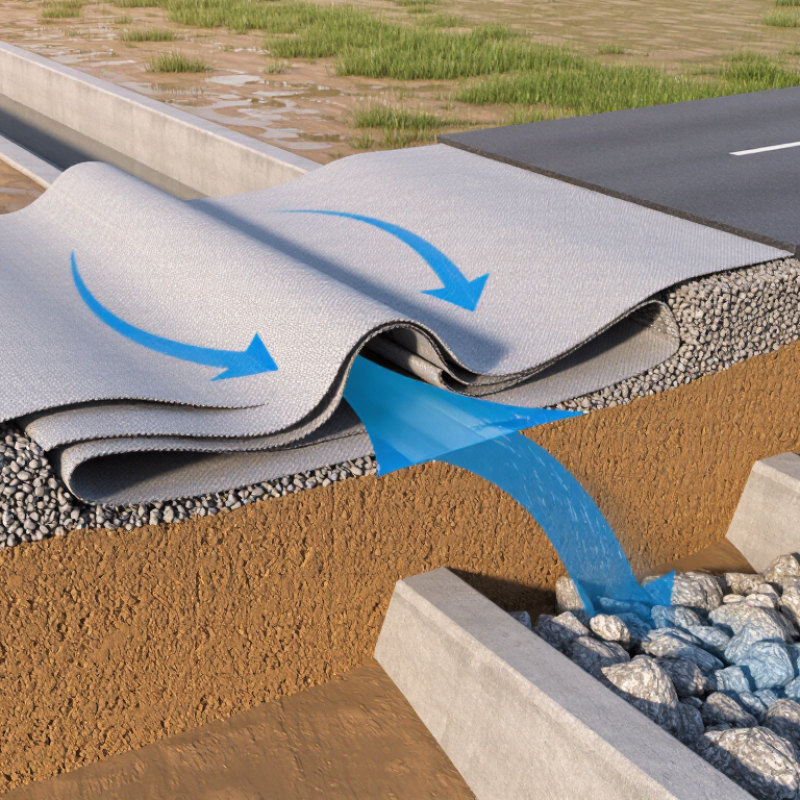
Fibre Geotextile is a permeable textile placed in contact with soil, aggregate, or other construction materials. On a wet roadside slope, it can help keep fine soil from washing into a drainage layer. Beneath a gravel track, it can separate soft subgrade from aggregate. These are practical functions, not a one-fabric-fits-all solution.

The Federal Highway Administration’s Geosynthetic Design and Construction Guidelines (NHI-07-092, 2008) describes geotextiles’ roles in separation, filtration, drainage, reinforcement, and protection. The guide is a useful engineering reference, but project conditions still matter: soil grading, water flow, loading, and installation affect performance. A fabric that works under a footpath may not suit a steep embankment. Small details count.

Geosynthetics expert Robert M. Koerner describes geosynthetics as “planar products manufactured from polymeric material used with soil, rock, earth, or other geotechnical engineering related material as an integral part of a man-made project, structure, or system.” This definition captures the material’s engineered role, though it does not replace a site-specific design. In use, Fibre Geotextile may reduce soil mixing, support drainage, or help control erosion when correctly selected and installed. It cannot fix poor grading or inadequate drainage by itself. That distinction is easy to overlook. This guide explores where the material helps, how it works, and what to check before specifying it.
What Is Fibre Geotextile Used For?

What Fibre Geotextile Is and How It Is Made

Fibre geotextile is a permeable sheet made from synthetic fibres, most often polypropylene or polyester. The fibres form a stable layer that can separate soil, filter water, or reinforce weak ground. Small pores matter. They let water pass while limiting soil movement, though performance depends on the soil and installation.

Manufacturers turn polymer into fine filaments or staple fibres, then arrange them into a web. Needle-punching mechanically entangles fibres; heat bonding uses warmth to fuse contact points. Woven geotextiles instead interlace yarns in regular patterns. The Federal Highway Administration’s Geosynthetic Design and Construction Guidelines describes these woven and nonwoven structures and their differing engineering roles. It is not fabric alone: fibre type, bonding, thickness, and pore size all affect field performance.

Grand View Research’s 2024 Geotextiles Market Size, Share & Trends Analysis Report estimated the global market at USD 8.24 billion in 2023. That figure describes market value, not product quality. On site, a roll may look simple, but a torn edge or clogged pores can undermine its intended function. I would not choose a geotextile by appearance alone; project soil tests and specified strength and filtration properties matter.

Key Properties That Determine Its Performance

Fibre geotextile performance depends on more than fabric weight. Its openings must retain soil while allowing water to pass, or trapped water can weaken a road base or drainage layer. The FHWA’s Geosynthetic Design and Construction Guidelines (NHI-07-092) identifies apparent opening size, permittivity, tensile strength, and puncture resistance as key selection properties. Apparent opening size helps assess soil retention; permittivity measures water flow through the fabric. Both matter. A fine fabric may retain particles well but restrict drainage if its flow capacity is too low.

Strength matters during installation, when sharp aggregate and vehicle traffic can damage the material. AASHTO M 288-17 sets grab-tensile minimums ranging from 800 to 1,400 newtons across its survivability classes, tested using ASTM D4632. Those figures are not a universal product ranking: the suitable class depends on site conditions and installation severity.

A common design oversight is focusing on tensile strength while overlooking clogging risk. That choice can look adequate on paper. Check soil gradation, expected flow, and construction handling together; a specification alone cannot predict every field condition.

How It Separates, Filters, Drains, and Reinforces Soil

What Is Fibre Geotextile Used For?
How It Separates, Filters, Drains, and Reinforces Soil

Fibre geotextile is placed between soil layers or beneath aggregate to help them perform together without blending. Beneath a gravel path, for example, it can limit soft soil pumping upward as footsteps and rain disturb the surface. That separation helps preserve the stone layer. It does not make weak ground disappear.

Its pores let water pass while holding back soil particles. This filtering action can reduce erosion around drainage trenches, retaining structures, and embankments. Water may also move along the fabric, but the geotextile alone is not always a dependable drain. Flow capacity, soil grain size, and the risk of clogging all matter. The details matter.

Some geotextiles also help reinforce soil by carrying tension and spreading loads over a wider area. On a soft construction access road, this can reduce rutting beneath repeated vehicle traffic. The fabric’s strength, placement, seams, and contact with the ground affect performance. Still, it is not magic. A poorly chosen fabric can clog, tear during installation, or fail to control movement. Site conditions deserve careful checking, and the right specification may vary across even one project.

What Is Fibre Geotextile Used For?

Geotextiles can separate soil layers, filter water while retaining soil particles, support drainage systems, and reinforce soil. The chart counts these functions across four common application examples; it is an illustrative function mapping, not measured performance data.

Actual performance depends on the geotextile type, soil conditions, and project design. Drainage commonly relies on a geotextile working as part of a drainage system.

Common Uses in Roads, Drainage, and Erosion Control

Fibre geotextile separates soil layers while allowing water to pass through. On roads, it is commonly placed between soft subgrade and aggregate. This helps limit soil migration and uneven mixing under repeated traffic. The result can be a more stable road base, though the fabric cannot compensate for poor grading or inadequate compaction. Choose a product suited to the soil, expected loads, and installation conditions.

Tips: Overlap seams as specified in the project design. Keep the fabric free of tears, and avoid driving directly over exposed material. Small installation shortcuts can create weak spots.

For drainage, geotextile can wrap perforated pipes or line drainage trenches, filtering fine particles while water moves toward the outlet. Check that the fabric’s opening size matches the surrounding soil; an unsuitable choice may clog or let sediment through. On slopes and shorelines, it can sit beneath stone or other protective cover, helping reduce soil loss from flowing water. It is not a visible shield, and it needs secure placement and adequate cover. Reconsider the design after heavy rain or signs of settlement: site conditions often differ from the neat assumptions on a drawing.

How to Choose and Install Fibre Geotextile

What Is Fibre Geotextile Used For? How to Choose and Install Fibre Geotextile

Fibre geotextile separates soil from gravel, filters water, and can help limit erosion. The right fabric depends on the ground and the job. For a muddy driveway, separation and puncture resistance matter. Around a drain, water flow and soil retention are more important. Check the product specifications against the project design, including strength, opening size, and permeability. Ask a qualified geotechnical professional when soil conditions or loading are uncertain.

Prepare the surface carefully. Remove sharp stones, roots, and standing water, then smooth deep ruts. A common mistake is choosing fabric by thickness alone. A thick material may still clog or restrict drainage if its openings do not suit the soil. Check the site conditions first. Unroll the fabric without stretching it, and overlap seams as specified for the project. Keep wrinkles out where possible.

Cover the fabric promptly with the specified fill. Place the first layer gently; driving machinery directly over exposed fabric can tear or shift it. Use enough clean aggregate to protect the material before compacting in suitable layers. Watch the edges. Small gaps can let soil mix into the gravel, undoing the separation. Installation details vary with slope, soil, and expected loads, so the manufacturer's technical guidance and project plans should take priority. It is easy to rush this part, and that is often where avoidable problems begin.

What Is Fibre Geotextile Used For? - How to Choose and Install Fibre Geotextile

Application Main Function Suitable Fibre Geotextile What to Consider When Choosing Key Installation Practice
Roads, paths, and parking areas Separates subgrade soil from aggregate, helping limit the mixing of the two layers. Typically a durable woven or nonwoven synthetic geotextile selected for the project conditions. Check subgrade strength, expected traffic, aggregate size, drainage needs, and the specified tensile and puncture properties. Prepare a firm, even subgrade; lay the fabric without wrinkles; make specified overlaps; place aggregate carefully to avoid displacement or damage.
French drains and drainage trenches Allows water to pass while helping retain surrounding soil and reduce entry of soil particles into the drainage aggregate. A permeable nonwoven geotextile is commonly considered for filtration; final selection depends on the soil and drainage design. Match the fabric’s opening size and water-flow capacity to the soil and intended flow. A fabric that is too restrictive may impede drainage. Line the trench or wrap the drainage aggregate as detailed; keep the fabric continuous and close the wrap with the specified overlap before backfilling.
Embankments and soft-ground construction Can provide separation and, when designed for it, reinforcement to help distribute loads. High-strength woven or engineered geotextile selected by a qualified designer. Review design strength, deformation, creep, durability, subgrade conditions, and construction loading. Not every geotextile is suitable for reinforcement. Install to the engineered layout and anchorage details. Avoid turning, trafficking, or placing fill directly on unsupported or damaged fabric.
Slopes, banks, and surface erosion control Helps protect soil from surface erosion while vegetation establishes; some products also retain moisture near the surface. Biodegradable natural-fibre mats, such as coir or jute, may suit temporary protection; durable synthetic products may be used where longer service is required. Consider slope steepness, runoff, expected service life, vegetation plan, and whether the fibre should biodegrade or remain in place. Secure the material against the slope, use the specified overlaps and anchoring pattern, and ensure it contacts the soil rather than bridging hollows.
Landscape beds and planting areas May help separate soil layers or reduce weed growth when used as a suitable landscape fabric. Choose a permeable material appropriate to the planting, drainage, and expected exposure; landscape fabric is not automatically interchangeable with engineered geotextile. Consider water and air movement, plant type, maintenance, exposure to sunlight, and whether the fabric will be covered with mulch or aggregate. Remove sharp debris, overlap seams as specified, secure edges, and cut openings only where needed for plants or fixtures.
General installation preparation Reduces the risk of damage and helps the geotextile perform as intended. Use the product type and grade stated in the project specification. Confirm roll condition, required properties, compatibility with the soil and aggregate, and any project-specific overlap or anchoring requirements. Clear sharp objects and standing debris; unroll in the specified direction; keep the fabric taut but not overstretched; repair or replace torn areas as directed.

Selection note: Fibre geotextile is a broad term covering different materials and constructions. Choose it for the required function—such as separation, filtration, drainage, reinforcement, or erosion control—and follow the project specification and manufacturer installation instructions. Overlap widths and performance requirements should be determined by the design and site conditions.

FAQS

What does fibre geotextile do beneath a gravel path?

It separates gravel from soft soil and can reduce soil pumping upward. It helps preserve the stone layer, but it cannot repair weak ground.

How does it filter soil and water?

Its openings let water pass while retaining soil particles. This can reduce erosion near drainage trenches and embankments. Both matter.

Can fibre geotextile act as a drain?

Water can move through or along the fabric. But it is not always a dependable drain; flow capacity and clogging risk need checking.

Which properties should guide fabric selection?

Check apparent opening size, water-flow capacity, tensile strength, and puncture resistance. A fine fabric may hold soil well yet restrict drainage.

Why does strength matter during installation?

Sharp aggregate and vehicle traffic can damage the fabric. The required strength depends on ground conditions and how rough installation may be.

Does higher tensile strength always mean better performance?

No. A suitable strength class depends on the site and installation conditions. A specification alone cannot predict every field problem.

How can the fabric help reinforce a soft access road?

It can carry tension and spread loads, helping reduce ruts under repeated vehicle traffic. Placement and ground contact matter too.

What can cause fibre geotextile to fail?

It may clog, tear during installation, or fail to control soil movement. Check soil grain size and expected water flow. Easy to overlook.

Conclusion

Fibre Geotextile is a permeable, fabric-like material made from synthetic or natural fibres and designed for use in soil and civil engineering projects. Its performance depends on properties such as strength, permeability, durability, and resistance to punctures and environmental exposure. These characteristics help it perform several functions: separating soil layers, filtering water while retaining soil particles, supporting drainage, and reinforcing weak ground.

Common applications include road construction, drainage systems, and erosion-control projects, where the material can help improve stability and manage water movement. Choosing the right Fibre Geotextile requires considering the soil conditions, expected loads, water flow, and project environment. Careful installation is also important: prepare the ground, lay the fabric without excessive folds or damage, overlap adjoining sections as needed, and secure it before covering. When selected and installed appropriately, it can contribute to more stable and durable groundworks.


Henry

Henry

Henry is a dedicated marketing professional with a profound expertise in the company's offerings. With years of experience in the industry, he possesses an impressive understanding of the market dynamics and consumer behaviors that drive success. Henry is committed to sharing his insights through......