China’s geotextile industry supports roads, railways, drainage systems, landfills, and coastal engineering projects worldwide. This guide examines China’s Top 10 Geotextile Layer Manufacturers through practical industry criteria. These criteria include product quality, manufacturing capacity, technical support, certifications, and export experience.
A reliable manufacturer should provide stable nonwoven or woven geotextiles for specific soil conditions. Needle-punched polypropylene fabric may suit filtration and drainage applications. Woven polyester products can offer stronger separation and reinforcement. Buyers should also review tensile strength, puncture resistance, permeability, UV stability, and roll consistency. Product samples matter. So do factory audits.
The selected companies are assessed from an engineering and procurement perspective. Their experience with highways, railways, reservoirs, mining sites, and environmental projects provides useful evidence. Documentation should include test reports, quality-control procedures, installation guidance, and traceable production records. International certifications can support confidence, but they should not replace independent verification.
Rankings are never perfect.
Project conditions vary widely. A manufacturer with excellent export performance may not fit a demanding coastal project. Another supplier may offer stronger customization or faster regional delivery. This introduction therefore encourages readers to compare technical data, project references, communication quality, and after-sales support. The best choice is not always the largest factory. It is the manufacturer that consistently matches material performance with real site requirements. Careful evaluation remains essential, especially when a small fabric difference can affect drainage, settlement control, and long-term maintenance costs.
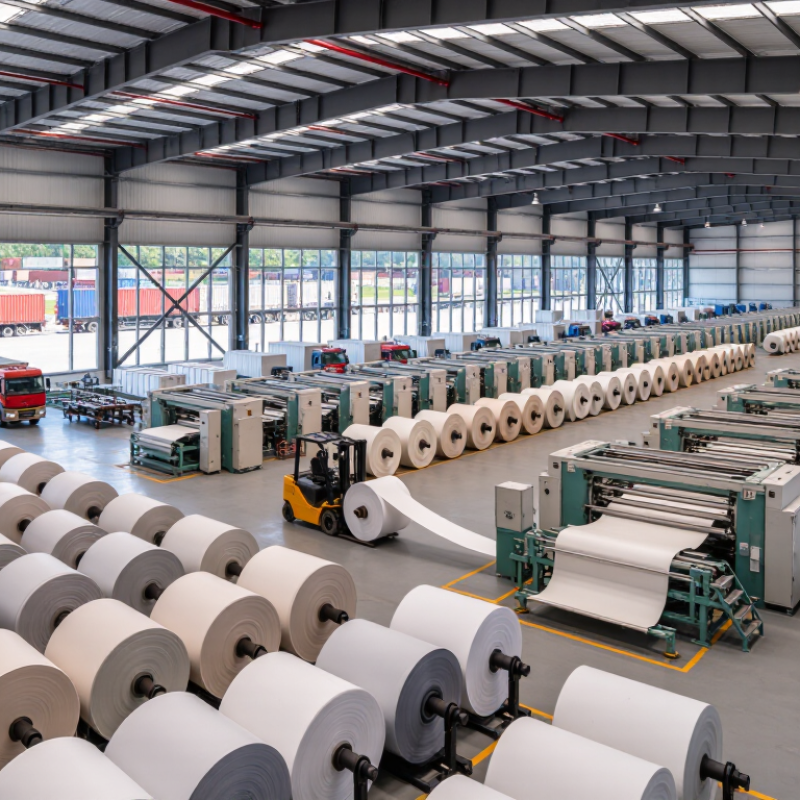
Geotextile layers are permeable fabric sheets placed between soil, gravel, sand, or drainage materials. They are usually made from woven or nonwoven synthetic fibers. These layers separate unstable soil from aggregate, allowing water to pass while limiting soil movement. On roads, they reduce rutting and help protect the base from contamination. In drainage systems, they filter fine particles around pipes and prevent clogging.
Their performance depends on site conditions. A road carrying heavy trucks needs stronger tensile resistance than a garden path. Nonwoven fabric often provides useful filtration, while woven fabric can offer higher reinforcement. Installation quality matters just as much. Wrinkles, exposed edges, or insufficient overlaps may create weak points. In practice, I have seen good materials perform poorly because workers placed them over wet, uneven ground. That detail is easy to overlook. It should not be.
Tips: Check the soil type, drainage demand, load, and expected service life before choosing a layer. Ask manufacturers for test data covering tensile strength, puncture resistance, permeability, and apparent opening size. Do not select fabric by thickness alone. Thicker is not always better. Field inspection should confirm clean overlaps and secure edges. Some projects also need a trial section, because laboratory values may not match actual ground behavior. Manufacturer experience matters, but independent testing remains important.
China’s geotextile layer manufacturers serve roads, railways, drainage systems, landfills, and coastal works. However, product selection depends more on performance than production volume. Grand View Research estimated the global geotextiles market at about USD 7.5 billion in 2023, with infrastructure investment supporting continued growth.
Key types include woven, nonwoven, knitted, and composite geotextiles. Woven layers provide high tensile strength for road reinforcement and soil separation. Nonwoven layers offer strong filtration and drainage, especially around pipes and retaining structures. Knitted products can support flexible reinforcement, while composites combine drainage cores with protective fabrics. It is not interchangeable.
Performance testing should follow recognized standards. ASTM D4595 and ISO 10319 measure tensile properties. ASTM D4751 evaluates apparent opening size, which affects soil retention. ASTM D4491 measures permittivity, while ASTM D4833 assesses puncture resistance. European projects may also reference EN ISO 12958 for in-plane flow capacity. These figures should be matched with soil grading, water pressure, loading cycles, and installation damage.
Field inspections often reveal a practical weakness: laboratory strength does not guarantee site performance. Poor overlaps, sharp aggregate, and uneven subgrades can reduce service life. Designers should request traceable test reports, production quality records, and installation guidance. One overlooked detail remains seam performance. A strong fabric with weak joints can still fail early.
Technical comparison of ten widely used geotextile layer configurations in China and international infrastructure projects
| No. | Geotextile Layer Type | Typical Polymer | Construction | Typical Engineering Use | Typical Mass (g/m²) |
Typical Grab Tensile (kN/m) |
Typical CBR Puncture (kN) |
Typical Permittivity (s⁻¹) |
Typical AOS (mm) |
Common Performance Standards |
|---|---|---|---|---|---|---|---|---|---|---|
| 1 | Woven Separation Geotextile | Polypropylene (PP) | Tape-yarn woven mesh | Separation and reinforcement beneath roads, railways, and working platforms | 100–300 | 20–80 | 1.0–3.0 | 0.1–1.0 | 0.15–0.60 | ASTM D4632, ASTM D4751, ASTM D4833, ASTM D4491; EN ISO 10319 |
| 2 | Nonwoven Filament Separation Geotextile | Polypropylene (PP) | Continuous filament, needle-punched | Drainage, filtration, separation, and cushioning in highways and retaining structures | 150–600 | 8–35 | 1.0–5.0 | 0.5–2.5 | 0.07–0.30 | ASTM D4632, ASTM D4751, ASTM D4833, ASTM D4491; EN ISO 10319, EN ISO 11058 |
| 3 | Nonwoven Staple-Fiber Geotextile | Polypropylene (PP) | Staple fiber, needle-punched | Filtration and separation for drainage trenches, embankments, and soil works | 200–800 | 8–30 | 1.5–6.0 | 0.5–3.0 | 0.06–0.30 | ASTM D4632, ASTM D4751, ASTM D4833, ASTM D4491; EN ISO 12956, EN ISO 11058 |
| 4 | High-Strength Woven Geotextile | High-tenacity woven yarns | Soil reinforcement, basal reinforcement, steep slopes, and soft-ground construction | 200–900 | 50–200 | 2.0–8.0 | 0.05–0.8 | 0.10–0.60 | ASTM D4595, ASTM D6637, ASTM D4751; EN ISO 10319, EN ISO 12236 | |
| 5 | PET Nonwoven Filtration Geotextile | Continuous filament, needle-punched | Fine-soil filtration, drainage layers, landfill drainage, and erosion control | 200–1,000 | 10–60 | 1.5–7.0 | 0.3–2.0 | 0.05–0.25 | ASTM D4632, ASTM D4751, ASTM D4491; EN ISO 10319, EN ISO 11058, EN ISO 12956 | |
| 6 | Road Pavement Stress-Relief Geotextile | Nonwoven, resin-compatible surface | Asphalt overlay interlayer, crack mitigation, and waterproofing support | 100–250 | 8–25 | 0.8–2.5 | 0.1–1.5 | 0.05–0.25 | ASTM D4632, ASTM D6241, ASTM D4491; EN ISO 10319 | |
| 7 | Geotextile Filter Layer for Drainage | Needle-punched nonwoven | Filter wrapping around perforated pipes and drainage aggregate | 150–500 | 8–35 | 1.0–4.0 | 0.8–3.5 | 0.05–0.25 | ASTM D4751, ASTM D4491, ASTM D4716; EN ISO 11058, EN ISO 12956 | |
| 8 | Erosion-Control Geotextile Layer | Woven, open-grid, or three-dimensional mat | Surface protection on slopes, channels, riverbanks, and revegetation areas | 200–1,000 | 10–80 | 1.0–6.0 | 0.5–4.0 | 0.20–10.00 | ASTM D4595, ASTM D5035, ASTM D6241; EN ISO 10319 | |
| 9 | Landfill Protection Geotextile | Heavy-duty needle-punched nonwoven | Cushioning and protection of geomembranes against puncture and localized stress | 600–2,000 | 20–100 | 4.0–15.0 | 0.2–2.0 | 0.05–0.30 | ASTM D4833, ASTM D6241, ASTM D4632; EN ISO 12236, EN ISO 10319 | |
| 10 | Coastal and Hydraulic-Engineering Geotextile | Heavy woven or nonwoven fabric | Scour protection, breakwaters, revetments, filtration beneath rock, and sand containers | 300–1,500 | 30–150 | 2.0–10.0 | 0.1–2.0 | 0.10–1.00 | ASTM D4595, ASTM D4751, ASTM D4833, ASTM D4491; EN ISO 10319, EN ISO 11058 |
Evaluating China’s geotextile layer manufacturers requires more than comparing prices. Start with the intended application, such as drainage, filtration, separation, or slope protection.
Ask for technical data showing mass per unit area, tensile strength, puncture resistance, and water permeability. These figures should match the project’s soil conditions and loading requirements.
A reliable factory should provide traceable raw material records and consistent batch numbers. Request recent laboratory reports, but verify whether the tests used recognized methods.
Inspect production samples carefully. Check roll edges, surface uniformity, winding tension, and visible contamination. Small defects can become larger problems during installation.
Factory experience also matters. Ask how the manufacturer controls recycled content, storage moisture, ultraviolet exposure, and packaging damage.
An on-site audit can reveal more than a polished presentation. Observe calibration labels, production records, worker training, and inspection points. Speak with the quality team, not only the sales representative.
Independent testing before shipment adds useful protection, especially for large orders. Still, no audit is perfect.
I once focused too heavily on certificates and overlooked weak communication about delivery changes. That mistake was costly in time.
Clear drawings, signed specifications, sample approval, and written tolerance limits reduce misunderstandings. Manufacturers that answer technical questions directly are usually easier to manage when field conditions change.
Avoid choosing only by the lowest quotation. A cheaper roll may carry higher installation risks, replacement costs, or uncertain performance.
China’s Top 10 Geotextile Layer Manufacturers are often compared by production control, material consistency, and project experience. A credible list should examine more than factory size or export volume. Key checks include polymer type, fabric weight, tensile strength, puncture resistance, and water permeability. These details matter when geotextile layers support roads, drainage systems, reservoirs, or landfill engineering.
During supplier evaluation, request recent laboratory reports and production samples. A reliable manufacturer should explain needle-punching settings, raw material sources, and roll-width tolerances clearly. Factory audits can reveal practical details, such as clean storage areas, calibrated testing equipment, and proper packaging against moisture. Traceable batch numbers are valuable when a project involves thousands of square meters. Small inconsistencies become expensive later.
The top ten should not be treated as a permanent ranking. Market data changes, and public information is sometimes incomplete. A manufacturer may offer excellent fabric but weak technical support. Another may respond quickly yet lack stable quality between batches. This is easy to overlook. Buyers should compare test results under the same standards and inspect samples before signing contracts. Site conditions also deserve attention, because a suitable layer for a highway may fail in a steep drainage channel. Careful verification remains more dependable than attractive catalog claims.
Typical geotextile basis weight by engineering function
The chart presents representative basis-weight levels commonly used for geotextile layers in separation, filtration, drainage, protection, and reinforcement applications. Higher basis weight generally indicates greater material thickness and resistance, while final selection depends on soil conditions, hydraulic requirements, tensile strength, and project specifications. The values are industry benchmarks and do not represent individual company data or a manufacturer ranking.
China’s top ten geotextile layer manufacturers are often assessed by application fit, not production volume alone. Their products support road subgrades, railway drainage, landfill liners, coastal protection, and mining containment. Nonwoven layers are common where filtration and separation matter. Woven layers suit reinforcement and higher tensile loads. Grand View Research estimated the global geotextiles market at about USD 6.5 billion in 2023, with infrastructure spending supporting continued growth. Field experience shows that soil type, drainage pressure, and installation damage can change product performance significantly. The specification is never enough.
Quality control should begin with polymer identification and continue through mass per unit area, thickness, tensile strength, puncture resistance, and apparent opening size. Laboratories commonly reference ISO 9863-1, ISO 10319, ISO 12236, and ASTM D4759. Factory audits should verify calibrated testing equipment, retained samples, batch traceability, and weather-protected storage. A 2024 industry review by MarketsandMarkets linked geosynthetics demand to stricter infrastructure and environmental requirements, but market reports are not substitutes for project testing. That distinction matters.
Export capability requires more than container capacity. Reliable suppliers provide English technical files, inspection records, loading photographs, and consistent roll labeling. They should understand destination standards, customs documentation, moisture protection, and port schedules. China Customs data for related nonwoven fabric categories indicates substantial international trade, although those categories include products beyond geotextiles. No ranking is perfect. Some manufacturers publish impressive figures, yet independent verification may remain limited. Pilot testing and third-party inspection are still sensible before large shipments.
Geotextile layers are permeable fabric sheets placed between soil, gravel, sand, or drainage materials. They allow water through while limiting soil movement. Simple idea. Careful placement matters.
They separate unstable soil from aggregate and help reduce rutting. They also protect the road base from soil contamination. Heavy truck routes require stronger tensile resistance.
Nonwoven geotextiles commonly provide effective filtration and drainage around pipes or retaining structures. They help stop fine soil particles from entering drainage paths. Particle size matters.
Woven geotextiles often provide higher tensile strength and reinforcement. They suit road bases and areas requiring soil separation under repeated loading. They are not interchangeable with every fabric.
No. Thickness alone cannot show performance. Check tensile strength, puncture resistance, permeability, and apparent opening size. Thicker is not always better.
Wrinkles, exposed edges, weak overlaps, and sharp aggregate can create failure points. Wet, uneven ground can also damage performance. This detail is easy to overlook.
Request traceable data for tensile strength, puncture resistance, permeability, and apparent opening size. Relevant tests may include ASTM or ISO methods. Independent testing remains important.
A strong fabric can fail when its joints are weak. Inspect clean overlaps, secure edges, and seam performance during installation. Laboratory strength is not the whole story.
This article provides a practical overview of the Geotextile Layer industry in China, explaining how these permeable synthetic materials support soil separation, filtration, drainage, reinforcement, and erosion control in civil engineering projects. It introduces major geotextile types, including woven, nonwoven, and composite structures, while outlining important performance standards such as tensile strength, puncture resistance, permeability, UV durability, and chemical stability.
The guide also explains how to evaluate China’s geotextile manufacturers through production capacity, raw material control, testing systems, customization services, certifications, quality assurance, and export experience. A structured review of the top 10 manufacturers highlights the factors buyers should compare without relying solely on price. Finally, it discusses applications in roads, railways, landfills, drainage systems, reservoirs, ports, and construction sites, emphasizing consistent quality control, traceability, technical support, reliable packaging, and efficient international delivery.

Hongyue