Buying Coir Geotextile in bulk can lower unit costs, but the wrong specification may create delays, waste, or uneven site performance. Bulk orders deserve more than a quick price comparison. Fiber quality, weave density, roll dimensions, and expected service life all matter. Ask how the material is made, and request technical data for the exact product being quoted. Details matter. Check width and length against your installation plan; a small mismatch can leave awkward seams or unused rolls. Confirm packaging, storage guidance, lead time, and whether the supplier can maintain consistent batches across repeat orders. These checks are not paperwork for its own sake. They help buyers compare like with like. Where possible, review a sample or completed project reference before committing. Still, samples cannot reveal every batch variation. That is worth remembering.
Price should be considered alongside freight, handling, and replacement risk, especially when delivery spans multiple sites. Request a written quotation that names the grade, dimensions, quantity, delivery terms, and any agreed inspection criteria. Reliable suppliers answer specific questions clearly and avoid vague promises about performance. Ask for evidence. Then compare. The right purchase depends on soil conditions, slope, water flow, installation method, and project duration—not just the lowest offer. This guide outlines seven practical checks for selecting Coir Geotextile in bulk, from defining requirements to confirming delivery. Some projects still require a revised choice after site review. That is not a failure; it is a reason to document assumptions and consult a qualified site professional.
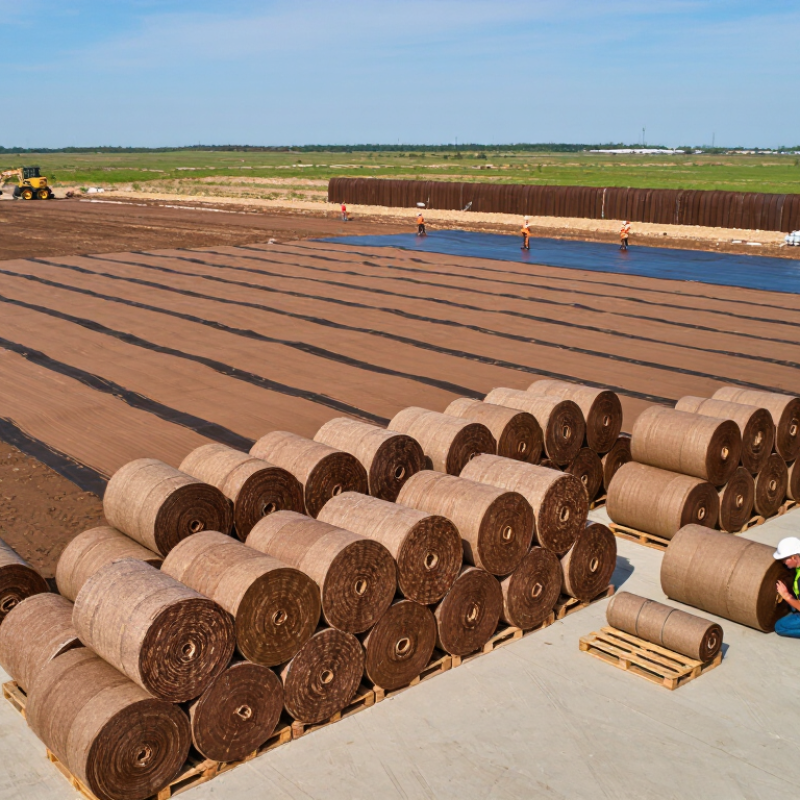
Define Project Requirements and Coir Geotextile Performance Goals
Bulk purchasing should begin with site evidence, not a supplier’s standard roll size. Record slope angle, soil type, rainfall intensity, drainage paths, and expected foot traffic. The FAO and Intergovernmental Technical Panel on Soils estimate that water erosion removes 25–40 billion tonnes of soil globally each year. Your project may face the same process on a smaller scale. Small details matter.
Set measurable performance goals before comparing prices. For a steep, highly exposed slope, specify higher tensile strength, stronger open-area stability, and secure anchoring. On a gentle roadside embankment, erosion-control coverage and vegetation establishment may matter more. FHWA guidance links erosion performance with flow velocity, shear stress, slope length, and surface protection. Ask for test data, including mass per unit area, thickness, tensile strength, permeability, and predicted service life.
Coir products commonly support vegetation while gradually biodegrading, but field life varies with moisture, sunlight, soil biology, and installation quality. A two-year design target may fail on a wet, fast-flowing channel. It might also be excessive for a temporary construction slope. Request samples and inspect fiber consistency, stitching, roll width, and anchoring requirements. I would not trust a specification sheet alone. Laboratory values can look excellent, while loose staples or poor soil contact undermine performance. Define acceptable tolerances in the purchase contract, then order a small trial quantity before committing to bulk volume.
| Tip | Requirement to Define | Example Project Data | Performance Goal | Bulk Purchase Check |
|---|---|---|---|---|
| 1. Identify the application | State where and how the coir geotextile will be used. | Vegetated slope erosion control along a drainage channel; soil is exposed during establishment of vegetation. | Reduce soil displacement from rainfall and surface runoff while vegetation becomes established. | Match the product type and opening structure to the site design; do not treat erosion-control fabric as a substitute for a designed drainage or reinforcement system. |
| 2. Record site conditions | Document slope geometry, soil, rainfall or runoff exposure, and installation access. | Example planning record: 2H:1V slope, silty soil, seasonal heavy rain, and limited vehicle access. | Select a product and installation method suited to the actual site exposure and substrate. | Provide site details with the inquiry and request confirmation that the proposed grade is suitable for those conditions. |
| 3. Set product performance goals | Define the required service period, erosion-control function, and any design-specific strength or permeability criteria. | Temporary surface protection through plant establishment; project engineer to set any required tensile strength or hydraulic criteria. | Maintain adequate surface coverage during the specified establishment period without obstructing the intended vegetation growth. | Request product data sheets and test methods for the selected grade; compare like-for-like test results rather than relying on product names alone. |
| 4. Specify material and mass | Identify fiber type, weave or open structure, and mass per unit area. | Coir fiber; open-weave geotextile. Commonly offered nominal mass classes include approximately 400, 700, and 900 g/m², depending on the product range. | Choose a grade that provides the required coverage and erosion protection for the project conditions. | Confirm nominal mass, permitted tolerance, roll dimensions, and whether the stated mass is measured using a specified test method. |
| 5. Calculate coverage and quantity | Measure the actual surface area and include overlaps, edge anchoring, and installation waste. | Example: a 1,000 m² slope area with a 10% allowance gives a planning quantity of 1,100 m². | Have enough material on site to cover the planned area and complete overlaps and terminations. | Confirm usable coverage per roll, roll width and length, and pallet quantity; calculate order quantity from usable area rather than gross roll area alone. |
| 6. Plan installation details | Specify laying direction, overlap, anchoring, trenching, and compatible vegetation or seeding work. | Install from the slope crest downward; determine overlap and anchoring details from the project design and manufacturer instructions. | Keep the fabric in close contact with the soil and reduce the risk of water flowing beneath or lifting the material. | Obtain installation guidance before ordering and check that the required pins, staples, or other approved fixing materials are included in the project plan. |
| 7. Confirm delivery and quality controls | Set delivery schedule, packaging, inspection criteria, and documentation requirements. | Example: phased delivery to match a 4-week installation window; inspect roll labels, dimensions, visible damage, and supplied certificates on arrival. | Receive consistent, traceable material in usable condition when installation crews and site access are ready. | Agree on batch identification, documentation, packaging, storage protection, lead time, and the process for handling short shipments or damaged rolls. |
Planning note: The quantities and site details above are illustrative. Coir geotextile properties, service life, and suitable grade vary by product and site conditions. Confirm project-specific design criteria, test methods, and installation requirements with the responsible engineer and the product documentation before placing a bulk order.
Record slope angle, soil type, rainfall intensity, drainage routes, and expected foot traffic. Small details matter. Use site evidence, not standard roll sizes.
Steep, exposed slopes need stronger tensile resistance, stable openings, and secure anchoring. Gentle embankments may prioritize vegetation growth and surface coverage. Match requirements to water flow and slope length.
Request mass per unit area, thickness, tensile strength, permeability, and expected service life. Ask for reports matching the exact mat construction and weight. A polished specification is not enough.
Service life depends on moisture, sunlight, soil biology, and installation quality. A two-year target may fail in a wet, fast-flowing channel. It may be excessive on a temporary slope.
Check fiber consistency, stitching, roll width, edges, thin patches, and anchoring needs. Poor soil contact can weaken performance. Loose staples are a warning.
Request recent batch records, production schedules, and manufacturing-site quality documents. Confirm who performs testing and replaces rejected rolls. Verify subcontracted weaving carefully. Capacity claims can be optimistic.
Measure every installation section separately. Include overlaps, seams, cuts, irregular edges, and a small reserve. Check roll width and length before rounding up to whole rolls. Recheck the math.
Compare material, freight, unloading, handling, and labor costs. Confirm pallet dimensions, shipment weight, vehicle access, and delivery dates. A narrow gate may require smaller equipment. Budget for weather delays.
Keep rolls raised on a level, shaded surface with airflow underneath. Protect them from rain without trapping moisture. Avoid hot walls and standing water. Inspect packaging immediately. I might overlook this.
Buying Coir Geotextile in bulk starts with a clear understanding of your project’s needs. Identify the site conditions, intended use, expected service life, and performance goals, such as erosion control or support for vegetation. Then compare available product types, grades, strengths, and roll sizes to find an option suited to the work. Assess potential suppliers by reviewing product specifications, quality-control practices, relevant certifications, and their ability to meet your required volume and timeline.
Before placing an order, estimate the total quantity carefully and account for pricing, freight, unloading, and suitable storage conditions. Request samples when possible to check that the material meets your expectations, and confirm all specifications in the purchase agreement. Clarify payment terms, delivery dates, procedures for handling product issues, and the scope of after-sales support. Careful planning across these steps can help reduce delays and waste while ensuring the bulk purchase aligns with both project requirements and budget.

 Hongyue