What Is Geotextile Felt and How Is It Used?

Time:2026-09-16 Author:Mason
0%

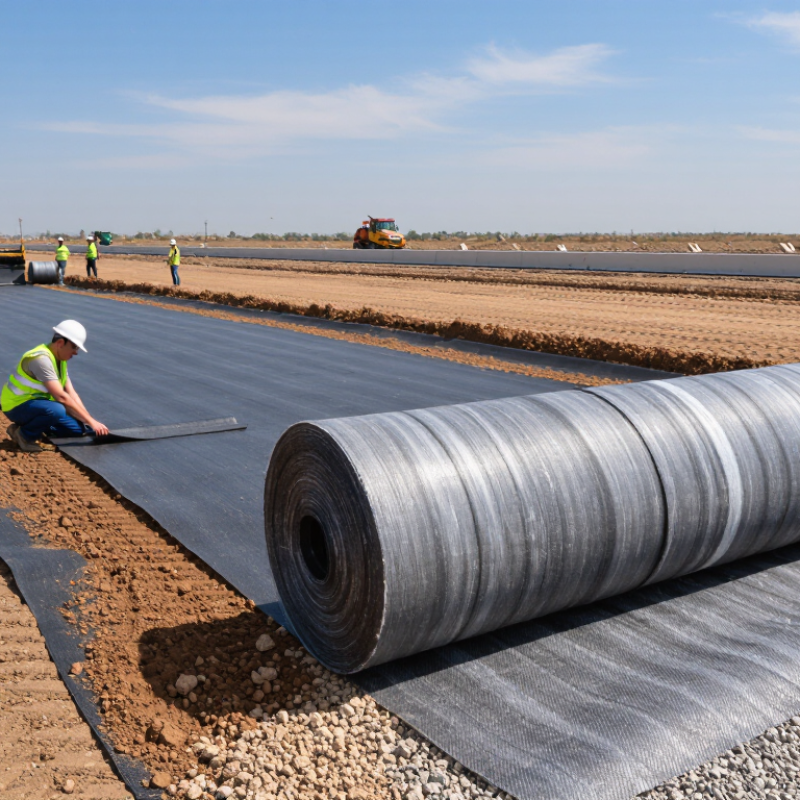
Geotextile Felt is a manufactured fabric used between soil, aggregate, water, and construction surfaces. Its visible form looks simple: a gray or black sheet, often rolled beside a road project. Its engineering role is more important. It can separate unstable soil, filter sediment, support drainage, and reduce material mixing. The Federal Highway Administration identifies separation, filtration, drainage, and reinforcement as key geosynthetic functions in transportation projects.

Demand is growing. Grand View Research reported that the global geotextiles market was valued at approximately USD 8 billion in 2023, with infrastructure development supporting future expansion. MarketsandMarkets also projected continued growth through 2028, although market estimates differ because product categories and regions vary. That limitation matters. Numbers are useful, but they cannot replace site testing.

In practice, engineers select Geotextile Felt according to soil conditions, water movement, loading, and installation risks. A woven fabric may suit reinforcement, while a nonwoven felt often supports filtration and drainage. ASTM D4751 and ASTM D4491 provide recognized methods for evaluating apparent opening size and permittivity. These tests help connect laboratory performance with field conditions.

A poorly chosen fabric can clog, stretch, or tear during placement. Mud on a construction site is not theoretical. Therefore, this guide examines what Geotextile Felt is, how it works, and where it performs best. It also considers practical limits. The material is valuable, but it is not a universal solution. Performance depends on design, installation, and honest inspection.
What Is Geotextile Felt and How Is It Used?

Geotextile Felt Defined: Nonwoven Fibers and 100–1,000 g/m² Mass

Geotextile felt is a nonwoven textile made from randomly arranged synthetic fibers. These fibers are bonded through needle punching, heat, or chemical methods. Unlike woven fabric, it has no regular grid pattern. Its irregular pore structure allows water to pass while holding back soil particles.

That structure matters.

The material is commonly specified by mass, from 100 to 1,000 g/m².

Lightweight grades, around 100–250 g/m², suit basic separation and filtration beneath paths or drainage layers.

Medium grades, roughly 300–600 g/m², offer better puncture resistance near gravel and rough soil.

Heavy grades, from 800–1,000 g/m², can protect membranes or resist demanding installation conditions.

Higher mass is not automatically better. Thick felt may reduce flow if its permeability is poorly matched to the project.

On site, installers use geotextile felt beneath roads, around perforated drainpipes, behind retaining walls, and under landscaping stone. It separates fine soil from aggregate, helping prevent clogging and settlement.

A practical inspection should check for tears, exposed seams, and folds before covering the fabric. Small defects can spread under vehicle loads.

I have seen specifications focus heavily on mass while overlooking tensile strength and apparent opening size. That is a useful warning.

Soil type, water pressure, installation damage, and long-term drainage needs should guide the final selection.

How Needle-Punched and Heat-Bonded Felt Structures Differ

Geotextile felt is a porous synthetic fabric used beneath roads, drainage layers, slopes, and retaining structures. It separates soil from aggregate while allowing controlled water movement. A 2023 Grand View Research assessment valued the global geotextiles market at approximately USD 7.1 billion in 2022. It also projected growth through 2030, reflecting wider infrastructure use.

Needle-punched felt is formed by mechanically entangling fibers with thousands of barbed needles. The result is a thick, flexible structure with strong filtration and drainage behavior. It can conform around rough stones and uneven ground. This makes it useful beneath roads, behind walls, and around drainage pipes. The FHWA Geosynthetic Design and Construction Guidelines identify separation, filtration, and drainage as major geotextile functions. In practice, puncture resistance still depends on mass, polymer type, and installation quality.

Heat-bonded felt uses controlled heat to fuse fibers at contact points. Its structure is usually more uniform and dimensionally stable. It can offer cleaner handling and consistent pore openings. However, it may feel less forgiving during installation, especially over angular fill. MarketsandMarkets reported continued demand for geotextiles in transportation and water-management projects, but market growth does not guarantee suitable performance. That distinction matters.

A thicker fabric is not automatically better. Designers should compare permittivity, apparent opening size, tensile strength, and puncture resistance. Site conditions decide the choice. I have seen specifications focus on strength while overlooking clogging risk. That is an avoidable weakness. Laboratory data helps, but field inspection remains essential.

Key Performance Data: CBR Puncture Strength and Water Permeability

What Is Geotextile Felt and How Is It Used?

Geotextile felt is a porous synthetic fabric placed beneath roads, drainage layers, slopes, and paving. It separates soil from aggregate while allowing water to pass through. Its performance depends on more than fabric thickness. CBR puncture strength is especially important where sharp stones or construction traffic may press against the material.

The CBR test measures the force needed to push a standard plunger through the geotextile. A higher value usually indicates better resistance to puncture during installation. This matters when workers spread crushed stone over uneven ground. A weak fabric may tear before the road structure is complete. However, test results should match site conditions. Needle-punched felt, soil type, aggregate size, and installation pressure can change actual performance.

Water permeability also requires careful attention. The geotextile must drain water without allowing fine soil particles to migrate into the aggregate. Engineers commonly review permittivity, permeability, and opening size together. A fabric with high flow may not provide enough filtration for silty soil. A tightly closed fabric may clog under muddy conditions. Small details matter. On a real project, trapped water beside a foundation can reveal weaknesses that laboratory testing missed. Field inspection, proper overlaps, and careful placement remain essential. Even excellent data cannot repair careless installation.

What Is Geotextile Felt and How Is It Used? — Key Performance Data: CBR Puncture Strength and Water Permeability
Typical Geotextile Class Indicative Areal Mass
(g/m²)
Typical Thickness
(mm)
CBR Puncture Strength
(kN)
Water Permeability
(m/s)
Normal-Flow Permittivity
(s⁻¹)
Typical Tensile Strength
(kN/m)
Common Engineering Uses
Light-duty nonwoven felt 100–150 0.8–1.2 0.8–1.5 0.08–0.15 1.0–2.0 6–12 Drainage layers, light landscape separation, and protection around small pipes.
Medium-duty nonwoven felt 200–300 1.5–2.5 1.8–3.5 0.03–0.10 0.35–0.90 10–20 Soil separation beneath footpaths, residential driveways, and drainage trenches.
Heavy-duty nonwoven felt 400–500 3.0–4.5 3.5–6.0 0.01–0.05 0.12–0.40 18–32 Road subgrades, retaining-wall drainage, embankments, and under-slab protection.
Very heavy-duty nonwoven felt 600–800 4.5–7.0 5.0–9.0 0.005–0.03 0.05–0.20 25–45 High-load access roads, landfill systems, erosion-control layers, and robust cushioning applications.

The values shown are representative engineering ranges for needle-punched, nonwoven geotextile felt and are intended for preliminary comparison only. CBR puncture strength is commonly assessed according to EN ISO 12236, normal-to-plane water permeability according to EN ISO 11058, and tensile strength according to EN ISO 10319. Actual performance depends on polymer type, fiber structure, manufacturing process, soil conditions, and test direction.

How Felt Geotextiles Separate, Filter, Drain, and Reinforce Soil

What Is Geotextile Felt and How Is It Used?

How Felt Geotextiles Separate, Filter, Drain, and Reinforce Soil

Geotextile felt is a porous fabric placed between soil layers. It is usually made from durable synthetic fibers. On a construction site, it can look simple, but its performance depends on correct installation. A fabric roll cannot fix poor grading or standing water by itself.

The separation function is often the first line of defense. The felt keeps fine soil from mixing with gravel beneath a road, path, or drainage trench. This preserves the gravel’s open spaces and helps maintain bearing capacity. During heavy rain, its filter role becomes important. Water can pass through the fabric, while soil particles remain in place. The openings must match the soil type. Too tight, and drainage slows. Too open, and particles may migrate.

Felt geotextiles also support drainage by guiding water toward pipes, outlets, or lower ground. In retaining structures, they reduce pressure behind the wall when installed with a suitable drainage layer. Some woven or reinforced fabrics can improve soil stability by distributing loads across weak ground. Field inspection matters. Wrinkles, tears, clogged edges, and uncovered seams can reduce performance. I have seen designs fail because the fabric was treated as a substitute for proper compaction. It is not. Project specifications, soil tests, and local engineering practice should guide selection, especially where water flow changes seasonally.

What Is Geotextile Felt and How Is It Used?

Felt geotextiles are permeable synthetic fabrics placed between soil layers or around drainage materials. Their main roles are to separate soil, filter water, drain excess moisture, and reinforce weak ground.

Functional map: 1 indicates that the mechanism directly supports the geotextile function, while 0 indicates that it is not the primary mechanism. This is not a performance rating; actual results depend on soil conditions, fabric properties, loading, and installation quality.

Selecting Geotextile Felt by ASTM Standards, Soil Type, and Load Conditions

Geotextile felt is usually a nonwoven, needle-punched fabric placed between soil and aggregate. Its fibers create a controlled filter, while the fabric separates materials during construction. Selection should follow ASTM testing, not appearance or thickness alone.

ASTM D4595 measures wide-width tensile strength, ASTM D4632 measures grab strength, and ASTM D4751 measures apparent opening size.

Soil type changes the requirement. Fine, silty soil needs a smaller opening size and adequate permittivity, tested under ASTM D4491. Clean sand may need stronger retention than drainage control.

AASHTO M288 lists minimum mass values of 135, 200, and 270 g/m² for Classes 3, 2, and 1. These classes help screen separation fabrics, but mass alone can mislead. A heavy fabric may still fail if its puncture resistance is poor.

Load conditions matter just as much. Light pedestrian paths usually face less installation damage than roads carrying repeated truck loads. The Federal Highway Administration’s FHWA-NHI-07-092 guidance evaluates survivability against aggregate size, subgrade strength, and construction stress.

ASTM D4833 puncture testing and ASTM D4884 seam testing can expose weak points before installation. Field inspection remains important: wrinkles, exposed edges, and sharp aggregate can damage otherwise suitable felt.

The decision is not perfectly neat. Soil moisture, seasonal pumping, and workmanship often change the real result. A careful specification should state the test method, minimum value, and installation condition, rather than simply requesting “heavy geotextile felt.”

FAQS

What is geotextile felt?

Geotextile felt is a nonwoven fabric made from randomly arranged synthetic fibers. Its irregular pores let water pass while retaining soil particles. No regular grid exists.

How is geotextile felt commonly classified?

It is usually specified by mass, from about 100 to 1,000 g/m². Light grades suit basic separation and filtration. Heavy grades offer greater protection and puncture resistance.

Which mass range suits pedestrian paths?

Fabrics around 100–250 g/m² often suit paths and simple drainage layers. They separate soil from aggregate under lighter loads. Do not assume every path is gentle.

When should a medium or heavy fabric be selected?

Medium grades around 300–600 g/m² suit gravel and rough soil. Grades near 800–1,000 g/m² can protect membranes during demanding installation. Higher mass is not automatically better.

Why can a heavier fabric perform poorly?

Excessive thickness may restrict water flow if permeability is poorly matched. Selection should consider soil, water pressure, puncture resistance, and drainage needs. More material can still be the wrong material.

Where is geotextile felt installed?

Common locations include beneath roads, around perforated drainpipes, and behind retaining walls. It also sits beneath landscaping stone. The fabric separates fine soil from aggregate and helps reduce clogging.

What tests help with fabric selection?

Standard tests can measure tensile strength, grab strength, opening size, permeability, puncture resistance, and seam strength. These values reveal performance more clearly than appearance or thickness. Specifications should state minimum values.

What should installers inspect before covering the fabric?

Check for tears, exposed seams, wrinkles, folds, sharp aggregate, and exposed edges. Small defects can spread under vehicle loads. Repair problems early.

Conclusion

Geotextile Felt is a porous synthetic fabric designed to improve the performance and durability of soil and aggregate systems. Made from nonwoven fibers, it is commonly produced in mass ranges from 100 to 1,000 g/m². Needle-punched felt creates a flexible, interconnected fiber network, while heat-bonded felt offers a more uniform structure and controlled pore characteristics. These manufacturing differences affect strength, filtration, drainage, and installation behavior.

Its key performance indicators include CBR puncture strength, tensile capacity, and water permeability. In construction, Geotextile Felt separates fine soil from gravel, filters water while limiting soil migration, drains excess moisture, and can provide reinforcement under loads. Selection should be based on relevant ASTM standards, soil conditions, expected water flow, installation environment, and traffic or structural loads. A suitable felt balances durability, hydraulic performance, and resistance to puncture so that roads, drainage layers, retaining systems, and other groundworks remain stable over time.


Mason

Mason

Mason is a seasoned marketing professional with a deep expertise in the company's offerings and a passion for driving brand awareness. With a strong background in digital marketing strategies, he has an innate ability to connect with diverse audiences and effectively communicate product benefits.......