A Geotextile Filter helps manage water flow while keeping soil particles in place. In roadworks, drainage trenches, and coastal protection, the wrong fabric can clog too quickly or allow fine soil to pass through. Those failures may not appear on delivery day. They can surface after months of rain, pressure, and sediment movement.
This guide reviews seven geotextile filter suppliers for global buyers. It focuses on practical comparison points: permeability, apparent opening size, tensile strength, roll consistency, and product documentation. These details matter. A datasheet is useful, but it cannot replace checking whether a product suits the soil, installation method, and design conditions. Buyers should request current technical information and, where feasible, test samples against project requirements.
There is no single best supplier for every project. That sounds obvious, yet procurement decisions often favor price or fast delivery alone. Regional stock, export experience, quality controls, and clear communication can matter just as much. Supplier capabilities also change, so treat this overview as a starting point rather than a final approval. Verify specifications, certifications, lead times, and warranty terms directly before placing an order. A small inconsistency in fabric weight or opening size may seem minor. On site, it may not be.
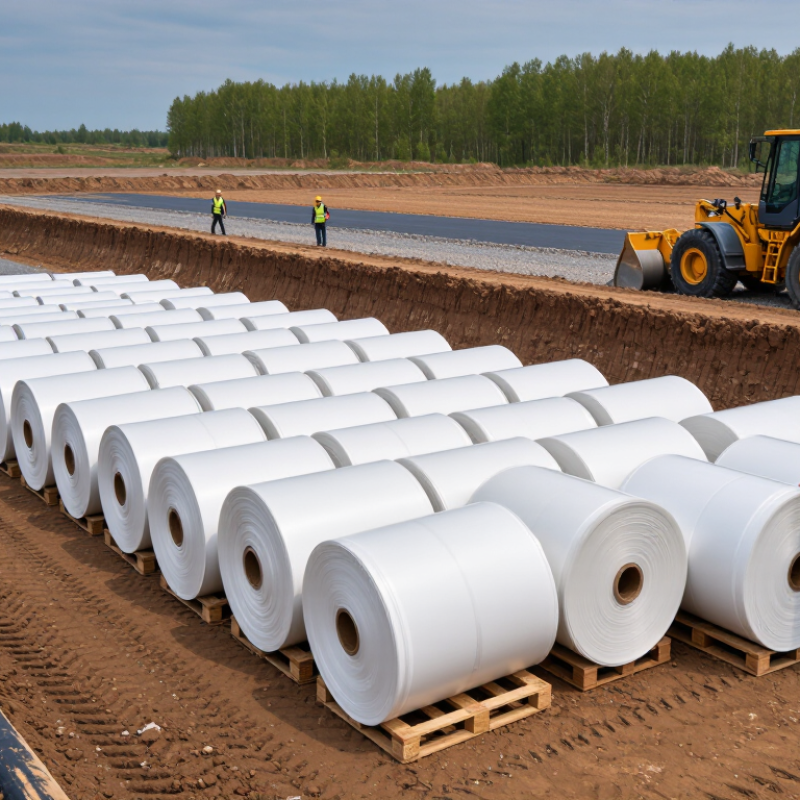
Geotextile filter fabric is a permeable sheet placed between soil and drainage materials. It lets water pass while limiting the movement of soil particles. Most products use synthetic fibers, often polypropylene or polyester, formed into woven or nonwoven structures. Their openings and flow capacity vary, so fabrics are not interchangeable. That matters.
On a road project, fabric may sit between soft subgrade and crushed aggregate, helping reduce soil migration as water moves through the base. Around a perforated drainpipe, it can keep fine particles from entering and gradually restricting the pipe. Similar uses include retaining-wall drainage, embankments, and some erosion-control systems. Installation details count. Wrinkles, poorly sealed overlaps, or damage from sharp aggregate can create weak spots.
A filter must suit the soil, water flow, and expected loading. A fabric that is too tight may clog; one that is too open may allow soil loss. Neither outcome is easy to fix after burial. Designers typically compare soil gradation, apparent opening size, and permeability before specifying a product. Still, field conditions rarely match a drawing perfectly. A small soil sample and a careful installation check can reveal issues that a catalogue cannot.
Global buyers should assess geotextile filter suppliers by verified performance, not catalog claims. Grand View Research’s 2023 geotextiles market report valued the global market at USD 8.22 billion in 2022. It projected 6.6% annual growth through 2030. A growing market offers more options, but does not guarantee a suitable filter. Ask suppliers for current test reports tied to the exact product and production lot. Check apparent opening size under ASTM D4751 and permittivity under ASTM D4491. These values help compare products, but they must match the project’s soil and drainage conditions.
The Federal Highway Administration’s Geosynthetic Design and Construction Guidelines explain that filtration design must balance soil retention with water flow. Request factory quality-control records, lot traceability, and clear details on fiber type, mass per unit area, and roll dimensions. Paper is not proof. For a roadside drain, for example, compare the filter fabric with the site’s actual soil gradation and expected flow, not just a general specification sheet. Ask how the supplier handles damaged rolls, storage exposure, and inconsistent test results. A technically complete file can still miss local soil behavior; independent review of the project-specific design is worth considering.
A practical, brand-neutral checklist for comparing geotextile filter suppliers. Test methods listed below help buyers compare product data; they are not, by themselves, supplier certifications or proof of project suitability.
| Evaluation area | What to request from the supplier | Relevant test method or reference | How to assess it for a global project |
|---|---|---|---|
| 1. Filtration opening size | Apparent opening size (AOS) or characteristic opening size, with the test result and method stated. | ASTM D4751 measures apparent opening size. | Compare the reported opening size with the project soil gradation and filtration design. Do not select a fabric from AOS alone. |
| 2. Water flow capacity | Permittivity or permeability data, including test conditions and whether flow is measured normal to the fabric plane. | ASTM D4491/D4491M covers water permeability of geotextiles by permittivity. | Check that the stated value and units match the project specification, and consider whether soil intrusion or clogging could reduce long-term flow. |
| 3. Tensile strength | Strength and elongation results in both principal directions, with the test method, specimen details, and units identified. | ASTM D4632/D4632M is a grab tensile test method; ISO 10319 is a wide-width tensile test method. | Compare results only when test methods and reporting bases are compatible. Confirm the design addresses installation and service loads. |
| 4. Tear and puncture resistance | Tear and puncture test reports for the proposed product, plus guidance on protection where sharp aggregate or rough subgrade is present. | ASTM D4533/D4533M addresses trapezoid tearing strength; ASTM D6241 addresses static puncture strength. | Use the tests required by the project specification and assess handling, placement, and site conditions as well as laboratory values. |
| 5. UV and exposure durability | UV-resistance test data and written installation guidance on exposure limits, storage, and covering the material. | ASTM D4355/D4355M measures deterioration from exposure to light, moisture, and heat using a xenon-arc apparatus. | Compare the result with the project requirement and planned exposure duration. UV test results do not establish a universal field service life. |
| 6. Quality documentation and traceability | Current technical data sheets, lot-specific certificates or test reports, product identification, and a documented process for handling nonconforming material. | Request reports that identify the tested product, method, date, units, and issuing laboratory. Confirm any required quality-system documentation directly. | Check that documentation matches the supplied grade and destination-market requirements; verify required certificates with the issuing body where applicable. |
| 7. Logistics and project support | Written production and shipment lead times, roll dimensions, packaging details, export documents, and a named technical contact for submittals and questions. | Confirm requirements against the purchase specification, shipping terms, and destination-country import rules. | Evaluate delivery reliability, document completeness, communication across time zones, and the supplier's ability to resolve specification or shipment issues. |
The first supplier profile is a large distributor with broad product availability and established export processes. Buyers may value consolidated shipments, but should check stock levels and delivery estimates.
The second is a manufacturer focused on woven and nonwoven geotextiles. Ask for data on tensile strength, puncture resistance, and filtration performance. Details matter.
A third supplier specializes in drainage and erosion-control projects. Its technical team may help match fabric properties to soil conditions, though buyers should confirm the advice suits their site.
The fourth offers custom roll widths or cut-to-size materials. This can reduce installation waste. Request sample dimensions before placing a large order.
The fifth is a regional producer serving nearby construction markets. Shorter transport routes may help with lead times, but available grades can be limited.
The sixth profile emphasizes quality records and product testing. Look for current technical sheets and clear descriptions of test methods; a certificate alone may not answer every project question.
The seventh is a smaller technical supplier that handles modest orders or unusual specifications. Ask about production capacity and repeat-order consistency.
No profile is automatically the best fit. Compare products against soil data, drainage needs, installation conditions, and project documents. Some details are easy to overlook. A practical review can reveal gaps before materials reach the site.
Compare each supplier’s filtration range, not just its headline strength. Needle-punched nonwovens suit drainage and soil separation, while woven products often prioritize tensile reinforcement. Check apparent opening size, permittivity, puncture resistance, and UV-aging results against the project specification. ISO 9001 indicates a quality-management system; it does not certify a geotextile’s field performance. Request independent, product-specific test reports. A polished certificate can still leave important questions unanswered.
Market reach matters when a project has tight delivery windows. Grand View Research valued the global geosynthetics market at USD 13.2 billion in 2023 and forecast 6.2% annual growth from 2024 to 2030. This points to expanding demand, not guaranteed supplier capacity. Compare export experience, regional inventory, technical support, and realistic lead times. Ask where the roll will ship from, and confirm that labels and documentation match the destination’s project requirements.
Tips: Request a lot-specific datasheet and sample roll. Check whether quoted delivery includes inland transport and port handling. Then compare test values—not only prices—across the same product type.
Choosing an international geotextile filter supplier starts with the soil, not the sales brochure. Share the project’s soil gradation, drainage conditions, and installation method. Ask for product data covering apparent opening size, permittivity, tensile strength, and ultraviolet resistance. These figures help narrow options, but they do not guarantee performance in every soil. Test it locally.
Request recent test reports and confirm that they match the product grade being quoted. Ask how production lots are checked and whether samples can be supplied before a large order. A sample roll or cut piece lets your team inspect thickness, weave, and handling. One document is not enough. Compare several records, and check that units and test methods are consistent.
Before purchasing, confirm lead time, roll dimensions, packaging, and shipping arrangements in writing. Ask how damaged goods or specification differences are handled. A low unit price can lose its appeal if rolls arrive late or do not fit the installation plan. Build in time for sample review and transport delays. No checklist removes all uncertainty; paperwork cannot fully reproduce site conditions. When project soils vary, a small field trial may reveal issues that a polished specification sheet misses.
How to Select and Purchase from an International Supplier
Use this unit-conversion reference to compare supplier datasheets that report mass per unit area in different units. Values are calculated using 1 oz/yd² = 33.9057 g/m². Mass alone does not determine filtration performance; compare test results and project requirements before purchasing.
It lets water pass while limiting soil movement. It is often placed between soil and drainage materials.
It can sit beneath crushed aggregate on roads or wrap around perforated drainpipes. It also appears in retaining-wall drainage and embankments.
Match the fabric’s openings and water flow to the site soil and expected loading. A tight fabric may clog; an open one may let soil escape.
Check apparent opening size, permeability, puncture resistance, and UV-aging results. Compare the same product type, not just headline strength.
Ask for current, product-specific test reports and quality-control records tied to the production lot. Confirm fiber type, roll dimensions, and mass per unit area.
No. It describes a management system, not how a fabric will perform in your soil. That distinction is easy to miss.
Inspect overlaps, wrinkles, and fabric damage. Sharp aggregate can create weak spots, and buried problems are hard to fix.
Ask where rolls will ship from and confirm realistic lead times. Check regional inventory, technical support, and whether quoted delivery includes inland transport and port handling.
Not always. Compare test results with actual soil gradation and expected flow. A small soil sample can reveal details a catalogue cannot.
Geotextile Filter fabrics are permeable materials designed to separate soil, retain particles, and allow water to pass through. They are commonly used in drainage systems, road and railway construction, erosion control, retaining structures, and other civil engineering projects. Choosing the right fabric depends on soil conditions, water flow, strength requirements, durability, and the demands of the intended application.
For global projects, buyers should assess suppliers by comparing product specifications, quality controls, available certifications, production capacity, export experience, and service support. A review of seven supplier profiles can help illustrate differences in product ranges and market reach without assuming that one option suits every project. Before purchasing internationally, confirm technical requirements, request relevant documentation and samples, clarify shipping terms and lead times, and agree on inspection and communication procedures. Careful evaluation helps buyers select a reliable Geotextile Filter solution that meets project needs and performs consistently over time.

Hongyue