2026 Top Types of Woven Geotextile for Global Buyers

Time:2026-10-01 Author:Charlotte
0%

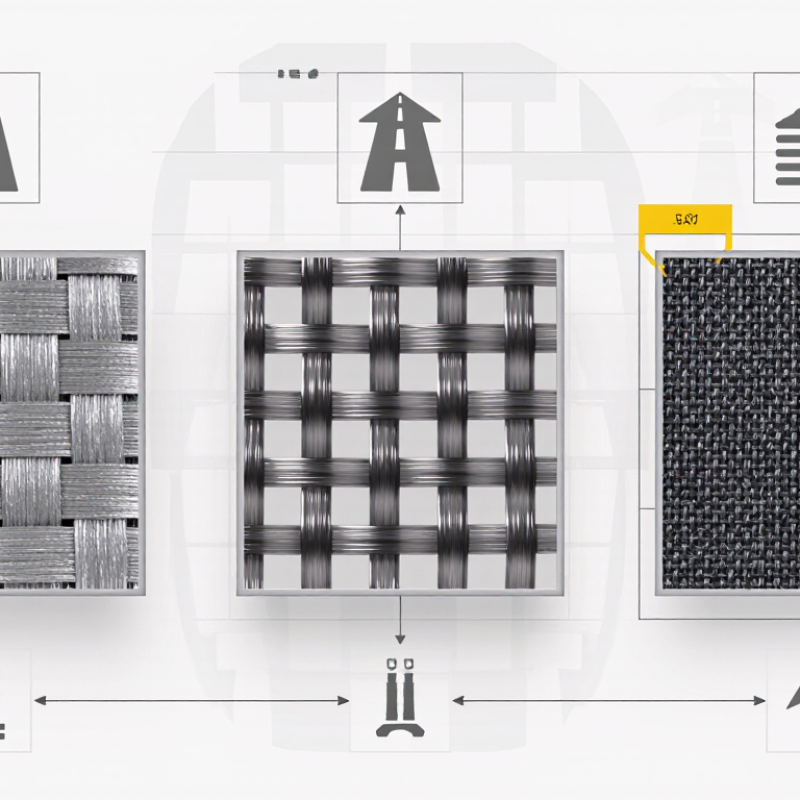
Choosing the right Woven Geotextile in 2026 requires more than comparing tensile strength and price. Global buyers now examine material structure, production consistency, project conditions, and verified technical data. This guide introduces the leading woven types, including slit-film, monofilament, and multifilament fabrics. Each type offers different performance in separation, reinforcement, filtration, and load distribution.

Slit-film woven geotextiles often suit road construction, warehouse yards, and temporary access routes. Their flat tapes provide practical strength and efficient manufacturing. Monofilament fabrics can offer improved filtration performance, especially where water must pass through stable openings. Multifilament designs may provide a softer structure and useful permeability, but their suitability depends on soil behavior and installation quality. The strongest product is not automatically the best choice.

Real projects rarely match laboratory conditions perfectly. Moisture, sharp aggregate, ultraviolet exposure, and uneven subgrades can change performance. Fit matters. Buyers should request test reports, aperture data, grab tensile strength, puncture resistance, and seam information from qualified suppliers. Independent testing can also reveal differences between marketing claims and production batches.

This overview evaluates popular Woven Geotextile types through practical use, engineering evidence, and international purchasing needs. It considers raw materials, weaving methods, quality control, packaging, and documentation. Some recommendations may require revision when local soil or drainage data is incomplete. That is an important limitation. Careful buyers should confirm project specifications with geotechnical professionals before selecting a final product.
2026 Top Types of Woven Geotextile for Global Buyers

What Woven Geotextiles Are and How They Function

Woven geotextiles are engineered fabrics made by interlacing high-strength polymer tapes or yarns. This structure creates a stable grid, unlike nonwoven sheets formed from randomly arranged fibers. Common types include slit-film, monofilament, and multifilament woven fabrics. Each type balances tensile strength, soil retention, permeability, and installation cost. Polypropylene is widely selected for its low density and chemical resistance. Polyester can provide greater dimensional stability under sustained loads. The right choice depends on soil, drainage, loading, and exposure conditions.

In road construction, woven geotextiles separate weak subgrade from aggregate. They prevent stone from sinking into soft soil during compaction and traffic. Their tensile resistance can also limit lateral aggregate movement. Under embankments, they may reinforce unstable ground. In drainage systems, an open weave allows water to pass while retaining soil particles. This function is easy to misunderstand. A strong fabric is not automatically a suitable filter.

Field inspections often show that installation controls performance as much as fabric selection. Wrinkles, damaged seams, and inadequate overlaps can create weak points. Designers should check grab tensile strength, puncture resistance, apparent opening size, and permittivity. Testing should match recognized standards and actual site conditions. Soil gradation matters. A fabric suitable for clean sand may clog beside silty clay. No woven geotextile performs perfectly in every layer or climate. That limitation deserves attention before procurement, not after failure.

Main Types of Woven Geotextiles Available in 2026

Woven geotextiles in 2026 are mainly divided into slit-film, monofilament, multifilament, and composite structures. Slit-film fabrics use flat polypropylene tapes and provide strong tensile support at a controlled cost. They suit road subgrades, temporary access roads, and soil separation beneath aggregate layers. Monofilament fabrics use round filaments, creating larger openings for filtration and drainage. They perform well beside retaining walls and drainage trenches.

Multifilament woven geotextiles contain many fine yarns. Their flexible structure can improve soil contact, especially on uneven ground. Composite woven products combine a woven reinforcement layer with a nonwoven filtration layer. This design can reduce installation steps, but it may increase project cost and complicate damage assessment. Choose carefully.

Grand View Research reports that the global geotextiles market reached about USD 7 billion in 2023, with continued growth forecast through 2030. MarketsandMarkets also projects strong expansion across the wider geosynthetics market, driven by roads, drainage, erosion control, and landfill construction. These figures cover several product categories, not woven fabrics alone. That distinction matters.

In practical purchasing, review tensile strength, apparent opening size, permeability, UV resistance, and seam performance. A high-strength fabric is not automatically the best filter. Site soil changes everything. Laboratory data can also disappoint when installation includes sharp aggregate, poor overlaps, or careless anchoring. I would request test results under relevant standards and confirm performance with local soil trials. Specifications are useful, but field judgment remains imperfect.

How Each Woven Geotextile Type Supports Different Applications

2026 Top Types of Woven Geotextile for Global Buyers
How Each Woven Geotextile Type Supports Different Applications
Woven geotextiles differ by yarn structure, opening size, tensile strength, and permeability. These details decide whether a product suits a highway, drainage layer, or coastal project. In road construction, slit-film woven geotextiles provide strong separation between aggregate and weak soil. Their tight structure limits soil migration under repeated truck loads. They also help maintain aggregate thickness during installation.
Flat-yarn woven geotextiles offer a practical balance between strength and cost. Contractors often use them beneath access roads, working platforms, and railway subgrades. They spread wheel pressure across soft ground and reduce rut formation. Field experience shows that poor overlaps can weaken an otherwise suitable design. This small detail is often underestimated.
Monofilament woven geotextiles have larger, more controlled openings. They support filtration and drainage around riprap, culverts, retaining walls, and shoreline protection. Water can pass through while soil particles remain largely contained. Multifilament structures may provide useful flexibility, but their performance depends heavily on pore size and installation conditions. No type fits every site. Designers should check soil grading, hydraulic flow, puncture resistance, seam strength, and ultraviolet exposure before selection. Laboratory data helps, yet site verification remains important. Some projects still specify tensile strength alone, which can produce an incomplete and risky comparison.

Key Performance Standards and Quality Factors to Evaluate

For global buyers, woven geotextile selection should start with project loads, not fabric price. In road bases, hauling and installation can create sharp, uneven stress. Tensile strength alone is not enough. Review grab tensile results under ASTM D4632 or ISO 9073-3, then check wide-width tensile behavior under ISO 10319. Ask whether values represent machine direction, cross direction, or both. Direction matters.

Filtration and drainage need different evidence. Apparent opening size, tested under ASTM D4751, helps compare soil retention. Permittivity under ASTM D4491 indicates water flow through the fabric. A high value may still fail when soil clogs the openings. That detail is easy to miss. For exposed rolls, request UV resistance data, such as ASTM D4355, and confirm the allowed exposure period. Puncture resistance under ASTM D6241 can reveal weaknesses before placement.

Quality evaluation should include denier consistency, coating coverage, roll width, seam strength, and visible yarn breaks. I would inspect samples from several production lots, not one attractive roll. Ask for lot traceability, calibrated laboratory reports, and retained samples. Factory checks should record mass per unit area and dimensional tolerance. Certificates help, but they do not prove every roll. Field conditions often differ from laboratory conditions. Soil chemistry, folding, wet handling, and poor overlaps can reduce performance. Some projects still specify strength without defining test methods. That invites disputes.

2026 Top Types of Woven Geotextile for Global Buyers - Key Performance Standards and Quality Factors to Evaluate

Woven Geotextile Type Common Polymer / Construction Typical Key Performance Range* Typical Opening / Permeability Characteristics Best-Fit Applications Important Quality Factors Relevant Test Standards Buyer Evaluation Priority
Woven Monofilament Polypropylene or polyester monofilaments woven into a stable grid Moderate to high tensile strength; commonly selected where consistent pore geometry and filtration are required Relatively uniform apparent opening size; generally better filtration consistency than slit-film fabrics Drainage layers, erosion control, riverbanks, revetments, and separation with filtration requirements Uniformity of openings, seam performance, UV resistance, chemical compatibility, and resistance to installation damage ASTM D4751, ASTM D4491, ASTM D4632, ASTM D4355, ISO 12956, ISO 11058 Confirm filtration criteria against the soil gradation and hydraulic conditions
Woven Slit-Film Flat polypropylene tapes slit from extruded film and woven in two directions Typically high tensile strength and high puncture resistance at a comparatively economical material cost Low to moderate permeability; apparent opening size depends on tape width, weave density, and coating Road and rail separation, subgrade stabilization, haul roads, working platforms, and embankments Tensile uniformity, coating integrity, aperture stability, grab strength, tear resistance, and roll-width accuracy ASTM D4595, ASTM D4632, ASTM D4533, ASTM D4833, ASTM D4751, ISO 10319 Prioritize strength, installation survivability, and compatibility with the design aggregate
High-Strength PET Woven High-tenacity polyester yarns woven in warp and weft directions Very high tensile capacity with relatively low elongation compared with many polypropylene products Can be engineered for reinforcement or separation; hydraulic performance varies by weave density Reinforced embankments, steep slopes, mechanically stabilized structures, soft-soil improvement, and heavy-duty haul routes Creep behavior, tensile strength at design strain, hydrolysis resistance, installation damage, and long-term reduction factors ASTM D4595, ASTM D5262, ASTM D6637, ISO 10319, ISO 13431 Request long-term design strength and creep data rather than relying only on ultimate tensile strength
High-Strength PP Woven High-tenacity polypropylene tapes or fibrillated yarns woven into a reinforced structure High tensile and puncture performance with low density and good resistance to many acids and alkalis Available from relatively tight to open constructions, depending on separation, reinforcement, or filtration needs Road bases, railway formations, mining access roads, landfill liners, and heavy-duty soil separation UV stabilization, dimensional stability, seam strength, creep response, puncture resistance, and roll consistency ASTM D4595, ASTM D4632, ASTM D4833, ASTM D4355, ISO 10319 Check the actual design strength after installation and environmental reduction factors
Woven Reinforcement Geotextile Engineered PP or PET woven structure designed primarily for tensile load transfer High tensile strength, controlled elongation, and directional strength tailored to the project design Hydraulic properties are secondary; opening size must still be compatible where drainage or separation is required Basal reinforcement, embankments over weak soils, slope stabilization, and reinforced working platforms Strength at specified strain, creep, junction efficiency, installation damage, durability, and calculated reduction factors ASTM D4595, ASTM D5262, ASTM D6637, ISO 10319, ISO 13431 Evaluate design tensile strength, not just catalog maximum strength
Woven Geotextile with Coating or Lamination Woven PP or PET substrate with polymer coating or laminated film High tensile and tear resistance; coating can reduce water flow and increase barrier performance Lower permeability than uncoated fabric; performance depends on coating continuity and bonded area Temporary covers, contaminated-soil containment, pond liners, canal works, and applications requiring controlled seepage Coating adhesion, pinholes, weldability, seam strength, flexibility at low temperature, UV exposure, and chemical resistance ASTM D751, ASTM D1004, ASTM D638, ASTM D4437, ASTM D4491, ISO 11058 Verify whether the project needs drainage, containment, or a separate geomembrane system
Woven Geotextile for Erosion Control UV-stabilized polypropylene or polyester woven tapes, yarns, or reinforced grids Moderate to high tensile strength with emphasis on surface stability and resistance to hydraulic or wind forces Open or semi-open weave allows drainage while helping retain soil particles, depending on soil compatibility Channels, riverbanks, coastal protection, slope facing, temporary soil cover, and vegetation establishment UV stability, anchoring strength, seam overlap, hydraulic stability, soil retention, and resistance to biological exposure ASTM D4355, ASTM D4595, ASTM D4751, ASTM D4491, ISO 10319, ISO 12956 Match the fabric opening and permeability to the site soil and design flow velocity
Woven Geotextile for Filtration and Drainage Usually monofilament or specially engineered PP/PET woven yarns Strength selected for site loads while maintaining measurable permittivity and water flow capacity Designed around apparent opening size, permittivity, and transmissivity; values must be assessed with the site soil French drains, underdrains, retaining-wall drainage, coastal structures, and filtration beneath aggregates Clogging potential, soil retention, permittivity, transmissivity, seam filtration, and resistance to construction damage ASTM D4751, ASTM D4491, ASTM D4716, ASTM D4632, ISO 11058, ISO 12956 Use soil-fabric compatibility criteria; strength alone does not demonstrate filtration suitability
*Note: Performance values and suitable applications are typical industry guidance only. Exact requirements depend on polymer type, weave design, project loads, soil gradation, climate, installation method, and the governing specification. Buyers should request independent test reports, lot traceability, dimensional checks, and declared values for the specific production batch.

How Global Buyers Can Compare Suppliers and Purchase Wisely

2026 Top Types of Woven Geotextile for Global Buyers

Global buyers need more than a catalog when selecting woven geotextile. Common options include slit-film woven fabric, monofilament woven fabric, and reinforced grades. Each suits different ground conditions. Slit-film products often support separation and stabilization on firm subgrades. Monofilament designs can offer improved water flow where drainage matters. Ask for test data, not broad claims. Review tensile strength, puncture resistance, apparent opening size, permeability, and UV performance. Match every value to the project specification.

Supplier comparison should examine consistency, not only the lowest quotation. Request recent batch reports, production tolerances, roll dimensions, and seam performance. A credible supplier explains testing methods and provides traceable samples. Check whether reports follow recognized testing standards. Ask how material is stored before shipment. Damp or sun-exposed rolls may create avoidable problems. Calculate landed cost, including freight, taxes, inspection, and replacement risk. A cheap offer can become expensive. I have seen purchasing teams overvalue tensile strength and overlook opening size. That mistake deserves a second review. Also confirm lead times in writing and test one sample in realistic soil conditions.

Tips: Build a comparison sheet with identical questions for every supplier. Keep retained samples from each approved lot. Inspect roll labels before unloading. Photograph packaging damage immediately. Do not accept “equivalent” without evidence. Check twice. If a supplier avoids clear answers, pause the order. Reliability comes from repeatable data, careful packing, and honest limits—not polished promises.

FAQS

What are woven geotextiles?

Woven geotextiles are engineered fabrics made by interlacing polymer tapes or yarns. They form a stable grid. This structure differs from randomly arranged nonwoven fibers.

How do woven geotextiles support road construction?

They separate weak subgrade soil from aggregate. The fabric helps stop stones from sinking during compaction and traffic. It can also reduce sideways aggregate movement.

Which woven geotextile type suits soft road subgrades?

Slit-film fabrics often provide strong separation at a controlled cost. They suit access roads, working platforms, and railway subgrades. Poor overlaps can still weaken the system.

When are monofilament woven geotextiles useful?

Monofilament fabrics have larger, controlled openings. They can support drainage beside culverts, retaining walls, riprap, and shoreline protection. Water passes through while soil remains largely contained.

Are multifilament woven geotextiles suitable for uneven ground?

Their flexible structure can improve contact with uneven soil. However, pore size and installation quality still control performance. Flexibility alone is not enough.

Can a strong woven geotextile automatically work as a filter?

No. Tensile strength does not guarantee suitable filtration. Designers should check apparent opening size, permeability, soil grading, and water flow.

What installation problems can reduce geotextile performance?

Wrinkles, damaged seams, weak anchoring, and insufficient overlaps can create weak points. Sharp aggregate may puncture the fabric. Small mistakes matter.

How should buyers choose a woven geotextile?

Review tensile strength, puncture resistance, permeability, ultraviolet resistance, and seam performance. Match testing with local soil and actual loading. Laboratory results can disappoint in the field.

Conclusion

This guide explains what Woven Geotextile products are, how their interlaced yarn structures function, and why they are widely used for soil stabilization, separation, reinforcement, filtration, and drainage support. It reviews the main types available in 2026, including products made from different polymer materials, yarn configurations, weave patterns, and strength levels. Each type is matched with suitable applications such as road construction, railways, retaining structures, embankments, land reclamation, and erosion control.

The article also outlines the key performance standards and quality factors global buyers should evaluate, including tensile strength, puncture resistance, aperture size, permeability, durability, dimensional stability, and production consistency. To make informed purchasing decisions, buyers should compare suppliers based on technical documentation, testing procedures, customization options, production capacity, packaging, communication, delivery reliability, and after-sales support. A careful comparison helps ensure that the selected Woven Geotextile meets project requirements, environmental conditions, and long-term performance expectations.

Charlotte

Charlotte

Charlotte is a seasoned marketing professional with a deep understanding of the company's portfolio and a passion for elevating its presence in the market. With a keen eye for detail and a commitment to excellence, she ensures that our professional blog is regularly updated with insightful articles......