For global buyers, selecting the right Geotextile Wrap in 2026 means looking beyond price, fabric weight, and attractive product images. A wrap may appear simple on a sample table, yet its performance depends on soil type, drainage pressure, installation tension, ultraviolet exposure, and long-term loading. Woven, nonwoven, composite, and reinforced structures each solve different problems. The wrong choice can create clogged pores, seam failure, or uneven settlement.
Experience matters here. Geosynthetic pioneer Dr. Jean-Pierre Giroud has emphasized, “A geosynthetic is only as good as its design and installation.” That principle remains practical. A high-strength fabric cannot rescue poor overlap, careless backfilling, or an unsuitable filter opening size. Buyers should examine technical datasheets, test methods, quality-control records, and project references before approving a supplier. Details matter. Even the soil stuck to a contractor’s boot can change the installation decision.
This 2026 guide compares the leading Geotextile Wrap types for international procurement, including drainage wraps, erosion-control wraps, pipe-surround fabrics, and heavy-duty containment layers. It considers tensile strength, apparent opening size, permittivity, puncture resistance, roll dimensions, packaging, and climate exposure. However, no ranking fits every site. That is the uncomfortable part. Product labels may simplify complex engineering choices. Global buyers should question vague claims, request independent test evidence, and involve a qualified geotechnical professional before final selection. A cheaper roll is not always a cheaper project.
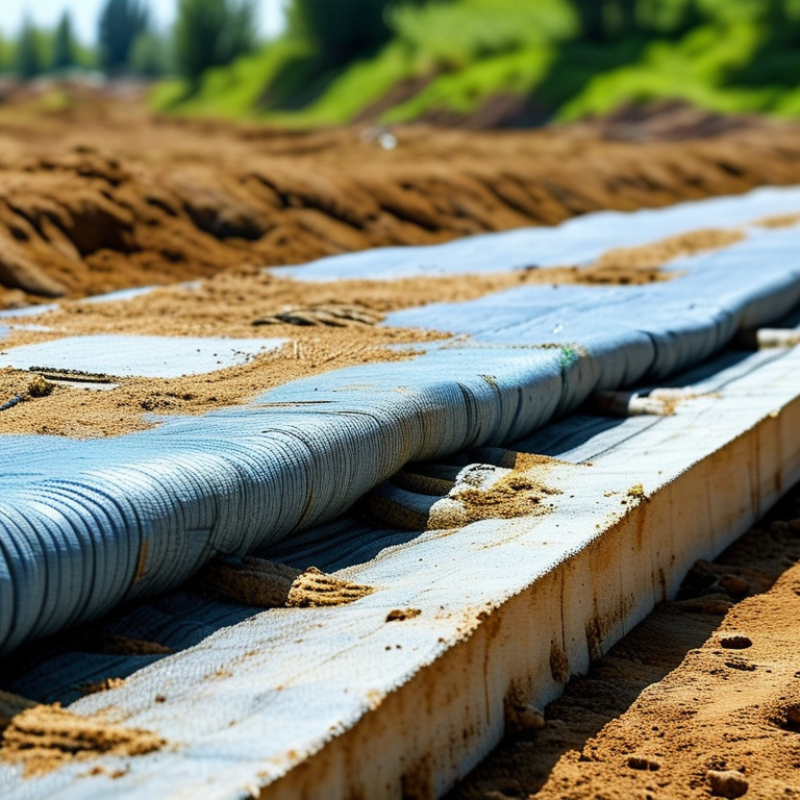
Geotextile wraps are permeable synthetic fabrics placed around drainage pipes, soil layers, or aggregate. They allow water to pass while limiting soil migration. Their main functions are filtration, separation, drainage, and protection. A wrapped perforated pipe, for example, needs enough opening size for water flow but not so much soil entry. Small design errors can cause clogging.
The main wrap types include woven, nonwoven needle-punched, and knitted structures. Woven wraps usually provide higher tensile strength and controlled openings. Nonwoven wraps offer strong filtration and conform well around uneven stone. Knitted products are less common, but they can support specialized drainage or reinforcement needs. Selection should follow project soil data, hydraulic demand, puncture resistance, and installation conditions. ASTM and AASHTO guidance remain useful reference points.
Grand View Research reported that the global geotextiles market reached about USD 8.1 billion in 2023. The same report projected a 6.2% compound annual growth rate from 2024 to 2030. These figures cover more than geotextile wraps, so buyers should avoid treating them as a direct wrap-market forecast. In practice, laboratory testing matters more than a product label. A fabric may look strong in dry samples but perform poorly after stone placement. That is an easy mistake to overlook. 马会
How Geotextile Wrap Types Are Classified
Geotextile wraps are classified by material, structure, manufacturing method, and intended field performance. The most common materials are polypropylene and polyester. Polypropylene resists many chemicals and suits drainage or separation work. Polyester offers higher tensile strength and performs well under sustained loads. Material selection depends on soil chemistry, temperature, and installation conditions.
Manufacturers also classify wraps as woven, nonwoven, or knitted products. Woven geotextiles have regular yarn patterns and strong tensile resistance. They are often selected for soil stabilization beneath roads and working platforms. Nonwoven wraps contain randomly arranged fibers bonded by heat or needling. Their porous texture supports filtration and drainage around pipes, slopes, and retaining structures. Knitted types are less common, but they can provide flexibility in specialized reinforcement applications.
A further classification uses performance values, such as apparent opening size, permeability, puncture resistance, and grab tensile strength. During site inspections, I check whether the fabric survives stone contact and repeated handling. Laboratory figures alone may not predict field behavior. A wrap that looks suitable on paper can clog when fine soil migrates through it. Classification is helpful, but local soil testing and installation practice still matter. Mistakes happen when buyers compare only weight or price.
How Geotextile Wrap Types Are Classified
Geotextile wraps are commonly classified by manufacturing structure: woven, nonwoven, knitted, and composite. The chart compares representative tensile-strength levels frequently specified for drainage, filtration, separation, erosion-control, and soil-reinforcement applications. Actual performance depends on polymer type, mass per unit area, testing direction, and project requirements. Tensile strength is commonly evaluated using ISO 10319 or ASTM D4595.
Geotextile wraps are becoming practical choices for drainage, soil separation, and erosion control in 2026. Grand View Research reports that the global geotextiles market was valued at approximately USD 6.9 billion in 2023. It also projects steady growth through 2030. Demand is linked to road upgrades, rail construction, coastal protection, and landfill engineering.
Woven polypropylene wraps provide high tensile strength and controlled filtration. They suit drainage trenches and road subgrades with repeated loading. Nonwoven polypropylene offers greater thickness and flexibility. Its needle-punched structure can absorb movement around pipes and irregular soil. Polyester wraps usually provide strong creep resistance and dimensional stability. They can perform well in demanding filtration systems, but chemical exposure requires careful review. Biodegradable natural-fiber wraps are useful for temporary erosion control. Their service life is shorter, and moisture may reduce performance. The choice is not always obvious.
Tips: Compare apparent opening size, permittivity, tensile strength, puncture resistance, and UV stability. ISO 10319 and ISO 11058 provide useful testing references. Check the actual soil, water chemistry, installation stress, and expected service period. A wrap that looks suitable on paper may clog quickly in silty ground. I have seen designs fail because permeability data replaced full soil testing. That shortcut deserves reconsideration. Market forecasts are helpful, but project evidence should guide procurement.
| Geotextile Wrap Type | Primary Polymer or Fiber | Manufacturing Structure | Typical Mass Range | Typical Tensile Strength | Typical Apparent Opening Size | Typical Permittivity | Main Properties | Typical Wrap Applications | Key Buyer Considerations |
|---|---|---|---|---|---|---|---|---|---|
| Woven Monofilament Geotextile | Polypropylene (PP) | Woven round monofilament yarns with controlled openings | 100–250 g/m² | 20–70 kN/m | 0.15–0.60 mm | 0.10–1.00 s⁻¹ | High dimensional stability, good soil retention, low elongation, and consistent pore geometry | Wrapping drainage gravel, trench drains, French drains, erosion-control layers, and separation systems | Suitable where filtration precision and resistance to installation stresses are important; verify soil gradation compatibility |
| Woven Multifilament Geotextile | Polypropylene (PP) or polyester (PET) | Woven flat or multifilament yarns | 150–400 g/m² | 30–100 kN/m | 0.10–0.50 mm | 0.05–0.80 s⁻¹ | High tensile capacity, good puncture resistance, low creep for many grades, and strong load distribution | Wrapped aggregate drains, road-edge drainage, retaining-wall drainage, and reinforced filter layers | Choose PET for higher stiffness and PP for lower density and generally better resistance to alkaline environments |
| Needle-Punched Nonwoven Geotextile | Polypropylene (PP) | Randomly oriented staple fibers mechanically entangled by needle punching | 150–800 g/m² | 8–60 kN/m | 0.07–0.30 mm | 0.30–1.50 s⁻¹ | High flexibility, strong cushioning effect, good drainage capacity, and effective protection against puncture | Wrapping perforated pipes, aggregate drains, landfill drainage layers, and filtration around irregular surfaces | Often preferred for conformability and filtration; confirm grab strength, puncture resistance, and clogging performance |
| Thermally Bonded Nonwoven Geotextile | Polypropylene (PP) or polyester (PET) | Continuous or staple fibers bonded through controlled heat | 100–500 g/m² | 10–50 kN/m | 0.08–0.35 mm | 0.20–1.20 s⁻¹ | Uniform thickness, relatively smooth surface, stable pore structure, and lower fiber shedding than some needle-punched grades | Lightweight drainage wraps, landscaping drainage, foundation protection, and separation beneath granular materials | Useful where clean handling and uniformity matter; generally less thick and less cushioning than heavy needle-punched products |
| High-Strength PET Nonwoven Geotextile | Polyester (PET) | Needle-punched high-tenacity staple fibers | 300–1,200 g/m² | 25–120 kN/m | 0.06–0.25 mm | 0.20–1.00 s⁻¹ | High strength-to-weight ratio, strong puncture resistance, excellent flexibility, and good performance under heavy loading | Heavy-duty drainage blankets, mining drainage, road and rail subgrade filtration, and wrapped aggregate structures | Check pH exposure because polyester is less suitable than polypropylene for strongly alkaline environments |
| Geotextile Tube Fabric | High-strength polypropylene (PP) or polyester (PET) | Engineered woven fabric formed into a tubular sleeve and seamed or integrally woven | 400–1,200 g/m² | 50–200 kN/m | 0.20–1.00 mm | Typically selected for controlled solids retention rather than maximum water flow | High seam strength, controlled dewatering, resistance to hydraulic filling pressure, and large-format containment capability | Dewatering sludge, dredged-material containment, coastal protection, shoreline restoration, and temporary sediment control | Specify tube circumference, fill height, seam efficiency, polymer stabilization, and required retention of fine particles |
| Composite Drainage Wrap | Geotextile filter bonded to a polymeric drainage core, commonly PP or HDPE | Nonwoven or woven geotextile combined with a cuspated, geonet, or geocomposite core | 350–1,500 g/m² | 15–100 kN/m for the geotextile component | 0.07–0.40 mm for the filter layer | Depends on the filter fabric and core configuration | High in-plane drainage capacity, integrated filtration, reduced installation thickness, and improved hydraulic continuity | Foundation walls, tunnels, landfill drainage, green roofs, retaining structures, and vertical drainage systems | Evaluate transmissivity under site pressure, compressive creep, filter compatibility, seam details, and core flow direction |
| Biodegradable Natural-Fiber Geotextile | Jute, coir, straw, or other plant-based fibers | Woven mesh, open netting, or stitched natural-fiber mat | 250–900 g/m² | 5–30 kN/m | Typically 2–20 mm, depending on mesh geometry | High initial water permeability | Temporary soil cover, erosion reduction, moisture retention, and gradual biodegradation | Short-term slope stabilization, streambank revegetation, landscaping, and temporary surface erosion control | Service life is environment-dependent; do not use where permanent filtration, high tensile capacity, or long-term chemical resistance is required |
Top Geotextile Wrap Types for Global Buyers in 2026
Global buyers are choosing geotextile wraps by soil conditions, drainage goals, and installation risks. Woven polypropylene wraps suit pipe trenches and soft ground reinforcement. Their tight structure offers high tensile strength and controlled soil separation. Nonwoven needle-punched polypropylene or polyester wraps provide better filtration around drains, retaining walls, and aggregate layers. They feel flexible and conform closely to uneven surfaces.
Geocomposite drainage wraps combine a geotextile filter with a drainage core. They can reduce installation time near foundations, tunnels, and green roofs. For highly wet sites, buyers should check flow capacity under pressure, not only the product thickness. In coastal or chemically aggressive areas, polymer resistance and long-term durability deserve careful review. A lower-cost wrap may look efficient, but weak seams or poor storage can create expensive failures. This is easy to underestimate.
Tips: Request test data for tensile strength, apparent opening size, permittivity, and UV resistance. Match the wrap to the actual soil, not a general project label. Inspect rolls for tears, moisture damage, and unclear markings. Local installation practice also matters. A technically suitable product can still perform poorly when workers stretch it too tightly or leave it exposed for too long. Check regional standards and confirm whether the supplier can provide traceable quality records.
Selecting geotextile wraps depends on the project, not the product label. A drainage pipe beside a highway needs different protection from a wrapped root ball or an erosion-control trench. Start with soil size, water flow, load, and installation conditions. Fine clay may require a tighter apparent opening size, while clean gravel often needs higher permeability. The wrong balance can cause clogging or soil loss.
For pipe wrapping, choose a fabric that allows water to enter while retaining surrounding particles. Nonwoven materials usually provide strong filtration and conform well around uneven surfaces. Woven fabrics can offer greater tensile strength for separation under heavy traffic. Check puncture resistance when angular stone surrounds the pipe. Also review chemical exposure, temperature, UV exposure, and expected service life.
Installation quality matters as much as fabric selection. I have seen good geotextile wraps fail because workers left gaps at overlaps or stretched the material too tightly. Overlap length should follow the project specification and site movement risk. Keep the fabric clean before backfilling. A small tear can become a serious pathway for soil migration. Drainage calculations should be checked by a qualified engineer, especially on slopes or groundwater sites. Field conditions often differ from drawings, and that is where careful judgment is still needed.
: They are classified by material, structure, manufacturing method, and field performance. The main structures are woven, nonwoven, and knitted. Classification helps, but soil testing remains essential.
Polypropylene and polyester are widely used. Polypropylene resists many chemicals and suits drainage or separation. Polyester offers strong tensile performance under sustained loads.
Woven wraps have regular yarn patterns and high tensile resistance. They often support road subgrades, working platforms, and soil stabilization. They handle repeated loading well.
Nonwoven wraps contain randomly arranged fibers bonded by heat or needling. Their thick, flexible texture supports filtration and drainage. They suit pipes, slopes, and retaining structures.
Knitted wraps are less common than woven and nonwoven types. They can provide flexibility in specialized reinforcement applications. Their usefulness depends heavily on project conditions.
Check apparent opening size, permeability, puncture resistance, and tensile strength. UV stability also matters for exposed installation. Price alone is a weak comparison.
Not always. Stone contact, repeated handling, and installation stress can damage fabric. Fine soil may clog a wrap that appears suitable in testing.
Review the soil grading, water chemistry, and expected service period. Compare permeability with the soil’s fine-particle content. A shortcut here can create drainage failure.
They can support temporary erosion control. Their service life is shorter, and moisture may reduce performance. Permanent use requires careful durability review.
Inspect for sharp stones, folds, tears, and poor overlaps. Protect the fabric during placement and backfilling. The design may be right, yet installation can still fail.
Geotextile Wrap is a versatile synthetic or natural-fiber material used to separate, filter, reinforce, protect, or drain soil and construction layers. Its effectiveness depends on how it is classified, including woven, nonwoven, knitted, composite, and specialized wrap forms. Each structure offers different levels of tensile strength, permeability, flexibility, puncture resistance, and durability. Common material options include polypropylene, polyester, polyethylene, and selected biodegradable fibers, allowing buyers to match performance with project conditions and service life requirements.
For global buyers in 2026, the most suitable Geotextile Wrap type will depend on the application. Woven wraps are often preferred for reinforcement and heavy loads, while nonwoven varieties support filtration, drainage, and cushioning. Composite products can combine several functions in one layer. Before purchasing, project teams should assess soil characteristics, water flow, load demands, installation conditions, climate exposure, chemical resistance, expected lifespan, and local standards. Careful selection helps improve stability, reduce maintenance, and achieve reliable long-term performance.

Hongyue