2026 Best White Geotextile for Global Buyers?

Time:2026-10-24 Author:Isabella
0%

Choosing the 2026 best white geotextile requires more than comparing color, price, or catalog images. Geotextile White commonly refers to woven polypropylene or nonwoven polypropylene and polyester products. Each material behaves differently beneath roads, drainage layers, erosion controls, and coastal protection systems. The right selection depends on soil conditions, installation stress, filtration needs, and project life.

Industry forecasts support continued demand. Grand View Research’s geotextiles market analysis identifies transportation, drainage, and environmental infrastructure as major growth applications through 2030. MarketsandMarkets also reports expanding adoption of geotextiles in road construction, waste management, and water management. However, published market estimates vary considerably. Buyers should examine the methodology behind each report, not just the headline value.

Performance evidence matters more than appearance. ISO 10318 provides geosynthetics terminology, while ASTM D4751 evaluates apparent opening size for filtration performance. ASTM D4595 and ASTM D4632 support tensile-strength assessment for different product structures. Request current test reports, production-batch records, UV-resistance data, and seam-strength results. A white roll may look clean and uniform, yet poor needle punching or unstable polymer quality can reduce field performance. Small details matter.

Experienced buyers should compare mass per unit area, tensile strength, elongation, puncture resistance, permeability, and allowable installation damage. Site trials can reveal problems that laboratory sheets miss. White fabric can also become stained during storage or placement, which does not automatically indicate failure. Still, it deserves inspection. No product is universally “best.” A reliable 2026 choice is the Geotextile White specification that matches local soil, climate, loading, standards, and verified supplier capability.
2026 Best White Geotextile for Global Buyers?

What Is White Geotextile and Why Does It Matter in 2026?

2026 Best White Geotextile for Global Buyers?

What Is White Geotextile and Why Does It Matter in 2026?

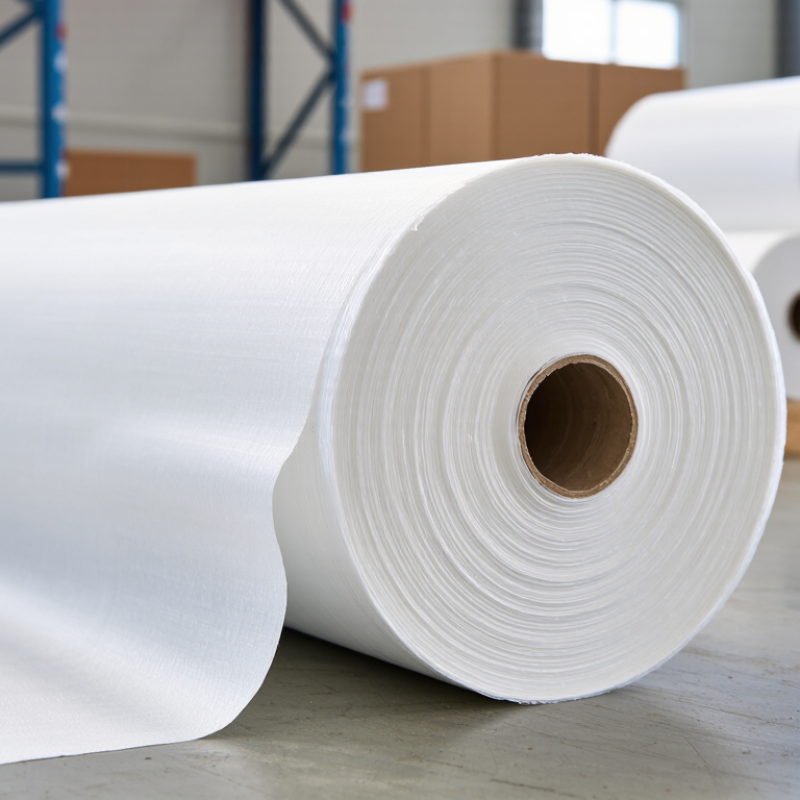
White geotextile is a permeable synthetic fabric used between soil, aggregate, and drainage layers. Its bright surface makes damage, dirt, and installation folds easier to notice. That simple visibility can reduce mistakes on busy construction sites.

In my field experience, white fabric is useful beneath road bases, drainage trenches, erosion-control layers, and landscaping systems. It can separate fine soil from gravel while allowing water to pass through. The right selection depends on tensile strength, puncture resistance, opening size, and permeability. Thickness alone does not prove quality.

Visibility helps.

In 2026, buyers should also examine ultraviolet resistance, roll consistency, packaging, and production traceability. A warehouse sample may look excellent, yet the delivered roll can vary if quality control is weak. Requesting laboratory data and checking several points across a roll is more reliable than judging one small piece. Installation matters too; sharp stones, loose seams, and excessive stretching can reduce performance.

White is not automatically better. In dusty environments, it may become difficult to inspect after installation. I have also seen teams choose fabric by color instead of soil conditions. That decision deserves reconsideration. A dependable product should match the project’s drainage needs, loading conditions, installation method, and expected service period. Clear documentation supports better purchasing decisions.

Key Types and Materials Used in White Geotextile Production

White geotextile is not a single product. It is a visual specification, not a performance class. IMARC Group’s 2024 industry report valued the global geotextiles market at approximately US$8.6 billion in 2023. It also forecasts about 6% annual growth through 2032. This expansion increases demand for clearly specified materials, especially in drainage, filtration, and soil separation.

Woven geotextiles commonly use polypropylene yarns. They provide high tensile strength and controlled openings for soil stabilization. Nonwoven products usually use polypropylene or polyester fibers. Needle-punched polypropylene offers flexibility and strong filtration around drainage pipes. Polyester has higher density and can support demanding reinforcement work. Yet, alkaline soil conditions require careful polyester selection because long-term hydrolysis may reduce durability. Research and Markets’ 2024 review also identifies polypropylene and polyester as leading polymer families.

White color often comes from titanium dioxide pigmentation. It improves visibility during installation, but it does not prove UV resistance. Exposed fabric needs stabilizers and verified weathering results. Buyers should request ASTM D4751 opening-size data, ASTM D4632 grab-strength results, and ASTM D4595 tensile testing. Check roll weight, fiber type, seam strength, and UV retention. Small mistakes matter. A bright surface may hide weak fibers, uneven coating, or poor storage damage. In my field experience, suppliers sometimes describe “high strength” without stating test direction or conditioning. That description needs questioning.

How to Compare Strength, Filtration, Drainage, and Durability

2026 Best White Geotextile for Global Buyers?

How to Compare Strength, Filtration, Drainage, and Durability

White geotextile is widely used beneath roads, drainage layers, retaining walls, and landscaping. Its color helps inspectors notice soil staining, installation damage, and contamination. However, color alone proves little. A clean surface can still hide weak seams or poor fiber bonding.

Start with tensile strength, puncture resistance, and seam performance. Ask for test results under recognized ISO or ASTM methods. Compare machine-direction and cross-direction values, not just one headline number. For filtration, check apparent opening size and permittivity. Smaller openings may retain fine soil, but they can reduce water movement. Soil gradation matters more than a simple product ranking.

Drainage performance needs practical attention. Look at water flow under load, especially beside foundations or retaining structures. A laboratory result may not represent compressed field conditions. For durability, review UV exposure, abrasion, chemical contact, freeze-thaw cycles, and long-term creep. Polypropylene and polyester behave differently in harsh environments. Confirm the polymer and coating before purchase.

I have seen installers select fabric by price and whiteness. That choice often creates rework. It is an imperfect shortcut. Request samples, verify roll labels, and inspect every shipment for tears, uneven width, and inconsistent mass. Storage also matters; prolonged sunlight can damage exposed rolls before installation. A small trial section may reveal clogging or handling problems earlier than a large project.

2026 Best White Geotextile for Global Buyers?

How to compare strength, filtration, drainage, and durability across common white geotextile constructions

The performance index is normalized to a 0–100 scale from representative midpoint values commonly specified for geotextile materials. Typical reference values include tensile strength of approximately 14–35 kN/m, apparent opening size of 0.10–0.30 mm, permittivity of 0.08–1.50 s⁻¹, water flow rate of 25–120 L/min/m², and accelerated UV strength retention of approximately 65–80%. Actual performance depends on mass per unit area, manufacturing quality, installation conditions, and test methods such as ASTM D4595, ASTM D4751, ASTM D4491, and ASTM D4355.

Global Standards and Selection Criteria for International Buyers

International buyers evaluating white geotextile should begin with applicable standards, not color alone. Requirements may reference ISO, ASTM, or EN testing methods. A credible supplier should provide recent laboratory reports, production-batch identification, and clear test conditions. Check mass per unit area, tensile strength, elongation, puncture resistance, permeability, and apparent opening size. These values show how the fabric may perform beneath roads, drainage layers, or erosion-control systems.

White geotextile can reflect sunlight and make site inspection easier. However, brightness does not prove durability. Ask about polymer type, UV exposure testing, seam strength, and storage protection. A roll stored outdoors may absorb moisture, collect dust, or suffer packaging damage. Inspect the core, wrapping, labels, and roll edges before shipment. Small details matter.

I have seen buyers compare only price and grammage. That approach often fails when soil conditions differ. Fine clay, sharp aggregate, and heavy construction traffic require different protection levels. Request samples from the intended production line, not only a showroom sample. Verify declared results through an independent laboratory when the project is sensitive. No checklist is perfect. Test interpretation can still be missed, especially when laboratories use different conditioning procedures. Confirm units, tolerances, and acceptance limits before approving a purchase. Keep every document linked to the exact lot and container.

Best Applications, Sourcing Factors, and Buyer Evaluation Tips

2026 Best White Geotextile for Global Buyers

White geotextiles suit drainage, soil separation, filtration, and erosion control projects. Their light surface makes dirt, tears, and installation damage easier to inspect. Nonwoven fabric usually supports filtration around drainage pipes, while woven fabric offers stronger separation beneath roads and working platforms.

Buyer evaluation should begin with application, not color. Check mass per unit area, tensile strength, puncture resistance, apparent opening size, and water permeability. Confirm the polymer type, UV resistance, roll width, and packaging method. A sample should be tested under expected soil and water conditions. Laboratory results alone may not reflect rough handling on site.

Reliable sourcing also requires production records, batch identification, and consistent technical data. Ask for independent test reports when the project carries high performance risk. Inspect several rolls, not only one carefully selected sample. Small variations can affect overlaps and installation speed. White fabric can look clean, but appearance proves little. A low price may hide weaker puncture resistance or unstable dimensions. I would also question any supplier promising universal performance. No geotextile fits every soil, climate, or load condition. Some decisions remain imperfect, especially when field data is limited.

2026 Best White Geotextile for Global Buyers? - Best Applications, Sourcing Factors, and Buyer Evaluation Tips

Practical comparison of common white geotextile options, technical selection criteria, and purchasing checkpoints. Values are typical project ranges and must be confirmed against the final specification and test report.

Application / Buyer Need Recommended White Geotextile Type Typical Polymer Typical Mass Range Key Performance Requirements Useful Test Standards Main Sourcing Factors Buyer Evaluation Tips
Road and pavement separation Needle-punched nonwoven geotextile Polypropylene or polyester 150–400 g/m² Adequate puncture resistance, filtration compatibility, elongation, and uniform thickness ASTM D4632, ASTM D4833, ASTM D4491, ISO 10319 Roll width, roll length, mass tolerance, seam options, packaging, and delivery schedule Request lot-based test results and verify the fabric does not tear during aggregate placement
Drainage behind retaining walls Nonwoven drainage and filtration geotextile Polypropylene or polyester 150–300 g/m² High normal permeability, suitable apparent opening size, clogging resistance, and soil retention ASTM D4491, ASTM D4751, ASTM D4716, ISO 12958 Soil gradation, hydraulic gradient, long-term flow capacity, and resistance to installation damage Do not select by GSM alone; match AOS and permeability to the retained soil
Landfill or pond liner protection Heavy-duty needle-punched nonwoven geotextile Usually polypropylene or polyester 400–1,200 g/m² High puncture resistance, cone drop resistance, cushion effect, and dimensional stability ASTM D4833, ASTM D5494, ASTM D6241, ISO 12236 Subgrade condition, protrusion size, liner thickness, installation method, and UV exposure Review puncture and tear results at the proposed mass per unit area, not only visual softness
Erosion control on slopes and channels Nonwoven geotextile or woven reinforcement geotextile, depending on hydraulic load Polypropylene or polyester 200–600 g/m² Surface stability, tensile strength, soil retention, permeability, and resistance to installation damage ASTM D4595, ASTM D4632, ASTM D4491, ISO 10319 Slope angle, flow velocity, anchoring pattern, UV exposure, and expected service duration Confirm whether the project needs filtration only or actual tensile reinforcement
Unpaved roads and weak subgrades High-strength woven geotextile or composite geotextile Primarily polypropylene 150–500 g/m² High tensile strength, low creep where required, junction strength, and aggregate confinement ASTM D4595, ASTM D4632, ASTM D4884, ISO 10319 Required tensile strength by direction, aperture structure, subgrade CBR, and overlap length Compare machine-direction and cross-machine-direction results separately
Railway ballast separation Heavy-duty nonwoven or woven geotextile selected for ballast conditions Polypropylene or polyester 300–800 g/m² High puncture resistance, filtration performance, abrasion resistance, and installation durability ASTM D4833, ASTM D6241, ASTM D4491, ISO 12236 Ballast size, subgrade fines, tamping method, track loading, and maintenance cycle Ask for puncture data using the method required by the rail authority or project consultant
Agricultural drainage and irrigation Light-to-medium nonwoven filtration geotextile Polypropylene or polyester 100–250 g/m² Stable filtration, adequate permeability, resistance to soil intrusion, and manageable installation ASTM D4491, ASTM D4751, ISO 12958 Soil texture, drainage aggregate grading, burial depth, chemical exposure, and roll handling Check apparent opening size against the soil’s characteristic particle size
Temporary ground cover and landscaping Light nonwoven geotextile or woven weed-control fabric Polypropylene or polyester 80–200 g/m² Tear resistance, water passage, handling strength, and resistance to expected UV exposure ASTM D4632, ASTM D4833, ASTM D4491 Exposure duration, anchoring accessories, roll dimensions, and surface appearance requirements Treat white color as an identification or appearance feature, not proof of higher performance
Material and construction quality Any selected structure, provided it meets the project specification PP generally offers low density and chemical resistance; PET may offer higher dimensional stability Project-dependent Consistent mass, thickness, width, tensile strength, elongation, and defect-free surface ASTM D5261, ASTM D5199, ASTM D4595, ISO 9863-1, ISO 10319 Production batch control, calibration records, inspection plan, traceability, and sample approval Inspect full-width samples for thin spots, holes, uneven bonding, edge damage, and color variation
Global logistics and compliance Specification-approved roll format and packaging configuration Polypropylene or polyester, according to chemical and durability requirements Based on design and transport limits Protected packaging, moisture control, UV protection during storage, and accurate shipping documents Applicable ASTM, ISO, EN, or local project standards Incoterms, container loading plan, customs documents, palletization, lead time, and minimum order quantity Compare landed cost rather than unit price: product, freight, duties, testing, handling, and claims risk
Buyer checklist: Define the application, soil and aggregate conditions, required test methods, minimum performance values, roll dimensions, packaging, inspection procedure, and acceptance criteria before requesting quotations.
Technical note: White geotextile color may improve visual inspection and heat reflectance, but selection should be based primarily on polymer, structure, mass per unit area, tensile behavior, puncture resistance, apparent opening size, permeability, durability, and project-specific installation conditions.

FAQS

What does “white geotextile” describe?

It describes the fabric’s appearance, not its performance level. Color is not proof. Always check technical data.

Which materials are commonly used in white geotextiles?

Woven fabrics commonly use polypropylene yarns. Nonwoven fabrics may use polypropylene or polyester fibers. Each material behaves differently.

How do woven and nonwoven fabrics differ?

Woven fabric usually provides higher tensile strength and controlled openings. Nonwoven fabric offers flexibility and filtration around drainage pipes.

Does white color prove UV resistance?

No. White color often comes from titanium dioxide pigmentation. Exposed fabric still needs stabilizers and verified weathering results.

Which tests should buyers request?

Request results for opening size, grab strength, tensile strength, puncture resistance, and water permeability. Check both fabric directions.

How should filtration performance be evaluated?

Compare apparent opening size, soil gradation, and water movement. Smaller openings retain finer soil but may reduce drainage.

What factors affect long-term durability?

Review sunlight, abrasion, chemical contact, freeze-thaw cycles, and long-term creep. Polyester may require careful selection in alkaline soils.

What should buyers inspect before shipment and installation?

Check roll labels, mass, width, seams, packaging, and batch records. Look for tears, uneven dimensions, or inconsistent weight.

How should white geotextile rolls be stored?

Keep rolls protected from prolonged sunlight, moisture, and rough handling. Storage damage may appear before installation begins.

Is the lowest-priced fabric a good choice?

Not always. A low price may hide weaker puncture resistance or unstable dimensions. A small trial section can expose problems early.

Conclusion

White geotextile is a permeable synthetic material designed to separate, filter, reinforce, protect, and drain soil in construction and environmental projects. In 2026, its importance is increasing as global buyers seek materials that offer reliable performance, long service life, and efficient installation. The term Geotextile White commonly refers to light-colored woven or nonwoven products made from polymers such as polypropylene or polyester. Product selection should consider tensile strength, puncture resistance, filtration precision, water permeability, drainage capacity, UV stability, and resistance to moisture, chemicals, and biological degradation.

For international buyers, comparing products against recognized technical standards and project specifications is essential. Suitable applications include road foundations, railways, drainage systems, landfills, coastal protection, landscaping, and erosion control. Buyers should also evaluate raw material consistency, roll dimensions, packaging, quality documentation, testing procedures, production capacity, lead time, and logistics support. A dependable sourcing decision balances technical performance, total cost, environmental conditions, and long-term project requirements rather than focusing only on the lowest purchase price.


Isabella

Isabella

Isabella is a dedicated marketing professional with a sharp focus on driving brand growth and engagement through strategic content creation. With an extensive background in digital marketing, she combines her passion for storytelling with her keen understanding of industry trends to deliver......